Gardening right after a rainstorm feels like the perfect time to get outside, especially when the soil looks soft and easy to dig.
However, working in your garden too soon after rain can cause more harm than good, particularly to your soil structure and plant roots.
So, is it bad to garden after it rains? Yes, gardening immediately after rain can damage your soil, but the real answer depends on your soil type, how much rain fell, and what task you’re trying to do.
Let’s dig deeper into this topic.
The Direct Answer
Yes, it’s generally bad to garden in your beds right after heavy rain, especially if you’re walking on or digging into wet soil. Working wet soil compacts it, squeezing out the air pockets roots need to breathe and grow properly. That said, light tasks like harvesting or weeding along paths usually cause little to no harm.
Why Wet Soil Causes Problems
Soil structure depends on a balance of solid particles, air, and water, and that balance gets thrown off the moment you step on or dig into saturated ground. Compaction squeezes soil particles together, collapsing the pore spaces that normally hold oxygen and allow water to drain properly.
Once soil compacts, it stays that way for a long time — sometimes an entire growing season — since compacted soil doesn’t loosen itself back up naturally. Roots then struggle to push through the denser ground, which slows growth and makes plants more vulnerable to drought stress later, even though it seems backward right after a rainstorm.
Clay-heavy soil suffers the worst from this, since clay particles bond tightly together when wet and form dense, brick-like clumps once they dry. Sandy soil handles foot traffic and light digging after rain much better, since it drains fast and doesn’t compact nearly as easily.
When It Depends
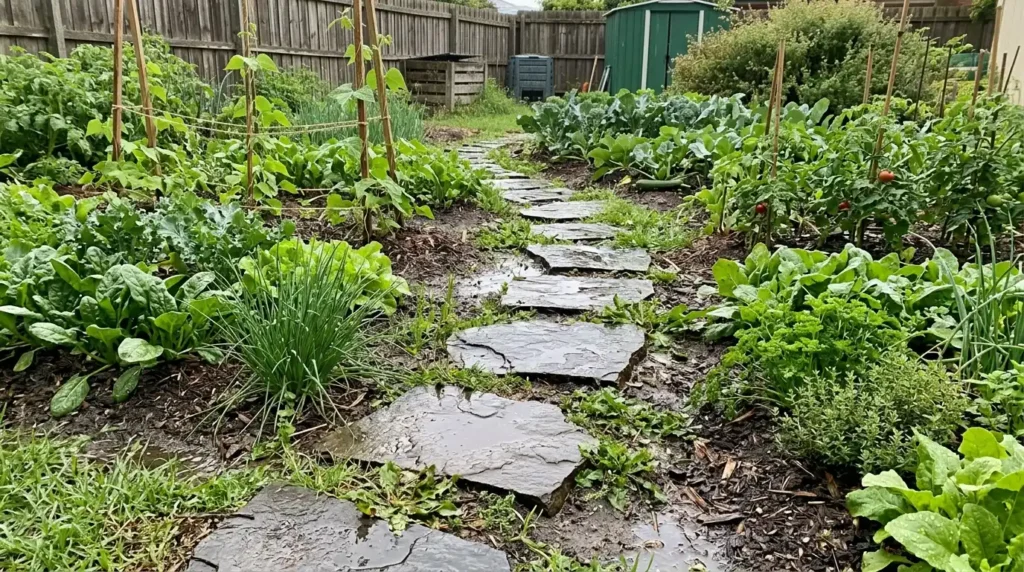
Not every rainy-day gardening task causes damage, so a few factors change the picture.
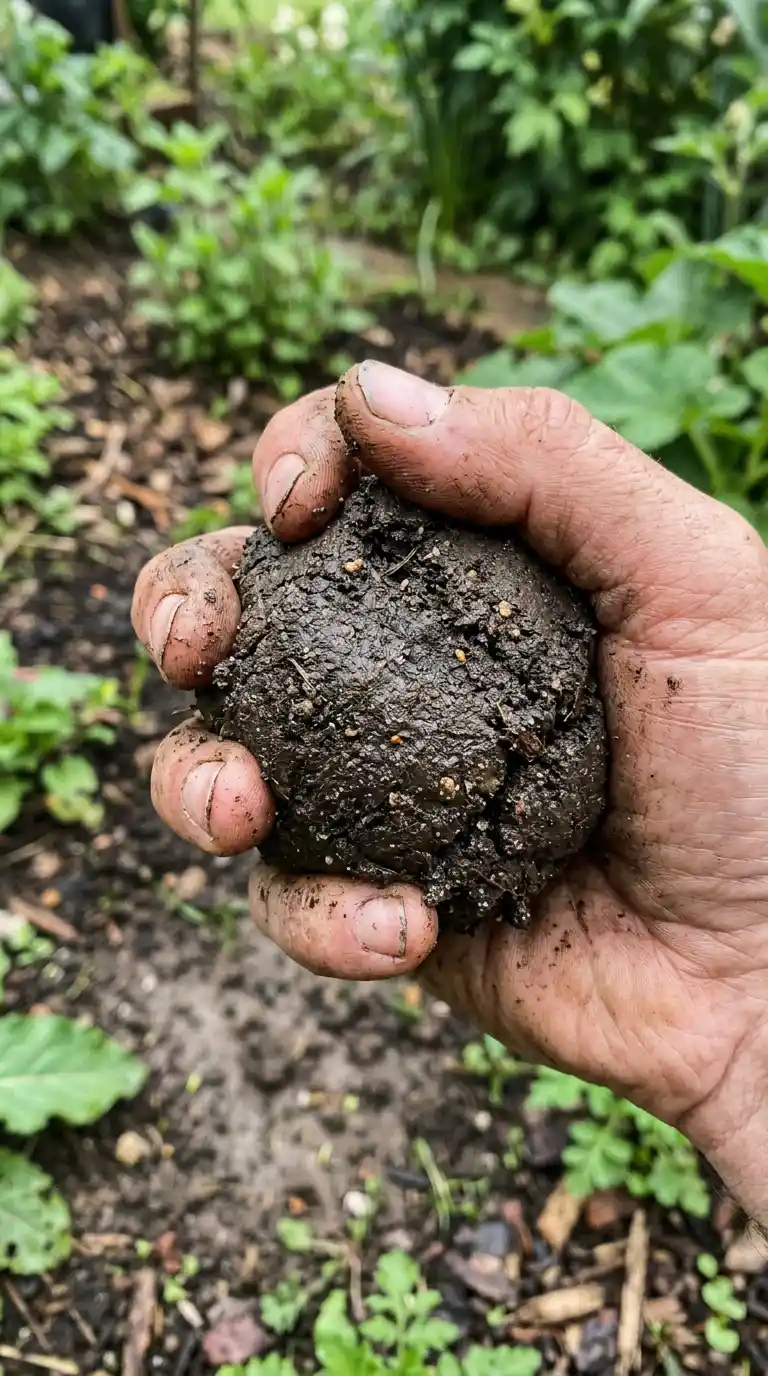
Soil type matters most. Heavy clay soil needs several days to dry out enough for safe digging, while sandy or loamy soil often bounces back within a few hours. Squeeze a handful of soil to check — if it forms a tight, sticky ball that doesn’t crumble when poked, it’s still too wet to work.
Rainfall amount changes the timeline too. A light drizzle barely affects soil structure, while a heavy downpour can leave beds waterlogged for a full day or more depending on drainage. Check how deep the moisture penetrated before deciding whether it’s safe to dig.
The task itself makes a big difference. Walking along established paths or harvesting ripe vegetables causes minimal disturbance, since you’re not digging into or compacting the actual planting beds. Tilling, transplanting, or heavy digging right after rain does the most damage, since these tasks disturb soil structure at a deeper level.
Season and temperature play a role as well. Wet soil in cool spring weather dries slower than wet soil during a hot summer afternoon, so timing your next garden session shifts depending on the forecast that follows.
What To Do Instead
Give your soil time to drain before doing anything that involves digging, tilling, or heavy foot traffic in your beds. The squeeze test remains the most reliable method — grab a handful of soil, squeeze it into a ball, and poke it with your finger. If it crumbles apart easily, you’re good to go; if it holds together in a dense clump, wait longer.
Stick to raised beds or stepping stones and garden paths during and immediately after rain, since these let you access your garden without compacting the actual growing areas. Raised beds also drain faster than in-ground plots, which shortens the waiting period significantly after a storm.
Save intensive tasks like tilling, transplanting, and bed preparation for a day or two after rainfall, once the soil has had a real chance to dry. Light tasks like harvesting, checking plant health, or pulling weeds from already-loose soil remain safe options even shortly after rain.
Improving drainage over time reduces how often you’ll face this problem at all. Adding compost and organic matter to heavy clay soil gradually improves its structure, helping it drain faster and resist compaction even after a downpour.
Common Mistakes People Make With This
- Tilling or digging immediately after a storm, which compacts soil and destroys the structure you’ve worked to build
- Walking directly through planting beds to reach other parts of the garden instead of using a path or stepping stones
- Assuming all soil types behave the same way, when clay and sandy soil have completely different drying timelines
- Transplanting seedlings into soggy soil, which suffocates roots before they’ve even had a chance to establish
- Ignoring the squeeze test and guessing based on how the surface looks, when the real moisture level often sits deeper than it appears
Quick Recap
- Direct answer: Yes, gardening right after rain can damage soil structure, especially in clay-heavy beds, but light tasks usually cause little harm
- Clay soil needs more drying time than sandy or loamy soil
- Heavy digging, tilling, and transplanting cause the most damage; harvesting and light weeding are generally fine
- Use the squeeze test before working any wet bed, and stick to paths or stepping stones when access is unavoidable
- Improving soil with organic matter over time shortens how long you need to wait after future rainstorms
Next time it rains, resist the urge to dig in right away — give your soil a squeeze test first, and save the heavier work for once it passes.