So your neighbor just asked you to identify that “pretty purple flower” growing by their fence, and you had a sinking feeling it might actually be a weed? Yeah, that happens more than people admit.
Here’s the thing nobody wants to hear: a shocking number of weeds are basically wearing a flower costume. Some are so convincing that people plant them on purpose, then spend the next three summers regretting it.
The Quick Answer
Yes, at least 15 common weeds look almost identical to actual flowers, and that’s exactly why so many end up growing in flower beds instead of getting pulled. The line between “weed” and “flower” is honestly a lot blurrier than most gardening blogs let on. Once you know the tells, though, spotting them gets a lot easier.
Why This Is True (or Not)
A weed isn’t a special category of plant — it’s just a plant growing somewhere nobody invited it. A dandelion popping up in your lawn gets pulled without a second thought, but that same dandelion in a wildflower meadow gets admired for its color. Nature really doesn’t care about your landscaping plans.
Most of these plants developed bright petals and bold shapes for the same reason your prized tulips did: to lure in bees and other pollinators. That’s not a coincidence, and it’s not weeds trying to trick you personally, even though it sure feels that way sometimes. The prettier the flower, the better the odds of getting pollinated and spreading everywhere.
Ever notice how the most stubborn weeds in your yard also tend to be the showiest ones? That’s not bad luck. It’s evolution doing exactly what it’s supposed to do.
When It Depends
Whether something on this list counts as a “weed” in your specific yard depends on a few things, and region tops that list. A plant considered invasive in one state might be a protected native wildflower two states over.
The Lineup
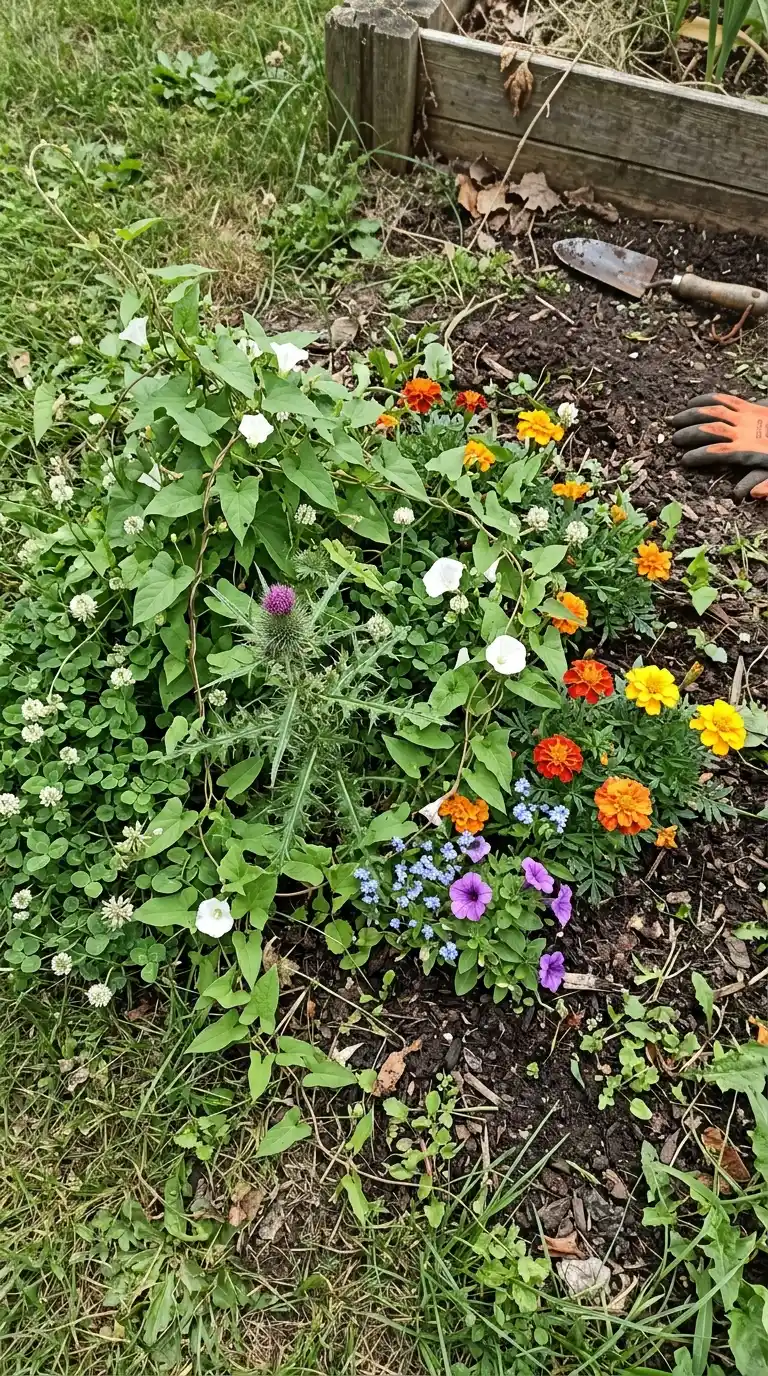
Here’s who to watch for:
- Dandelion — the classic yellow bloom every kid has blown the seeds off of
- Bindweed — a dead ringer for morning glory, minus the manners
- Creeping Charlie — tiny purple flowers attached to a groundcover that spreads like gossip
- Queen Anne’s Lace — delicate white umbrella blooms, secretly a wild carrot
- Purple Deadnettle — small purple-pink flowers showing up right at winter’s edge
- Common Chickweed — tiny white star-shaped blooms that love cool weather
- Yellow Wood Sorrel — often mistaken for clover until the yellow flowers show up
- Bull Thistle — a striking purple pom-pom sitting on top of genuinely painful spikes
- Field Bindweed — bindweed’s equally sneaky cousin, known for brutal root depth
- Buttercup — glossy yellow petals that look harmless but aren’t great for grazing animals
- Henbit — another pinkish-purple bloomer, easy to confuse with Purple Deadnettle
- Yellow Sweet Clover — tall, leggy stalks dotted with small yellow flowers
- Spotted Knapweed — thistle-shaped purple blooms with a reputation for taking over
- Wild Violet — genuinely lovely, genuinely relentless once it gets comfortable in a lawn
- Ragweed — less flashy, but its early growth stage still fools plenty of gardeners
Growth Stage Matters Too
A lot of these look far more “flower-like” when they’re young, before their true habits show up. Bindweed as a seedling looks almost innocent. Give it three weeks, though, and it’s climbing your fence like it pays rent there.
What To Do Instead / What The Experts Recommend
Identify before you dig, not after — I learned this one the hard way after ripping out a wild violet I actually wanted. A plant ID app on your phone solves this in about ten seconds, so there’s really no excuse anymore.
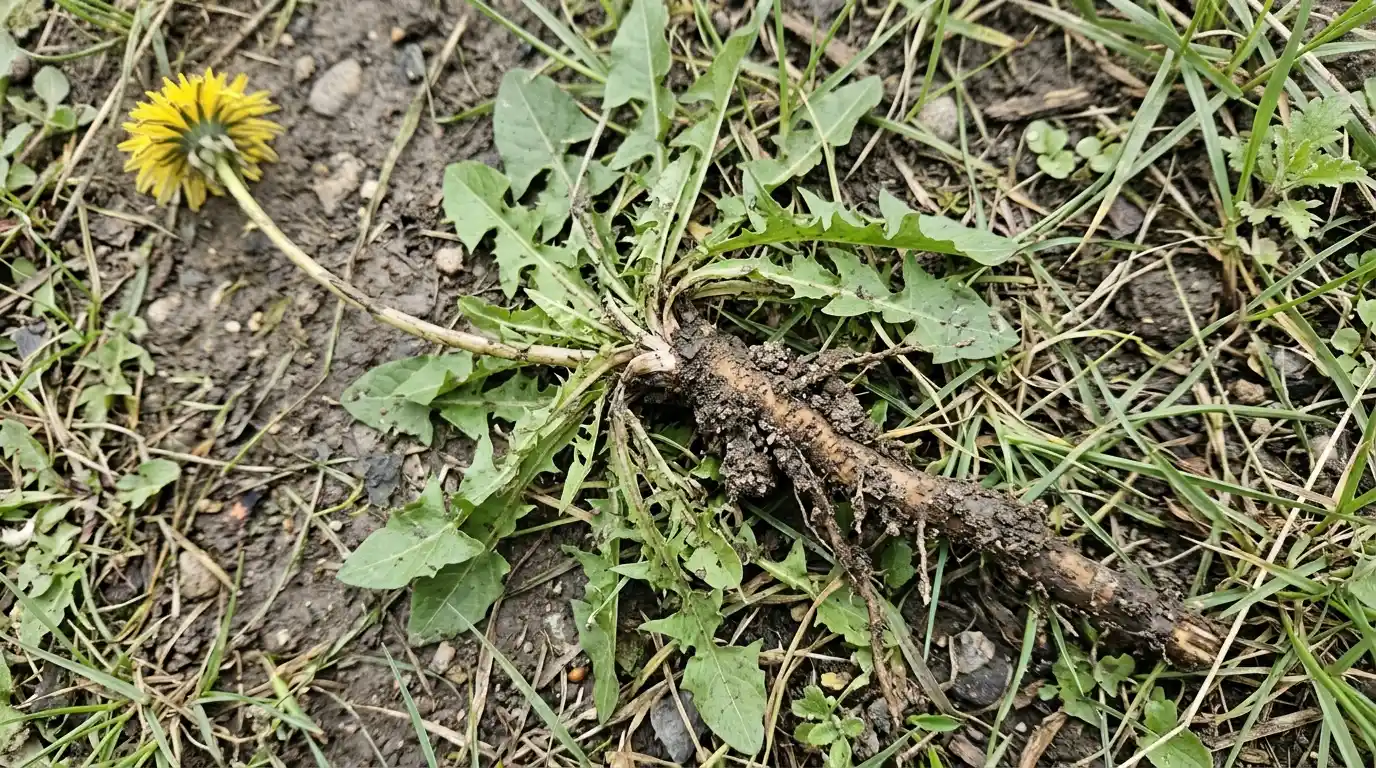
Roots tell you almost everything. Dandelions and bindweed both run deep taproots or spreading rhizomes, which is a dead giveaway once you know to check. True ornamentals you planted on purpose tend to stay put, while weeds show up in random spots you never touched.
Leaves matter just as much as blooms, if not more. Queen Anne’s Lace has feathery, carrot-like foliage that gives it away long before the flower opens. IMO, learning to read leaves is the single fastest way to stop second-guessing every pretty thing in your yard.
Timing makes or breaks the whole effort. Pull unwanted weeds before they flower and go to seed, because once that happens, you’re not managing one plant anymore — you’re managing next year’s entire crop too.
Common Mistakes People Make With This
- Assuming “pretty” automatically means harmless, when plenty of good-looking weeds choke out everything around them
- Yanking out real flowers by accident because they resemble a weed at a young growth stage
- Cutting the top off instead of the root, which just invites deep-rooted weeds like bindweed to grow right back within days
- Waiting until the plant flowers before deciding whether to pull it, which usually means the seeds already won
- Treating every lookalike the same way, when some — like wild violet — are honestly fine to leave alone depending on where they’re growing
Quick Recap
- Direct answer: Yes, at least 15 weeds convincingly mimic real flowers, from dandelions to Queen Anne’s Lace to bull thistle
- Whether something is a “weed” often comes down to region, location in your yard, and growth stage
- Roots and leaves reveal the truth faster than the flower itself ever will
- Pull anything unwanted before it flowers, or you’re just planting next season’s problem
- Some lookalikes, like wild violet, aren’t worth the fight in every yard
Before your next weeding session, snap a photo of anything you’re unsure about first. Ten seconds with an ID app beats an afternoon of apologizing to a flower you didn’t mean to pull 🙂