Pests can destroy weeks of hard work in your vegetable garden in just a few days if left unchecked.
Aphids, hornworms, cabbage moths, and slugs treat a healthy vegetable patch like an all-you-can-eat buffet.
Spraying synthetic pesticides on food you plan to eat isn’t exactly appealing, and it can also harm beneficial insects like bees and ladybugs that your garden actually needs.
That’s why so many gardeners turn to natural pest control methods that protect crops without introducing chemicals near their dinner table.
This post covers the 9 best natural pest control methods for vegetable gardens, along with exactly how to use each one.
9 Best Natural Pest Control Methods For Vegetable Gardens
Knowing which natural method fits which pest problem saves you time, money, and a lot of frustration this growing season.
Here are the most effective natural pest control methods for vegetable gardens.
1. Companion Planting
Certain plants naturally repel specific pests when grown near vulnerable crops, making companion planting one of the easiest long-term pest control strategies available.
Marigolds deter nematodes and aphids, while basil planted near tomatoes helps repel hornworms and whiteflies.
This method works because pests rely heavily on scent to locate host plants, and strong-smelling companion plants throw off that signal entirely.
How To Use Companion Planting
Step 1
Identify which pests commonly attack your specific vegetables — tomatoes, for example, often face hornworms and aphids.
Step 2
Choose a companion plant known to repel that pest, such as marigolds, basil, or nasturtiums.
Step 3
Plant the companion directly alongside or bordering the vulnerable crop, not several feet away, since proximity matters for scent-based deterrence.
Step 4
Replant companions each season, since annual varieties like marigolds and basil need to be reseeded or replanted yearly.
2. Neem Oil Spray
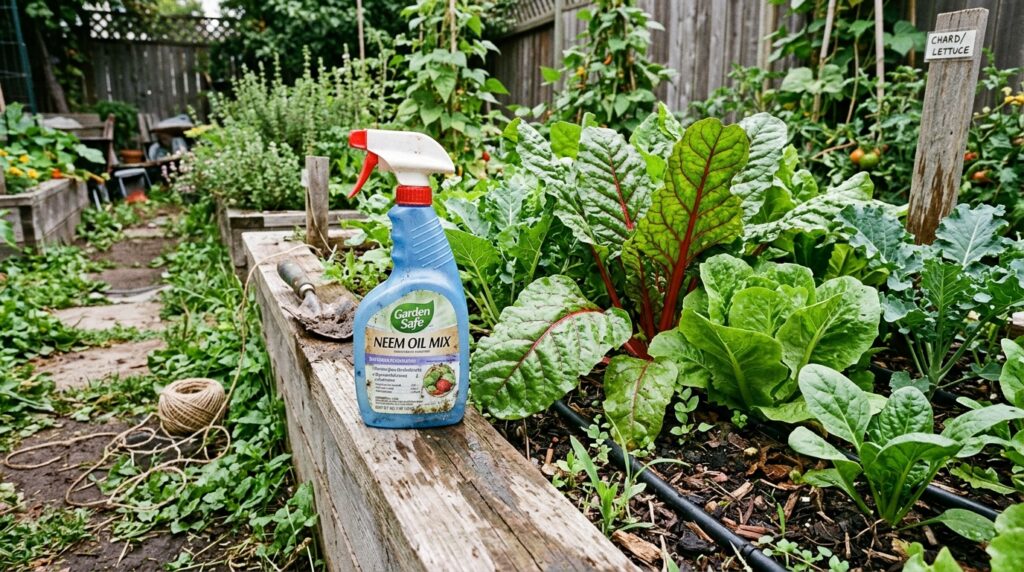
Neem oil disrupts the hormone system of insects, preventing them from feeding, molting, or reproducing normally.
It works on a wide range of common vegetable garden pests, including aphids, spider mites, whiteflies, and cabbage worms, while remaining low-risk for bees when applied correctly.
Neem oil breaks down quickly in sunlight, so timing your application matters more than most gardeners realize.
How To Use Neem Oil Spray
Step 1
Mix 2 teaspoons of neem oil with 1 teaspoon of mild liquid soap per quart of water to help the oil bind with water.
Step 2
Pour the mixture into a spray bottle and shake well before each use, since neem oil separates from water quickly.
Step 3
Spray both the tops and undersides of leaves, since many pests hide and lay eggs on the underside.
Step 4
Apply in the early morning or evening, never in direct midday sun, to avoid leaf burn and to protect pollinators that are active during the day.
3. Diatomaceous Earth
Diatomaceous earth (DE) consists of fossilized diatoms ground into a fine powder that’s harmless to humans and pets but lethal to soft-bodied insects.
The sharp microscopic particles pierce the exoskeletons of pests like slugs, beetles, and ants, causing fatal dehydration.
DE only works when dry, so rain or heavy watering renders it useless until reapplied.
How To Use Diatomaceous Earth
Step 1
Buy food-grade diatomaceous earth, never the pool-grade version, which is chemically treated and unsafe for gardens.
Step 2
Dust a thin layer around the base of vulnerable plants and along garden borders where pests typically enter.
Step 3
Reapply after every rainfall or watering session, since moisture completely deactivates the powder.
Step 4
Wear a dust mask while applying, since inhaling DE powder can irritate your lungs even though it’s non-toxic.
4. Handpicking Pests
It sounds tedious, but handpicking remains one of the most effective methods for larger, visible pests like hornworms, Japanese beetles, and cabbage loopers.
This method requires no products or mixing, just consistent attention, and it causes zero collateral damage to beneficial insects.
Early morning works best, since many pests are sluggish and easier to spot before the day heats up.
How To Use Handpicking
Step 1
Inspect plants daily during peak pest season, checking both leaf surfaces and stems closely.
Step 2
Remove pests by hand using gloves, then drop them into a bucket of soapy water to kill them.
Step 3
Check for egg clusters on leaf undersides and remove those too, since they’ll hatch into the next wave of pests.
Step 4
Repeat daily during the height of pest season, since a few missed days can let a small problem multiply fast.
5. Beneficial Insects
Introducing beneficial insects like ladybugs, lacewings, and predatory wasps creates a natural pest control system that works around the clock.
Ladybugs alone can eat up to 50 aphids per day, making them one of the most efficient natural pest solutions available to home gardeners.
This method takes patience to establish but requires far less ongoing effort once beneficial populations settle in.
How To Use Beneficial Insects
Step 1
Plant nectar-rich flowers like dill, fennel, and yarrow near your vegetable beds to naturally attract beneficial insects.
Step 2
Purchase ladybugs or lacewing larvae from a garden supply store if your pest problem needs a faster solution.
Step 3
Release beneficial insects in the evening, when temperatures are cooler and insects are less likely to immediately fly off.
Step 4
Avoid spraying any pesticides, even organic ones, in areas where beneficial insects are established, since most sprays don’t discriminate between good and bad bugs.
6. Garlic and Chili Spray
A homemade garlic and chili spray repels a wide range of pests through smell and taste alone, without killing beneficial insects on contact.
The strong sulfur compounds in garlic and the capsaicin in chili peppers irritate the sensory receptors of most common garden pests, driving them away from treated plants.
This method needs frequent reapplication, especially after rain, since it works as a deterrent rather than a direct kill method.
How To Use Garlic and Chili Spray
Step 1
Blend 2 whole garlic bulbs and 1 tablespoon of chili powder with a quart of water until fully combined.
Step 2
Let the mixture sit overnight, then strain out the solids and pour the liquid into a spray bottle.
Step 3
Spray directly onto leaves, stems, and soil around affected plants, focusing on new growth pests tend to target first.
Step 4
Reapply every 5-7 days or immediately after rainfall, since the scent fades quickly outdoors.
7. Row Covers
Floating row covers physically block pests from ever reaching your plants, making this one of the most reliable prevention methods available.
Lightweight fabric lets sunlight, air, and water through while keeping out moths, beetles, and flying insects looking to lay eggs on your crops.
This method works especially well for brassicas like cabbage and broccoli, which face constant pressure from cabbage moths.
How To Use Row Covers
Step 1
Drape lightweight garden fabric directly over rows of vulnerable crops right after planting or transplanting.
Step 2
Secure the edges with soil, rocks, or garden staples to prevent pests from crawling underneath.
Step 3
Remove covers once plants flower if the crop requires pollination, since covers also block bees.
Step 4
Check under the cover every few days for any pests that snuck in before it was installed.
8. Coffee Grounds
Used coffee grounds work as a mild pest deterrent while also improving soil structure as they break down.
Slugs and snails avoid crawling over coffee grounds due to the caffeine and abrasive texture, making it a solid barrier method for these particular pests.
This method won’t eliminate a large infestation on its own, but works well as a supporting layer alongside other methods on this list.
How To Use Coffee Grounds
Step 1
Collect used, dried coffee grounds rather than fresh ones, since fresh grounds can be too acidic for some plants.
Step 2
Sprinkle a thin ring of grounds around the base of vulnerable plants, particularly lettuce, hostas, and other slug-prone crops.
Step 3
Reapply every couple of weeks, since coffee grounds break down and lose their deterrent effect over time.
Step 4
Mix leftover grounds into compost or soil once they’ve served their purpose as a barrier, since they still add nutrients.
9. Crop Rotation
Crop rotation disrupts the life cycle of soil-dwelling pests that overwinter in the same spot expecting their favorite host plant to return.
Pests like squash vine borers and Colorado potato beetles rely on finding the same crop in the same location year after year, and rotation breaks that pattern entirely.
This method takes planning across seasons rather than a single application, but it prevents problems before they even start.
How To Use Crop Rotation
Step 1
Map out your garden beds and note which crop family grew in each section this season.
Step 2
Avoid planting the same crop family in that same spot for at least 2-3 years.
Step 3
Group crops by family (nightshades, brassicas, legumes, cucurbits) so entire sections rotate together each season.
Step 4
Keep a simple garden journal or map from year to year, since it’s easy to forget rotation details by the time next spring arrives.
Final Remarks
Protecting your vegetable garden from pests doesn’t require reaching for harsh chemicals that put your food and local pollinators at risk. Combining a few of these natural methods — like companion planting alongside row covers, or neem oil paired with beneficial insects — usually delivers better results than relying on just one. Whichever methods you choose, stay consistent with reapplication and daily checks, especially during peak pest season, and your harvest will hold up a lot better this year.