Ever seed a lawn and then just… wait? And wait? And start wondering if the birds ate every last seed while you weren’t looking? I’ve absolutely been there, staring at a patchy yard wondering why my “thick, lush lawn” looked more like a bad comb-over.
Here’s the thing — a lot of that frustration comes down to seed choice, not effort. Pick the right grass seed for your situation, and you’ll see faster germination and thicker coverage without doing anything differently. Let’s break down what actually works.
What Makes A Grass Seed “Fast-Growing” Or “Thick”?
Before picking a seed, it helps to know what you’re actually optimizing for. Germination speed refers to how quickly seeds sprout, while thickness comes down to a grass variety’s natural growth habit — some spread aggressively via rhizomes or stolons, filling in bare spots on their own, while others grow in clumps and need more seed density to look full.
The fastest-growing options aren’t always the thickest long-term, so the “best” seed really depends on whether you want quick results or a dense lawn that fills in over a season.
Best Fast-Germinating Grass Seed Options
Perennial Ryegrass
If speed is your priority, Perennial Ryegrass is hard to beat — it often germinates in as little as 5-10 days, making it a favorite for quick patch repairs or overseeding thin spots before a big event or season change. It handles foot traffic well too, though it doesn’t spread on its own the way some other varieties do.
Annual Ryegrass
Even faster than its perennial cousin, but it’s a short-term player — great for erosion control or a quick green fix, not for a permanent lawn. IMO, skip this one unless you specifically need a fast, temporary cover.
Tall Fescue
Slightly slower to germinate (around 7-14 days) but a great balance of speed and long-term durability. Tall Fescue handles heat, drought, and traffic better than most cool-season grasses, making it a solid all-rounder.
Best Grass Seed For Maximum Thickness
Kentucky Bluegrass
This is the gold standard for a dense, carpet-like lawn, thanks to its ability to spread via rhizomes and self-repair bare patches over time. The tradeoff? It germinates slower than ryegrass, often taking 14-30 days, so patience is part of the deal here.
Bermuda Grass (Warm-Season Regions)
For hot climates, Bermuda Grass spreads aggressively through both rhizomes and stolons, filling in gaps fast once established. It’s one of the thickest, most self-repairing lawns you can grow — just know it needs full sun and can be tough to contain near garden beds.
Zoysia Grass (Warm-Season Regions)
Slower to establish than Bermuda, but once it fills in, Zoysia creates one of the densest, softest lawns out there. Worth the wait if you’re not in a rush and want that “walk on it barefoot” texture.
Should You Use A Seed Blend Instead Of One Variety?
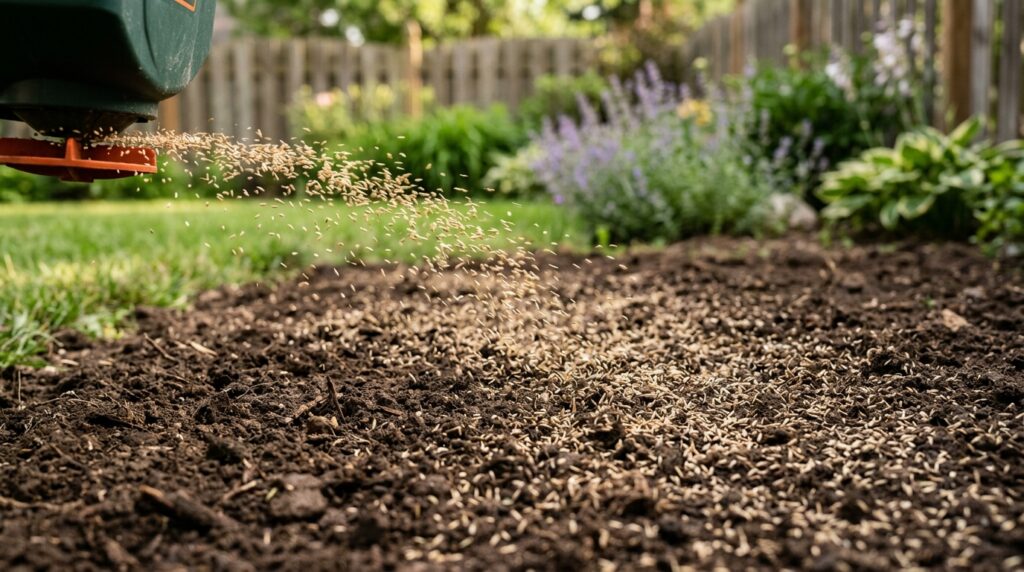
Here’s something a lot of people don’t realize: most bagged grass seed you’ll find is actually a blend, not a single variety. And that’s usually a smart thing.
- Blends combine fast-germinating varieties (like Ryegrass) with slower, thicker-growing ones (like Kentucky Bluegrass) — you get quick green cover while the denser grass fills in behind it.
- Blends improve resilience, since different varieties handle stress, disease, and shade differently — if one struggles, others can compensate.
- For most homeowners, a quality blend beats a single-variety bag unless you have a very specific need (like matching an existing lawn).
How To Choose The Right Seed For Your Situation
- Check your climate zone first — cool-season grasses (Ryegrass, Fescue, Bluegrass) for northern climates, warm-season grasses (Bermuda, Zoysia) for southern ones.
- Match sun exposure — Fine Fescue handles shade better than most; Bermuda needs full sun to thrive.
- Consider your patience level — if you want green grass fast, lean toward Ryegrass-heavy blends; if you’re playing the long game for maximum density, prioritize Bluegrass or Zoysia.
- Factor in foot traffic — Tall Fescue and Bermuda both hold up well under heavy use.
Tips To Help Any Seed Germinate Faster And Thicker
- Prep the soil properly — loosen the top inch or two before seeding so seeds make good soil contact.
- Keep the top layer consistently moist, watering lightly once or twice daily until germination is complete.
- Don’t oversee too thin or too thick — follow the bag’s recommended seeding rate; too little leaves gaps, too much creates overcrowded, weak seedlings competing for resources.
- Avoid mowing too early — wait until new grass reaches mowing height (usually 3-3.5 inches) before the first cut.
Final Thoughts
There’s no single “best” grass seed for everyone — it genuinely depends on your climate, how patient you’re willing to be, and what you actually want your lawn to feel like underfoot. A fast-germinating Ryegrass blend might solve an immediate bare-patch problem, while Kentucky Bluegrass or Zoysia might be the better long-term investment for that thick, envy-of-the-neighborhood lawn.
FYI, whichever seed you land on, the prep work you do before spreading it matters just as much as the seed itself. Get the soil, timing, and watering routine right, and even an average seed choice will outperform a premium one planted carelessly. 🌱