Nothing stings quite like feeding your lawn, expecting that deep green glow-up, and instead watching it turn yellow like it’s mad at you for trying. I’ve been there — stood in my yard holding an empty fertilizer bag, wondering if I’d just ruined months of work. IMO, this is one of the most panic-inducing lawn problems out there, mostly because it feels backwards. You fed it. Why is it dying?
Here’s the good news: yellowing after fertilizing is almost always fixable, and once you know why it happens, you’ll never make the same mistake twice.
Why Does Grass Turn Yellow After Fertilizing?
Ever wonder how something meant to help your lawn ends up hurting it? The answer usually comes down to one word: too much, too fast. Fertilizer is essentially concentrated salt, and when you apply more nitrogen than your grass can absorb, it pulls moisture out of the grass blades instead of feeding them.
This is called fertilizer burn, and it’s the most common reason for yellowing after a feeding. The good news is that it’s a moisture and chemistry problem, not a “your lawn is dying forever” problem.
The Most Common Causes
1. Over-Application
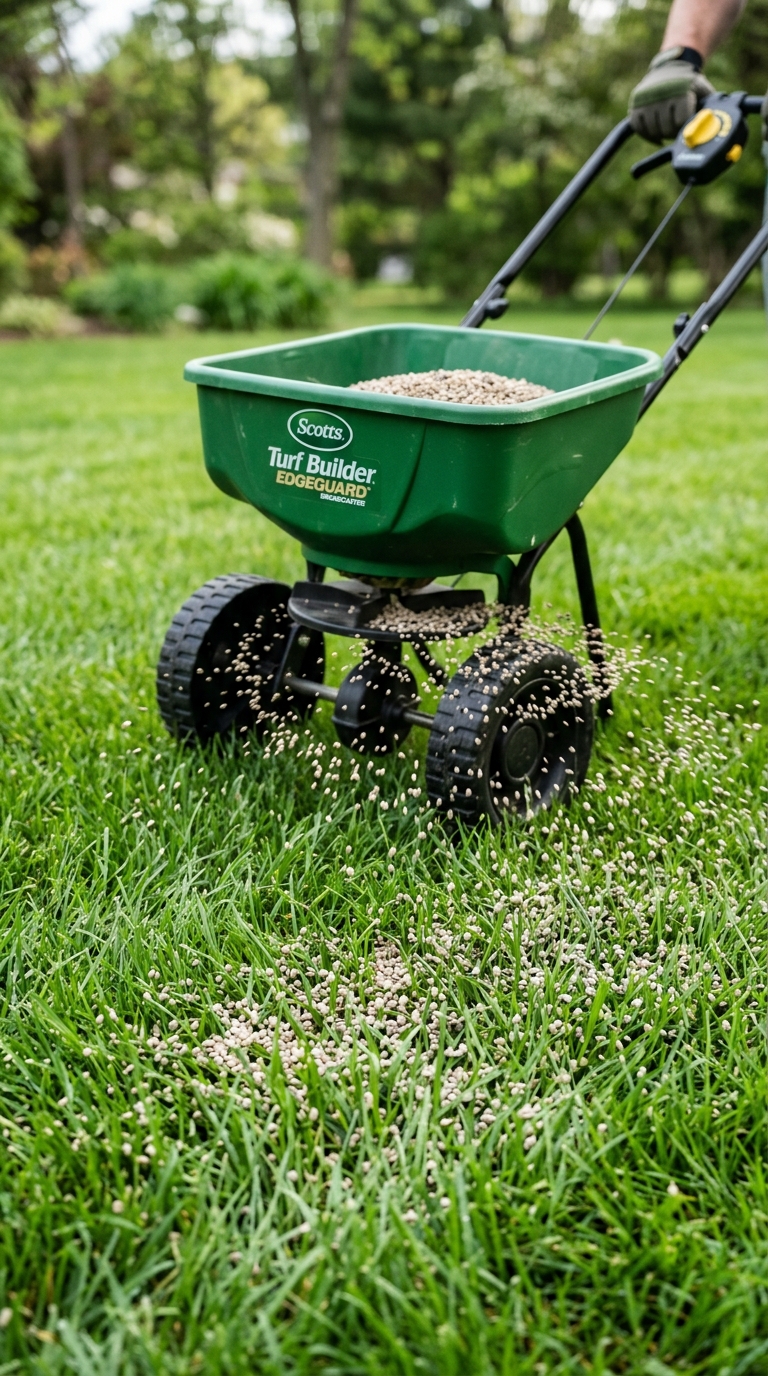
This is the big one. Applying too much fertilizer, or overlapping passes with a spreader, dumps way more nitrogen on certain patches than the grass can handle. I did this exact thing my first year with a new spreader — overlapped my rows a little too generously, and ended up with yellow tiger stripes across my front lawn. :/
2. Fertilizing In The Heat
Applying fertilizer during a hot, dry stretch is basically asking for trouble. Heat plus fertilizer salts pulls moisture from the grass faster than it can recover, which shows up as yellowing within a day or two.
3. Not Watering It In
Fertilizer needs water to move down into the soil where roots can actually use it. Skip the watering step, and the granules sit on top of the grass blades, burning them on contact.
4. Using The Wrong Type Or Ratio
Some fertilizers are simply too “hot” (high nitrogen concentration) for certain grass types or conditions. Quick-release fertilizers are more likely to cause burn than slow-release formulas, since they dump nutrients all at once instead of gradually.
How To Fix Yellow Grass After Fertilizing
Here’s where the relief comes in — this is fixable in most cases, and fast.
- Water it immediately and generously. Deep watering flushes excess salts and nitrogen away from the root zone. Do this daily for the first few days after noticing yellowing.
- Don’t apply more fertilizer to “fix” it. This is the mistake almost everyone makes. Adding more fertilizer to yellow grass is like giving someone more coffee to cure their jitters — it makes things worse, not better.
- Mow lightly, if at all, during recovery. Stressed grass needs less disruption, not more. Skip a mow or two while it bounces back.
- Be patient. Depending on severity, recovery can take anywhere from a few days to a couple weeks. Full-on brown, crispy patches may need reseeding, but general yellowing usually greens back up on its own.
How To Prevent It Next Time
- Follow the bag’s rate exactly — don’t eyeball it, and definitely don’t assume “more is better.”
- Water your lawn thoroughly right after applying fertilizer, ideally within 24 hours.
- Avoid fertilizing during heat waves or drought stress — wait for cooler, slightly overcast conditions.
- Consider a slow-release fertilizer, which feeds gradually and dramatically lowers your burn risk.
- Calibrate your spreader and walk in straight, non-overlapping passes — this alone fixed 90% of my striping issues.
Final Thoughts
Yellow grass after fertilizing feels like a disaster in the moment, but it’s rarely permanent. FYI, the fix is almost always water, patience, and resisting the urge to “correct” it with more product. Once you dial in the right amount, timing, and watering routine, this becomes one of those problems you only have to learn the hard way once. 🌱
Next time you fertilize, slow down, measure it out properly, and give your lawn a good drink afterward — future you (and your grass) will thank you.