There’s a certain kind of garden that stops you in your tracks — the kind with lush layered borders, beautiful containers, and a sense of intention in every corner. You’d assume it cost a small fortune to create. But I’ve spent years discovering that the most beautiful gardens are rarely the most expensive ones; they’re just the most thoughtfully designed.
The real secret is understanding a handful of designer principles that make any space look curated and considered. Repetition, contrast, layering, and a commitment to texture do more visual work than a truckload of rare plants. With some smart plant choices and a few well-placed structural elements, your garden can look like it belongs in a magazine spread — without the magazine budget.
1. Repeat One Bold Plant Throughout the Entire Border
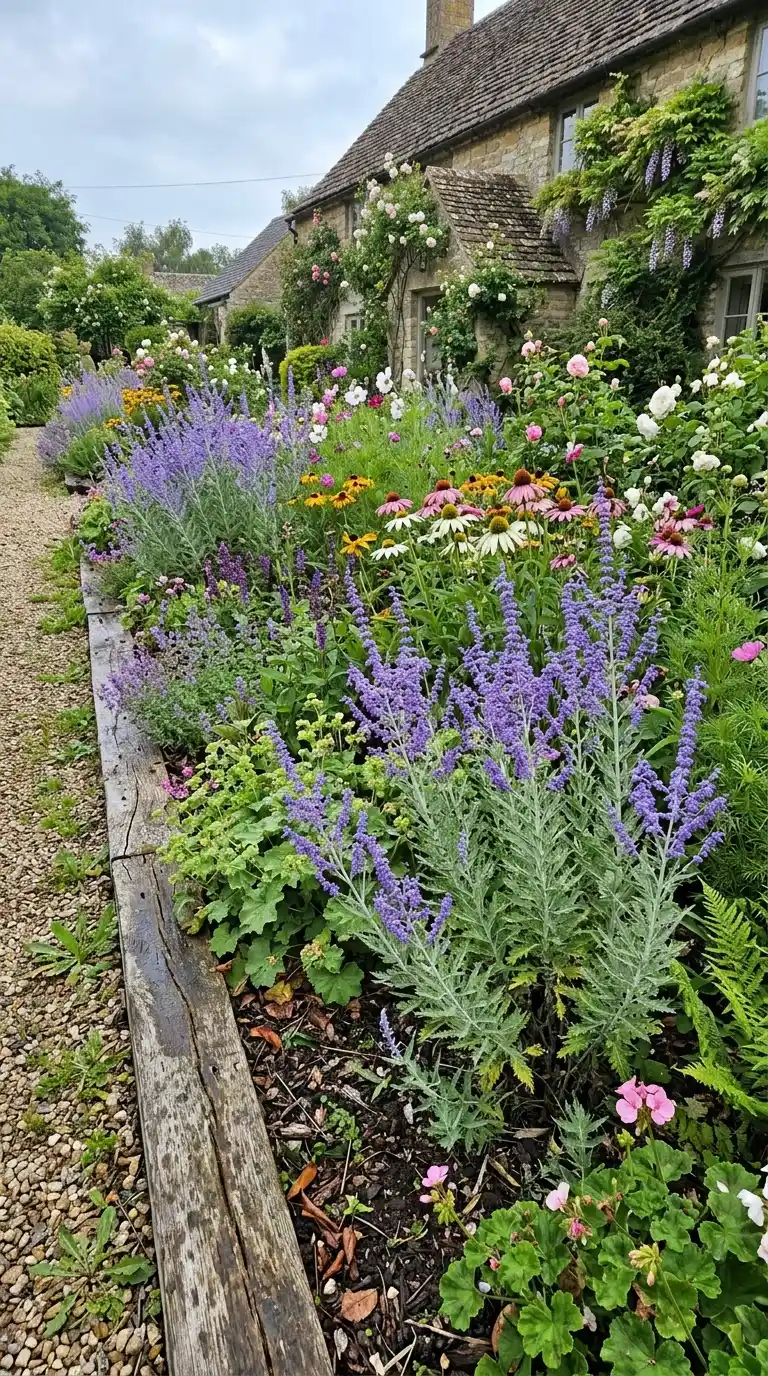
Repetition is the single most powerful design tool a gardener has, and it costs almost nothing extra to use. Professional garden designers call it “the rhythm of the border” — when the same plant appears at regular intervals, your eye travels smoothly through the space and the whole composition feels intentional. Choose something architectural and easy to split or grow from seed. Russian sage (Perovskia atriplicifolia), hardy in zones 4–9, is an ideal candidate: silvery stems, violet-blue spires, and a long bloom time from midsummer through frost.
Plant it every four to six feet along a mixed border and watch how it unifies everything around it. You can buy three plants, divide them each spring for two or three years, and end up with a dozen or more from your original investment. Pair it with a contrasting bold texture like the wide, ribbed leaves of Hosta ‘Sum and Substance’ in partially shaded spots, or the flat-topped golden blooms of Achillea ‘Moonshine’ in full sun. The repetition makes the border look designed rather than just planted.
2. Use Gravel as a Ground Cover to Instantly Elevate Beds
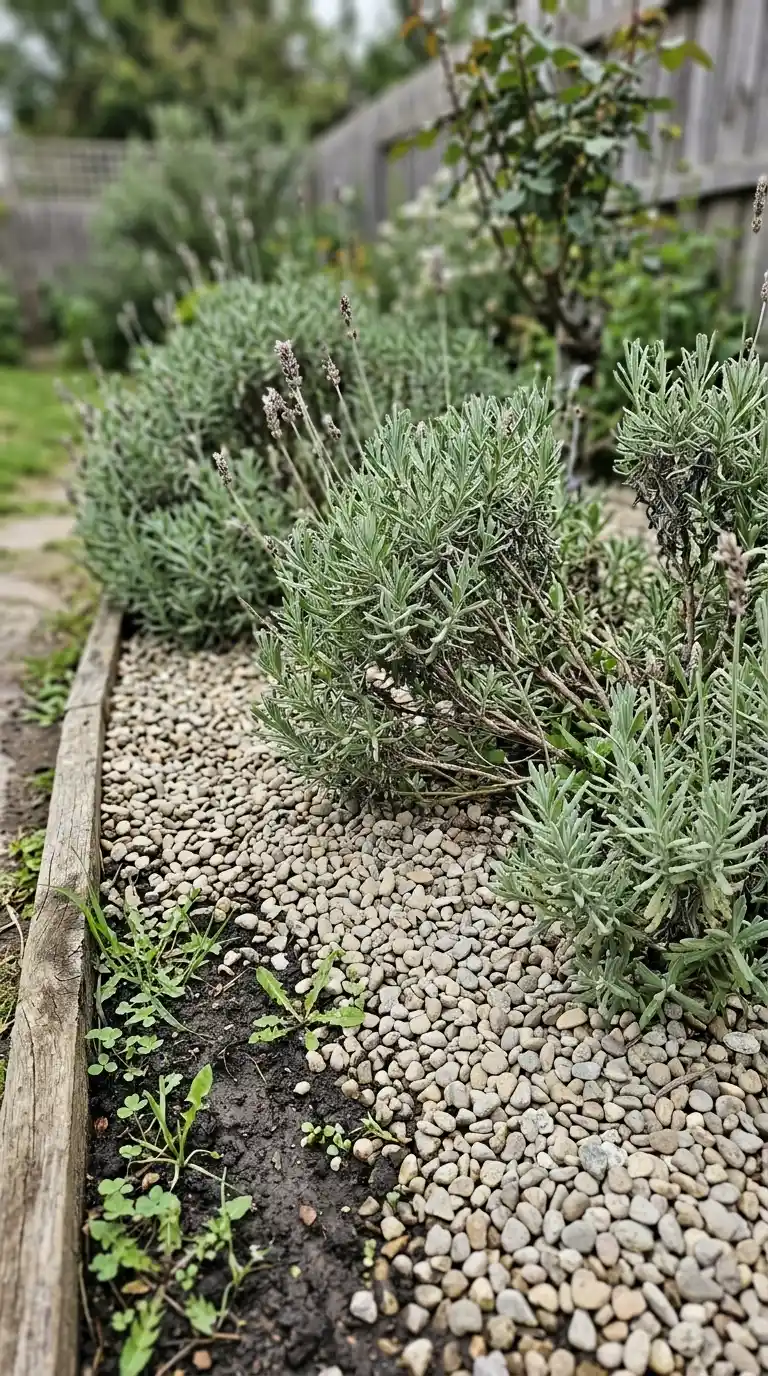
Bare soil is the enemy of the expensive-looking garden. Nothing ages a planting faster or makes it look more neglected than exposed dark earth between plants — and yet most gardeners leave it there season after season. A two-inch layer of pea gravel or fine crushed limestone around your plants does what mulch does for moisture retention and weed suppression, but with a far more refined visual result.
The warm, pale color of gravel reflects light upward into your plants, makes foliage colors pop, and gives the bed that clean, European kitchen-garden look that feels effortlessly chic. It’s also permanent, unlike bark mulch which breaks down and needs replacing every year. Use it around lavender (Lavandula angustifolia), thyme, and ornamental alliums for a Mediterranean-style border that genuinely looks like a professional designed it.
✨ Designer Tip: Lay a single layer of landscape fabric before adding gravel only in areas with no planned expansion — in mixed borders, skip the fabric and let the gravel sit directly on soil so you can still add plants and divide clumps freely without fighting through the fabric each time.
3. Plant in Odd Numbers and Loose Drifts, Not Straight Lines
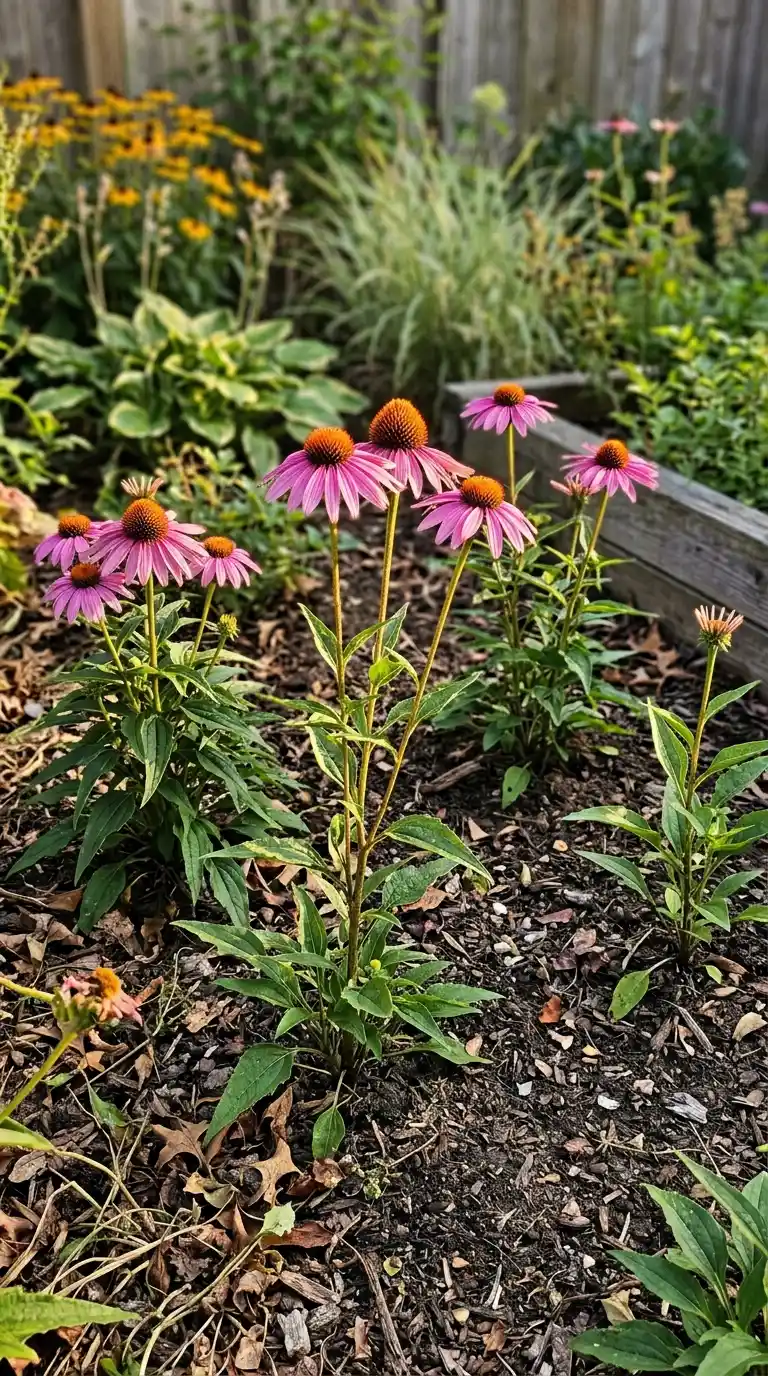
One of the fastest ways to make a garden look like it came from a big-box store is planting in perfectly even rows or symmetrical pairs. Professional designers always plant in threes, fives, and sevens, arranged in loose diagonal drifts rather than regimented lines. This mimics the way plants actually naturalize in the wild and creates a garden that feels abundant rather than stiff.
When you’re planting a grouping of Echinacea purpurea (purple coneflower) or Salvia nemorosa ‘Caradonna’, for example, stagger your five plants into a loose Z shape rather than a row or a tight cluster. The overlap of their canopies creates that lush, full look that makes visitors assume you’ve been gardening the space for years. This principle costs absolutely nothing — it’s pure technique, applied at planting time.
4. Add Height With Vertical Elements Made From Cheap Materials
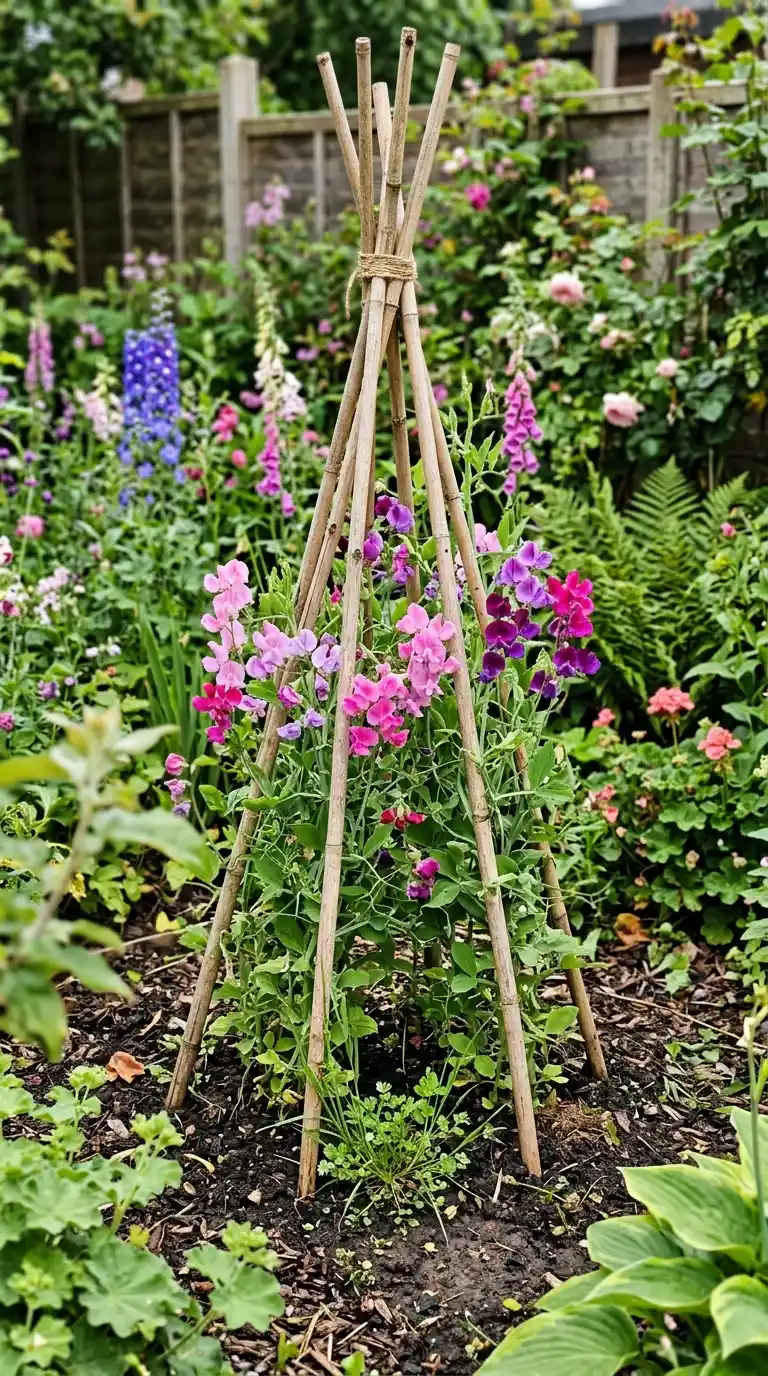
Every designer-worthy garden has vertical structure, but you don’t need expensive obelisks or custom ironwork to achieve it. Bamboo canes lashed together into a teepee shape, or cedar stakes forming a simple A-frame, give climbing plants the architecture they need to create that upward drama. Grow Cobaea scandens (cup-and-saucer vine) or sweet peas (Lathyrus odoratus) up them and you have a feature that looks like it was custom-made for the space.
Vertical Materials Worth Considering:
- Bamboo teepees (3–5 canes tied at the top) — incredibly sturdy and look naturally elegant
- Salvaged wooden ladders leaned against a fence and planted with Clematis ‘Jackmanii’ (zones 4–9)
- Lengths of galvanized rebar bent into arched supports for rambling roses
- Repurposed copper pipe frames — the patina weathers beautifully and looks expensive within a season
- Simple wooden trellis panels painted in Farrow & Ball-inspired deep greens or slate blues for a classic look
- Hazel or birch branch structures woven together — entirely free if you have access to natural pruning material
5. Use Containers in Threes With a Thriller-Filler-Spiller Formula
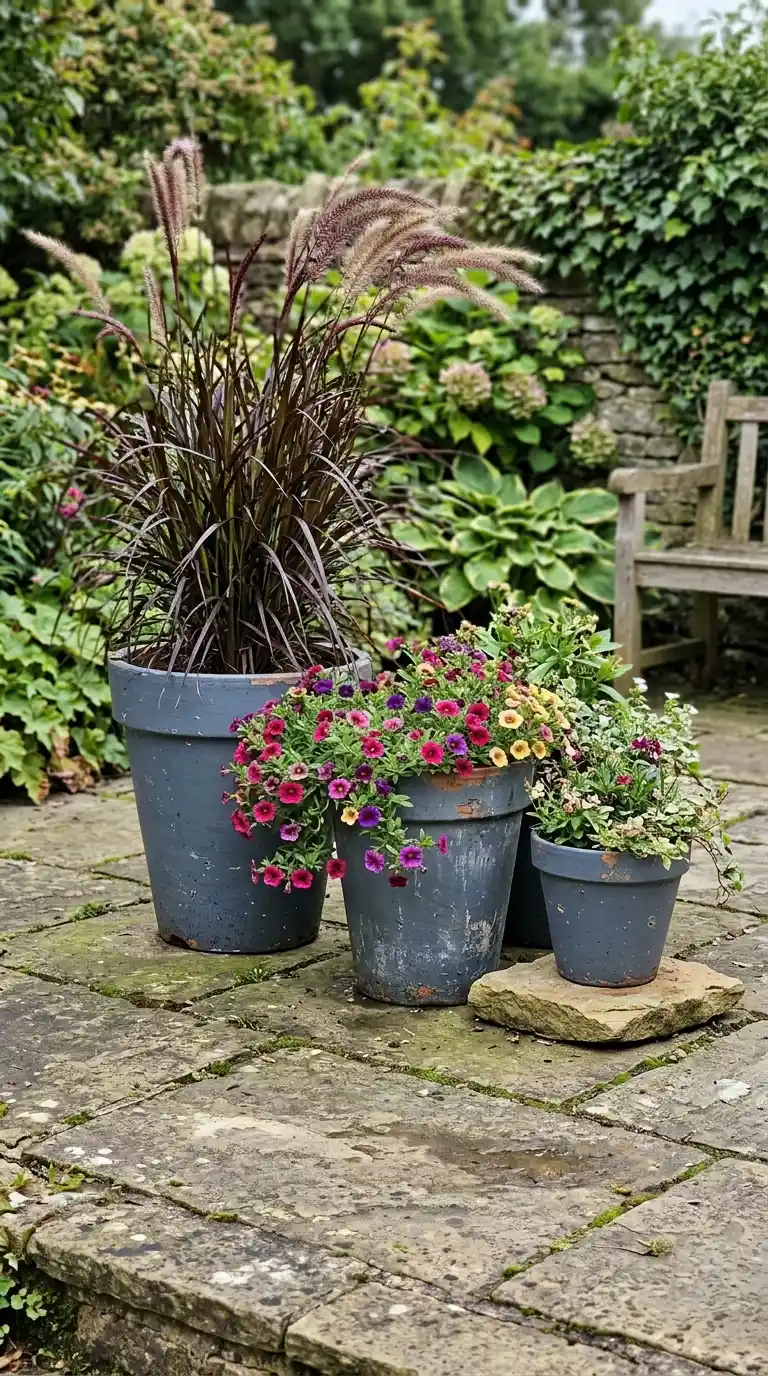
A single pot planted with one type of flower rarely looks intentional. But three containers of varying heights grouped together, each planted with a layered combination of plants, creates an arrangement that genuinely looks like it was designed. The thriller-filler-spiller method — a tall focal plant, medium-sized fillers, and trailing spillers — is used in every high-end hotel garden and public planting you’ve ever admired.
For a combination that works beautifully from early summer through frost: use Canna ‘Tropicanna’ or a tall ornamental grass like Pennisetum setaceum ‘Rubrum’ as your thriller, Calibrachoa or Lobelia erinus as your spiller, and a bushy Diascia or trailing Verbena as your filler. Group your three pots at different heights by placing the smallest on an upturned terracotta pot or a flat stone — this small detail adds the layered dimension that elevates the entire display.
✨ Designer Tip: Paint all your mismatched containers the same color — a deep slate, charcoal, or terracotta — before planting them. Instant cohesion, zero cost beyond a small tin of exterior paint.
6. Edge Your Lawn and Beds With Sharp, Clean Lines
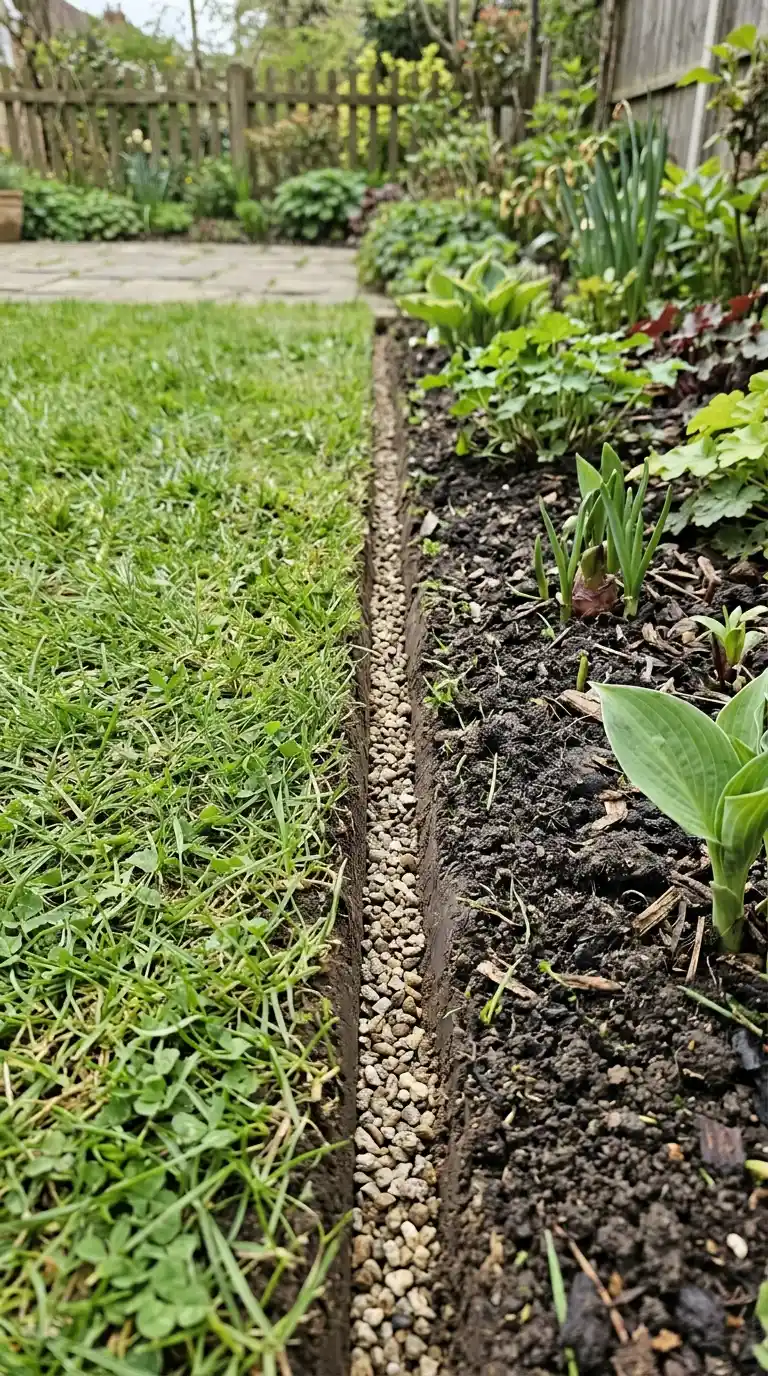
No single maintenance task transforms a garden’s perceived value more than a freshly cut lawn edge. A half-moon edging tool or long-handled edger creates a crisp vertical wall between lawn and bed that makes the entire garden look cared for and considered — even if the border behind it is still filling in. Professional gardeners edge religiously, and it shows.
Clean edges signal intention. They tell visitors that this garden is looked after, that someone made decisions here. Pair sharp edging with a thin gravel border between the lawn and the bed (just four to six inches wide) and you’ve added what looks like a professional hardscaping detail for the price of a bag of gravel. Repeat this detail along every border in the garden and the cumulative effect is remarkable.
7. Choose Plants With Interesting Foliage Over Flashy Blooms
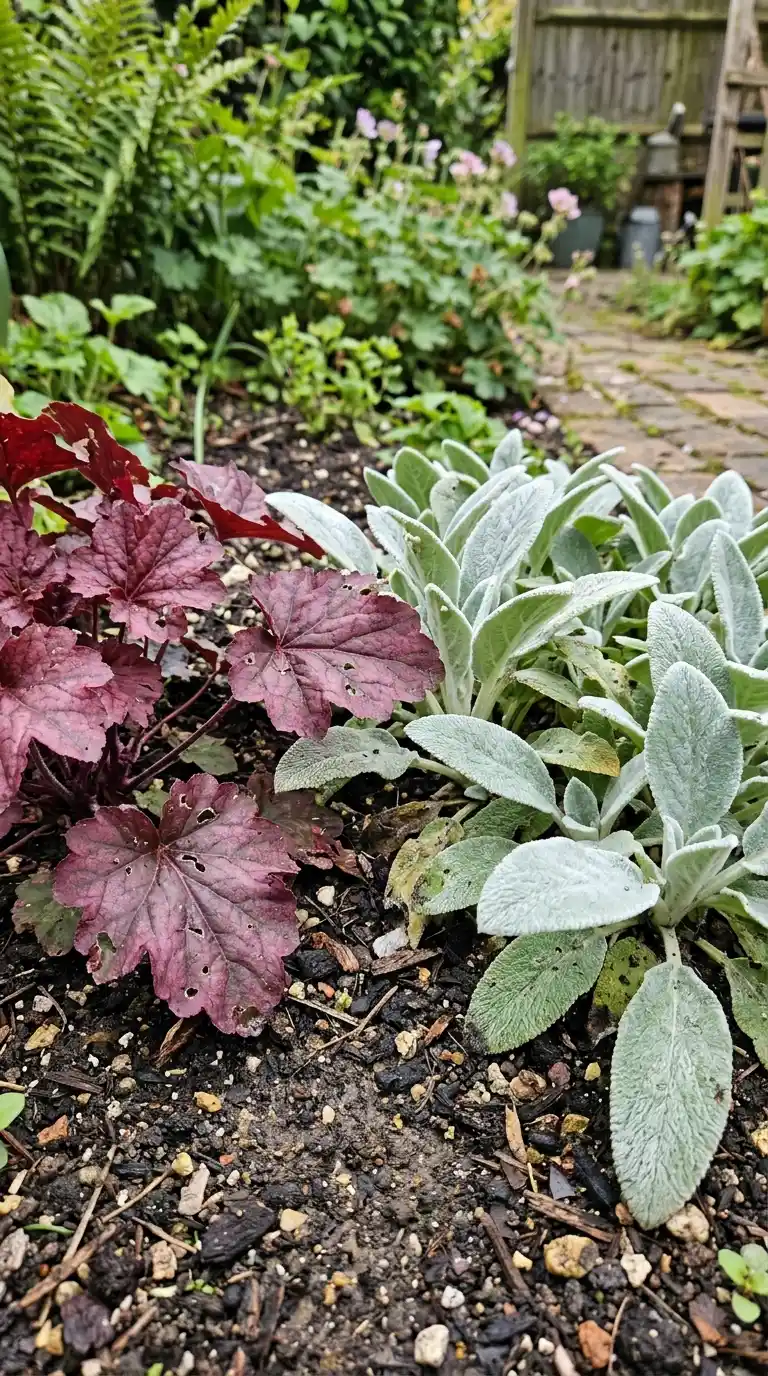
Flowers last for weeks; foliage lasts for the entire season. The gardens that look expensive all year — not just in peak bloom — are the ones built on great foliage combinations. Silvery Stachys byzantina (lamb’s ear) next to deep burgundy Heuchera ‘Palace Purple’, backed by the bold chartreuse paddles of Hosta ‘August Moon’: that’s a combination with season-long impact that costs less than a single statement shrub.
Foliage Plants Worth Building Around:
- Heuchera varieties (zones 4–9) — an extraordinary range of colors from caramel to deep plum, shade tolerant
- Stachys byzantina — silver-felted leaves that glow in low light and contrast beautifully with purples and pinks
- Artemisia ‘Powis Castle’ — feathery silver-grey mounding shrub, zones 6–9, deer resistant
- Hakonechloa macra ‘Aureola’ (Japanese forest grass) — golden variegated foliage, graceful arching habit, zones 5–9
- Cercis canadensis ‘Forest Pansy’ — redbud tree with stunning heart-shaped burgundy leaves, zones 5–9
- Euphorbia characias subsp. wulfenii — architectural lime-green bracts from late winter through early summer
8. Create a Simple Focal Point at the End of Every Sightline
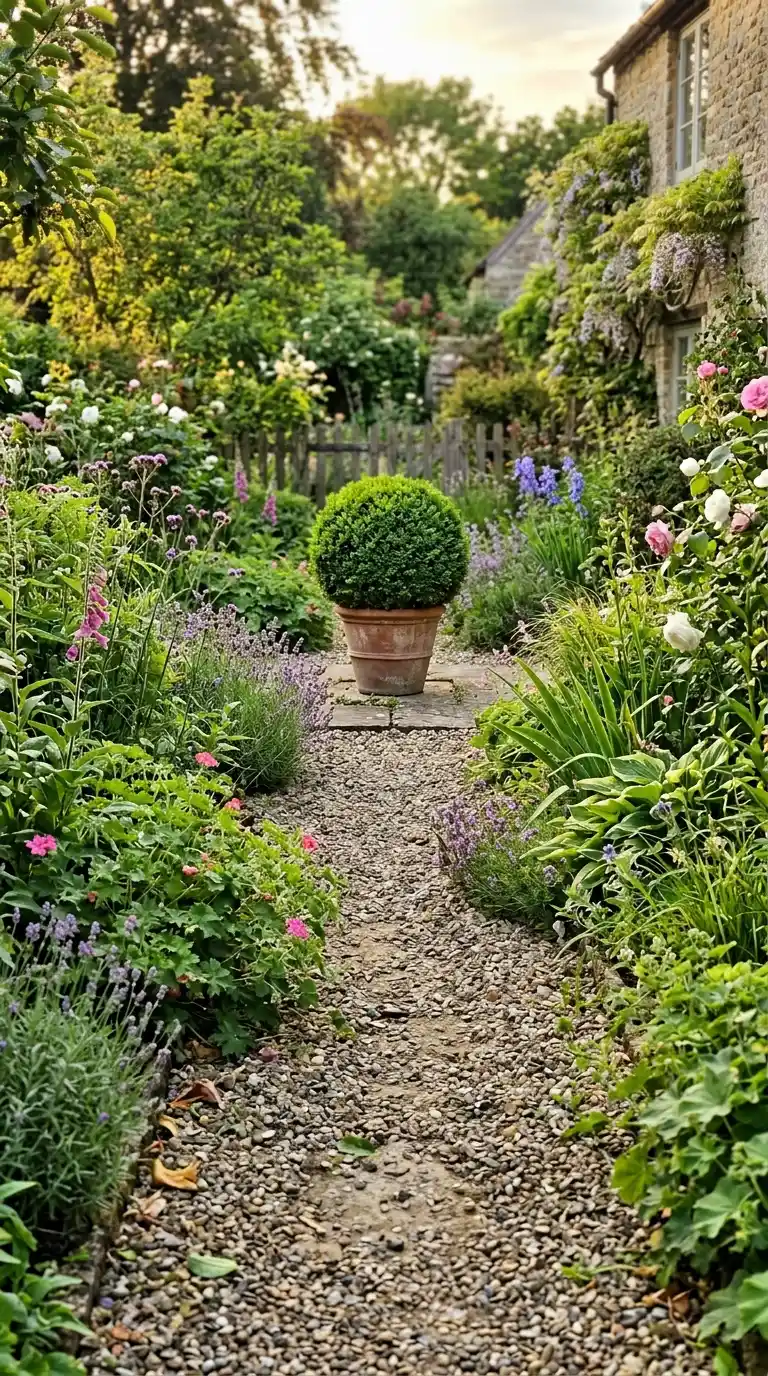
Every expensive-looking garden gives your eye somewhere to travel and somewhere to land. A sightline without a destination feels unfinished. It doesn’t need to be a fountain or a sculpture — a single large container, a birdbath, a simple obelisk draped with a vine, or even a beautifully shaped specimen shrub positioned at the far end of a path creates that sense of arrival.
Plant a ball-shaped box (Buxus sempervirens) or a clipped Ilex crenata standard at the end of a gravel path, and you have instant structure. If box blight is a concern in your area — and in many parts of the UK and Europe it is — substitute with Ilex crenata ‘Dark Green’ or Pittosporum tobira ‘Nanum’, which tolerate clipping beautifully and hold their shape all year.
9. Layer Planting Heights From Front to Back
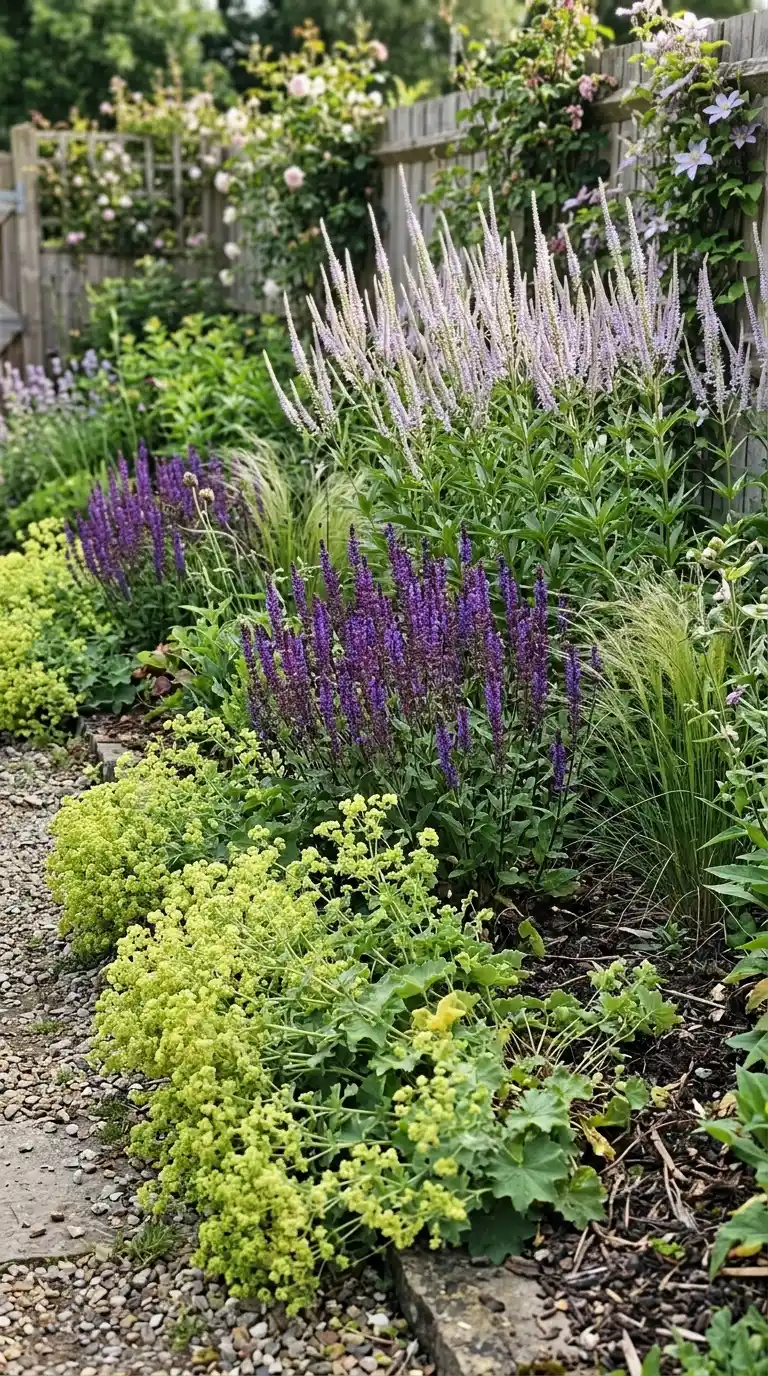
The layered border — low plants at the front, medium in the middle, tall at the back — is a foundational design principle for a reason: it shows every plant to its best advantage and creates that lush, full sense of depth that makes a garden feel designed rather than planted at random. Most gardeners know the principle but rush past it at the garden center. Slow down and plan your heights before you buy.
A classic layered combination for a sunny border in zones 5–8: Alchemilla mollis (lady’s mantle) at the front edge with its frothy lime-green flowers and scalloped dew-catching leaves; Salvia nemorosa ‘Mainacht’ in the mid-border with its deep violet spikes; and Veronicastrum virginicum ‘Fascination’ at the back, reaching four to five feet with elegant pale lilac wands from midsummer onward. These three plants together cover the whole season and layer perfectly without fuss.
Conclusion
The most beautiful gardens I’ve ever seen weren’t the most expensive — they were the most thoughtful. A handful of plants repeated with confidence, clean edges, deliberate focal points, and a commitment to foliage texture will do more for your garden than doubling your plant budget ever could. These are the principles that garden designers charge handsomely to apply, and every single one of them is available to you right now.
Start with one idea this weekend. Edge a single bed, group three containers together, or pick one plant to repeat through an existing border. Small, intentional changes compound beautifully in a garden — by next season, you’ll have a space that genuinely surprises people, and the best surprise will be knowing what it actually cost you to create it. ✨