Delphiniums have earned their title as Flower of the Year, and if you’ve ever stood in front of a towering cobalt-blue spike in full bloom, you already understand why. These majestic perennials (Delphinium elatum and its hybrids) rise to extraordinary heights of four to six feet, commanding attention in any border, cottage garden, or cutting garden. They carry a certain old-world romance — the kind of flower that makes a garden feel intentional and deeply beautiful. Once you understand what they need, growing them becomes one of the most rewarding things you can do in your yard.
The Perennial Plant Association naming delphiniums as a standout variety has brought them back into the spotlight for good reason. They thrive in Zones 3–7, bloom in early to midsummer, and come in a color range that few other flowers can match — from pale sky blue and white to deep violet, lavender, and rich purple. Yes, they have a reputation for being a little demanding, but with the right preparation and care, they reward you generously. This guide walks you through everything, from soil prep to spectacular plant combinations.
1. Understanding Delphinium Types Before You Plant
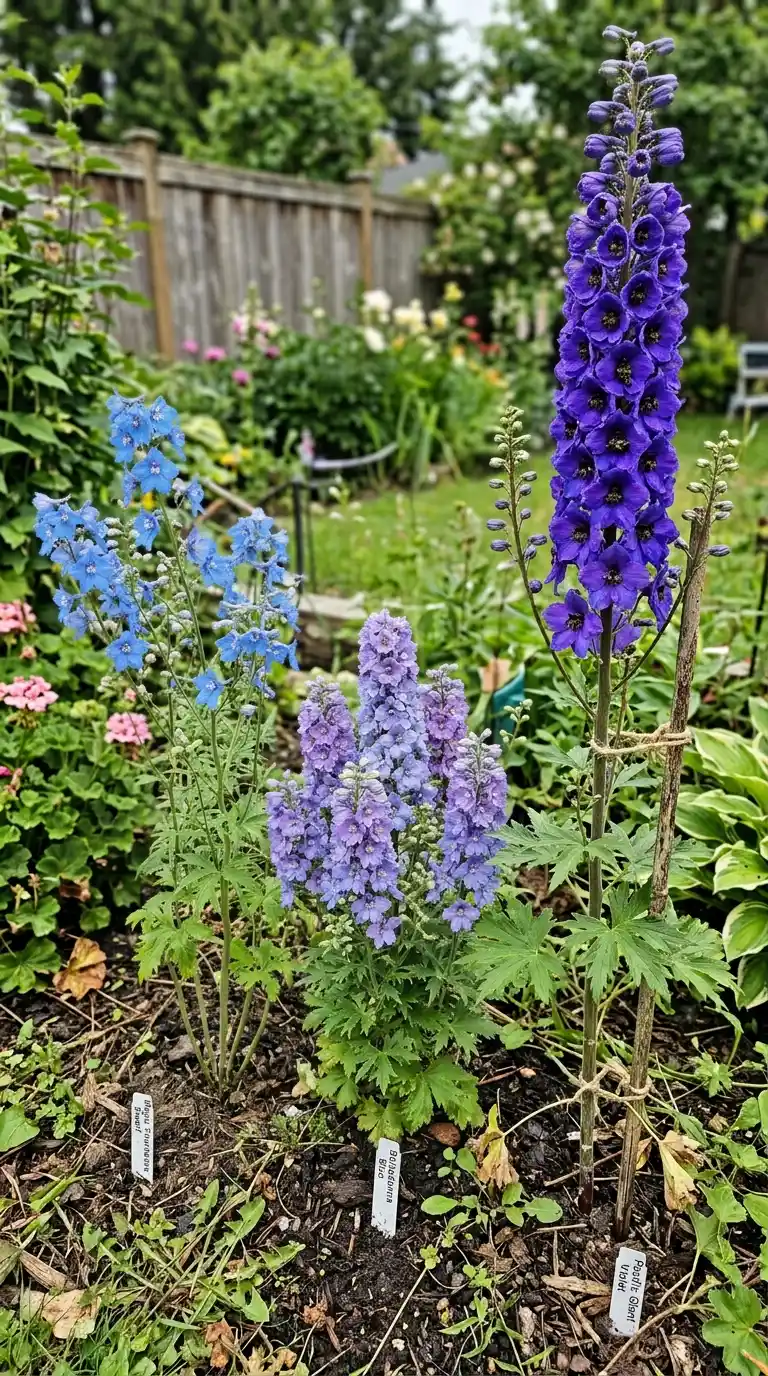
Delphiniums come in several distinct groups, and knowing which one suits your garden makes all the difference. The Elatum Group (Delphinium elatum hybrids) are the tall, stately types — think Pacific Giants and the Blackmore & Langdon series — reaching up to six feet and producing densely packed flower spikes. The Belladonna Group is more branched and airy, topping out around three to four feet, and tends to be slightly more heat-tolerant. Then there are the dwarf types like ‘Magic Fountains’, which stay around two and a half feet and work beautifully in smaller gardens or containers.
Pacific Giant hybrids are among the most widely grown, offering the classic tall spike in shades like ‘Blue Bird’ (mid-blue with a white bee), ‘Galahad’ (pure white), and ‘Black Knight’ (deep violet with a dark center). The Belladonna types — ‘Bellamosum’ in deep blue and ‘Casa Blanca’ in white — are worth growing for their graceful, open habit. If you’re new to delphiniums, starting with ‘Magic Fountains’ or a reliable Belladonna variety gives you a more forgiving first experience before committing to the tall giants.
2. Soil Preparation: The Foundation of Delphinium Success
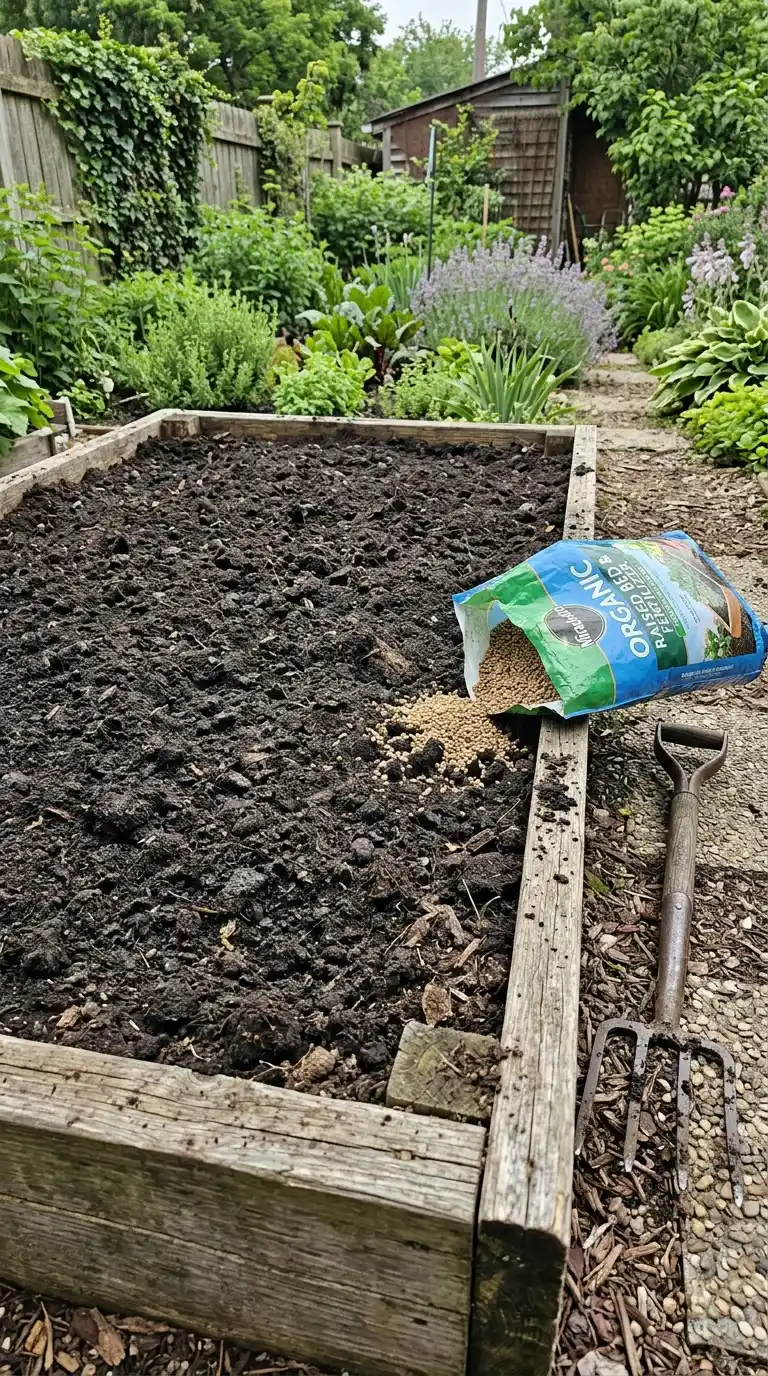
Getting the soil right is the single most important thing you can do before planting delphiniums. They demand rich, fertile, well-draining soil with a slightly alkaline to neutral pH of 6.5 to 7.5. Heavy clay soils that hold moisture around the crown will cause crown rot quickly, so amending with grit, perlite, or coarse sand alongside generous organic matter is non-negotiable. Work in at least two to three inches of well-rotted compost or aged manure before planting, digging it in to a depth of twelve inches.
✨ Designer Tip: Before backfilling the planting hole, scratch in a handful of slow-release granular fertilizer with a higher phosphorus content to encourage strong root establishment in the first season. Delphiniums are heavy feeders, and building a nutrient-rich foundation means you’ll see stronger, taller spikes from the very first bloom. Return every spring with a top-dress of balanced granular fertilizer and a thick layer of compost around the base, keeping the mulch a few inches away from the crown itself to prevent moisture buildup and rot.
3. Sunlight, Spacing, and Siting Your Delphiniums
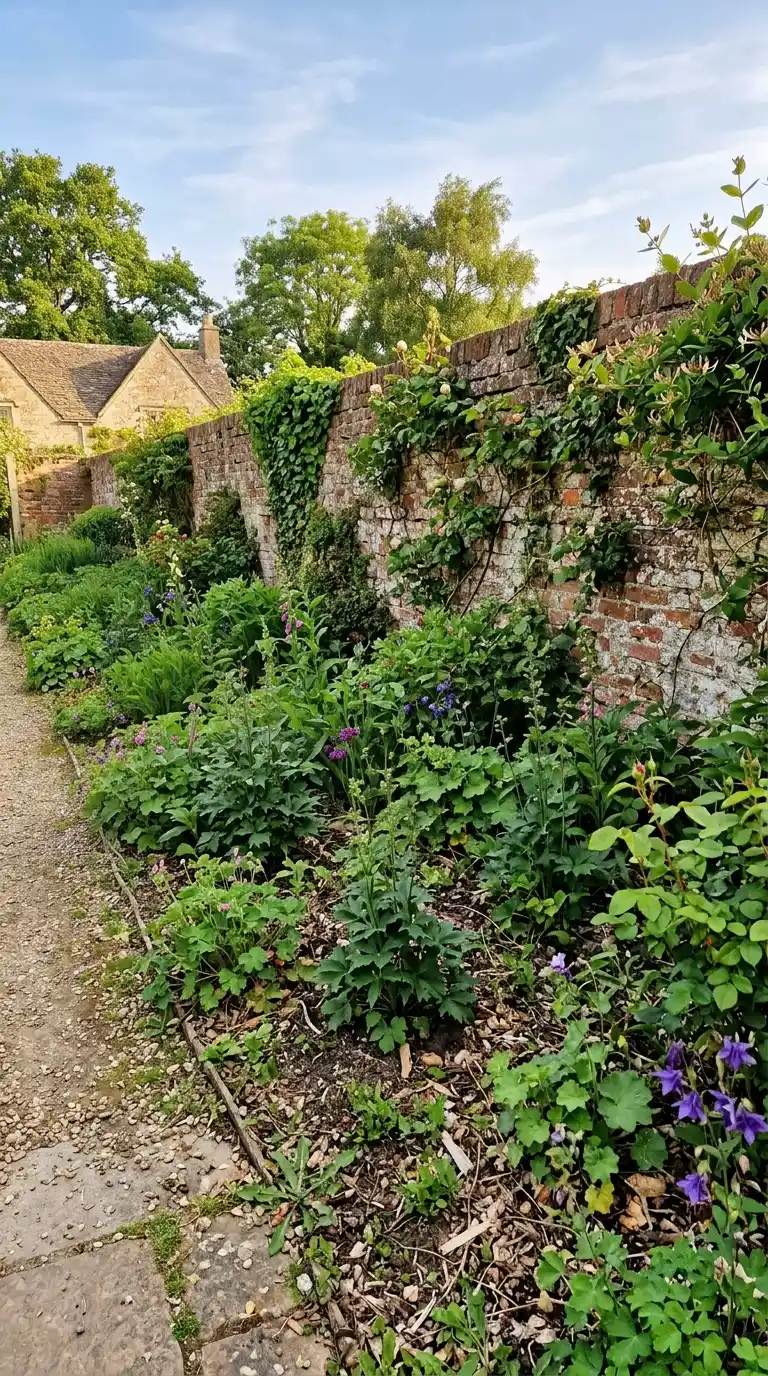
Delphiniums want full sun — at least six hours of direct light daily — but they also appreciate protection from intense afternoon heat, particularly in warmer climates at the edge of their hardiness range. A spot that receives morning sun and light afternoon shade in Zones 6 and 7 often produces taller, longer-lasting bloom spikes with less stress on the plant. In Zones 3–5, full sun all day is ideal because the cooler temperatures naturally moderate what would otherwise be a scorching environment. Siting them along a south or east-facing wall also offers the windbreak support these tall plants genuinely need.
Space Elatum Group varieties at least eighteen to twenty-four inches apart to allow for adequate airflow — poor circulation is a direct invitation to powdery mildew, one of delphinium’s most common problems. Dwarf types like ‘Magic Fountains’ can be spaced twelve to fifteen inches apart. Always plant in groups of three or five for visual impact rather than single specimens, which can look isolated in a border. The grouping also provides some mutual wind support among neighboring stems before staking becomes necessary.
4. Staking Strategies That Actually Work
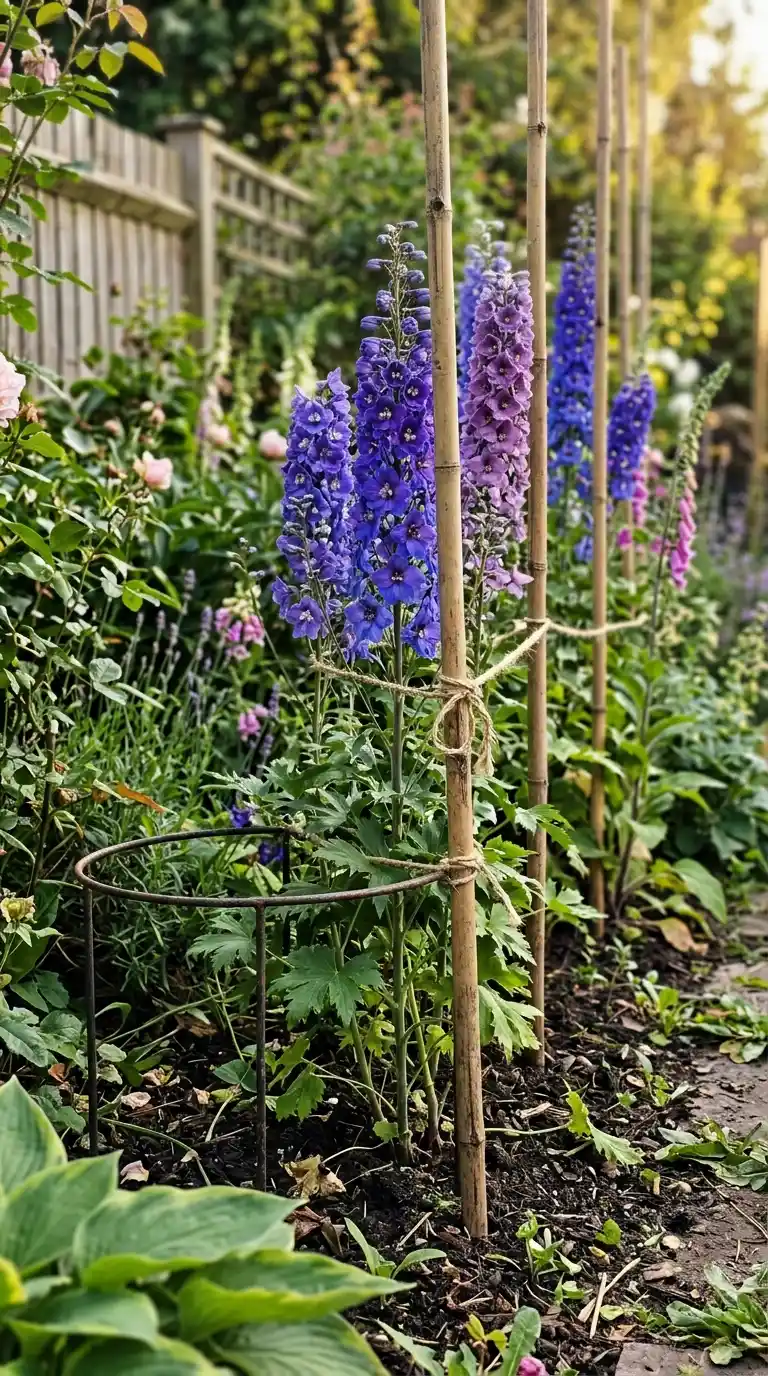
Tall delphiniums will fall without support — this is simply the reality of growing a five-foot flower in wind and rain, and accepting it early saves a lot of heartbreak. Begin staking when plants reach about twelve inches tall, well before the flower spike emerges. Individual bamboo canes tied loosely with soft jute twine work beautifully for single stems, while a grow-through support hoop or cage placed over the emerging clump in early spring is even better because the plant grows up through it naturally. Never tie the stem tightly — always leave room for the stem to sway slightly without chafing.
What to Have Ready Before Bloom Season:
- Bamboo canes at least six feet tall for Elatum Group varieties
- Soft jute or natural fiber twine — never wire or plastic ties that cut into stems
- Grow-through hoops or peony rings for clump support in mixed borders
- Extra stakes for secondary flower spikes that emerge after first bloom
- A rubber mallet for driving canes firmly into dense or dry soil
- Twist ties as a backup for emergency staking during storm season
5. Watering and Feeding Through the Growing Season
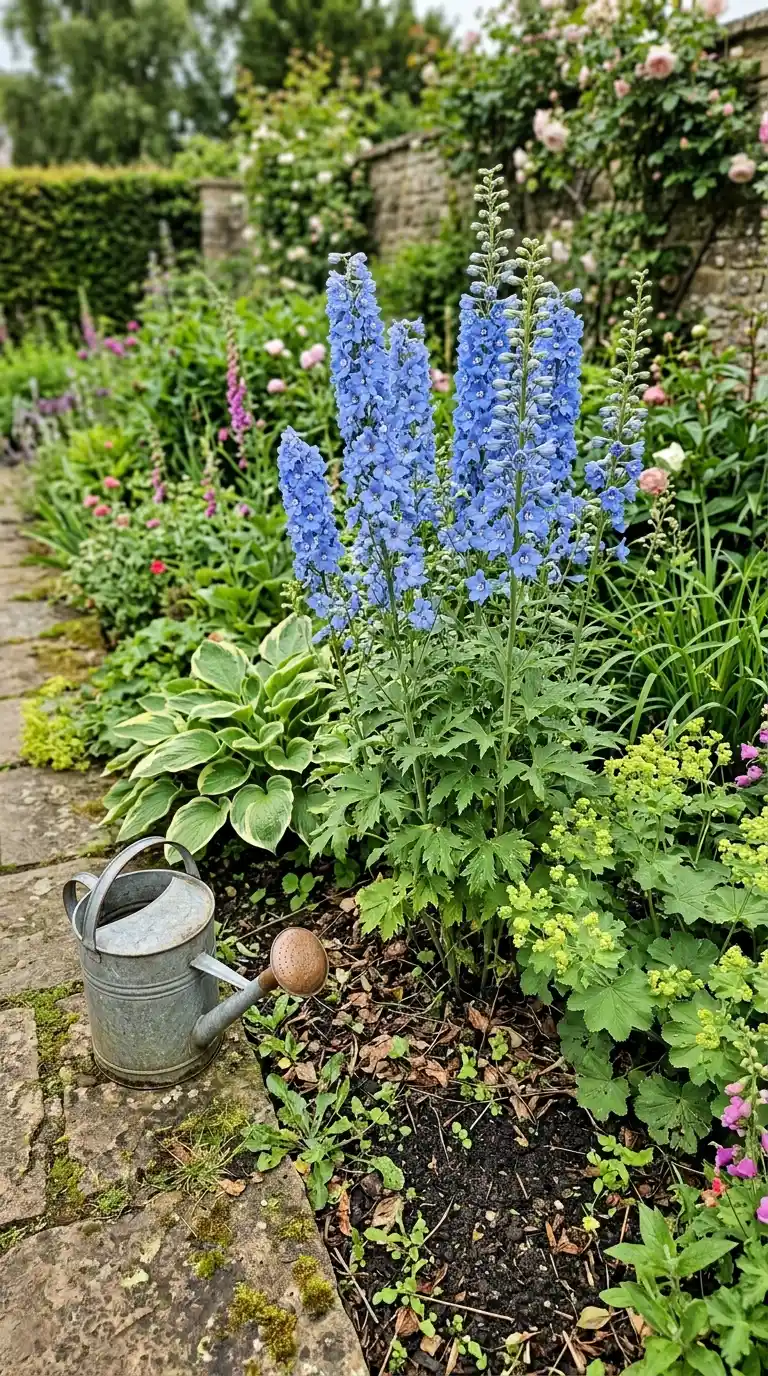
Delphiniums are thirsty plants, particularly during their rapid spring growth phase and as flower spikes develop. Water deeply and consistently, aiming for about one inch per week either from rainfall or irrigation, always at the base of the plant rather than overhead. Wet foliage left sitting overnight is a fast track to mildew and fungal issues, so morning watering that allows leaves to dry through the day is ideal. In dry summers, delphiniums may need watering every three to four days — check the soil a few inches down and water before it dries completely.
Feed with a balanced liquid fertilizer such as a 10-10-10 or tomato-type feed (higher potassium) every two to three weeks from early spring through bud formation. Once spikes are fully open, you can ease back on feeding. After the first flush of bloom and deadheading, give plants a final feed to encourage the second flush that many Elatum varieties will push out in late summer or early fall. Avoid high-nitrogen fertilizers mid-season — lush, soft foliage is more vulnerable to aphids and less structurally strong for supporting the spike.
6. Deadheading and Getting a Second Bloom
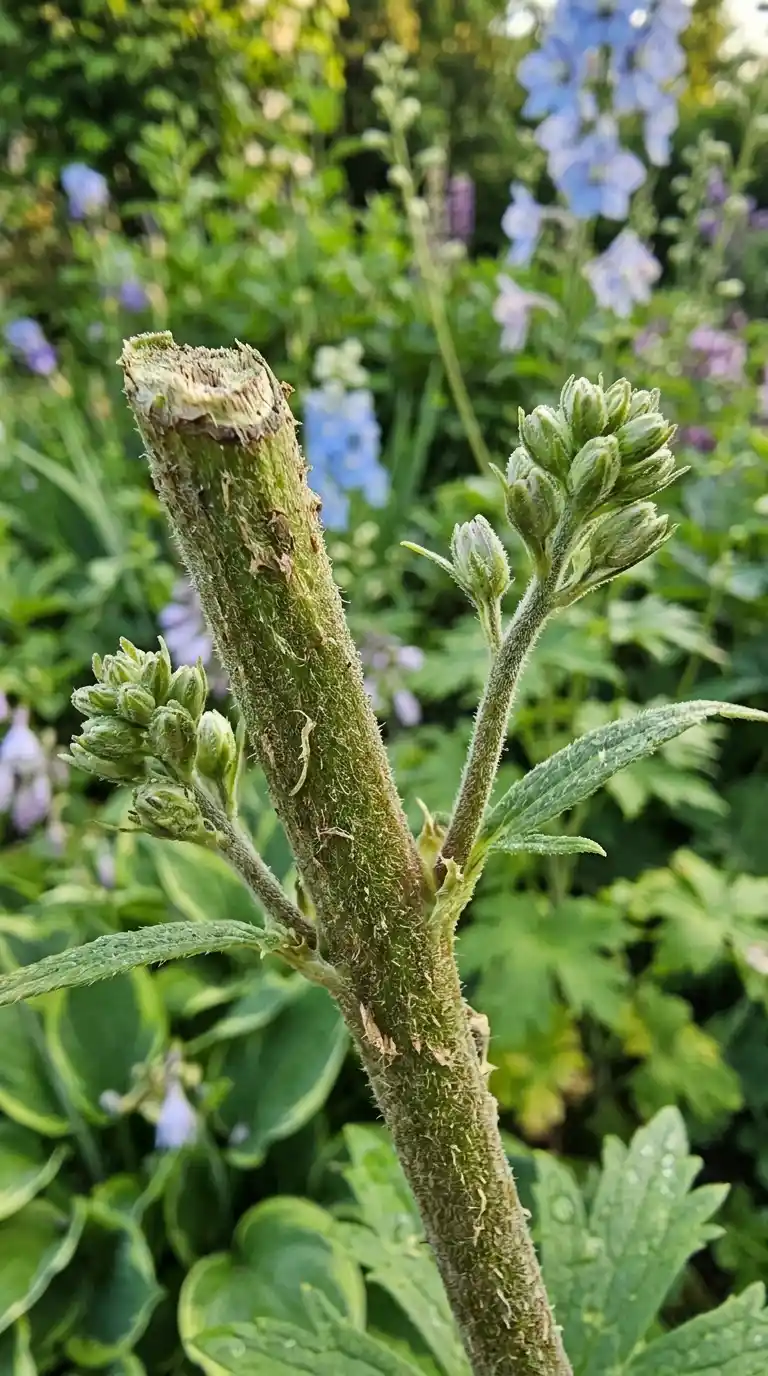
One of the most satisfying things about growing delphiniums is that deadheading correctly can reward you with a second round of flowers later in the season. Once the main spike has finished blooming and the individual florets have dropped, cut the spent spike back to just above the first set of lateral sideshoots. Those sideshoots will develop their own smaller but still beautiful spikes, typically in late summer. When those have finished as well, cut the entire stem down to the base rosette of foliage and give the plant a generous feed and deep watering.
✨ Designer Tip: After the second bloom has finished in late summer, resist the urge to cut delphiniums all the way to the ground immediately. Leave the basal foliage in place through the autumn months — it continues photosynthesizing and feeding energy back into the crown for next year’s growth. Cut back to within a few inches of the ground only once the foliage has browned naturally in late fall, and mark the crowns clearly so you don’t accidentally dig into them during spring border prep.
7. Designing With Delphiniums: Color and Companion Planting
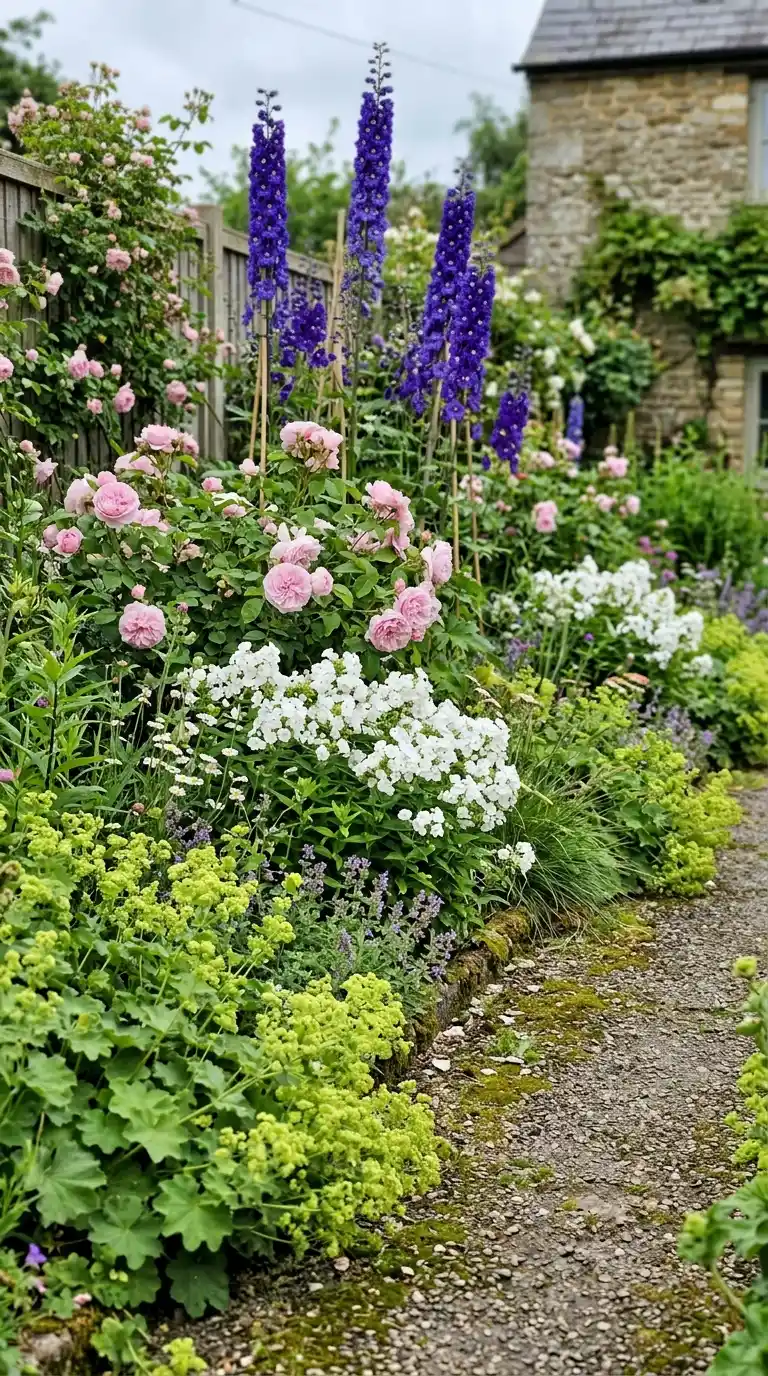
Delphiniums are one of the few true blues in the garden, making them invaluable in color-focused border design. In a classic cool-toned border, pair deep violet varieties like ‘Black Knight’ or ‘King Arthur’ with Rosa ‘Gertrude Jekyll’ (soft pink), Achillea millefolium ‘Cerise Queen’, and Phlox paniculata ‘David’ in white for a romantic, layered composition. The height contrast between the towering delphinium spikes and the mounded phlox creates natural rhythm and flow. White delphiniums like ‘Galahad’ are equally versatile, softening hot-colored schemes alongside Hemerocallis (daylilies) in orange and yellow.
For a traditional cottage garden feel, combine mid-blue Belladonna delphiniums with Alchemilla mollis spilling at the front edge, Geranium ‘Rozanne’ threading through the middle ground, and Digitalis purpurea (foxglove) as a vertical companion of similar scale. The alchemilla’s chartreuse froth creates a gentle color bridge between the cool blue spikes and any warm tones nearby. Repetition is key — planting the same delphinium variety in three or more groupings throughout a border ties the whole design together and gives the eye a place to rest and return.
8. Managing Pests and Common Problems
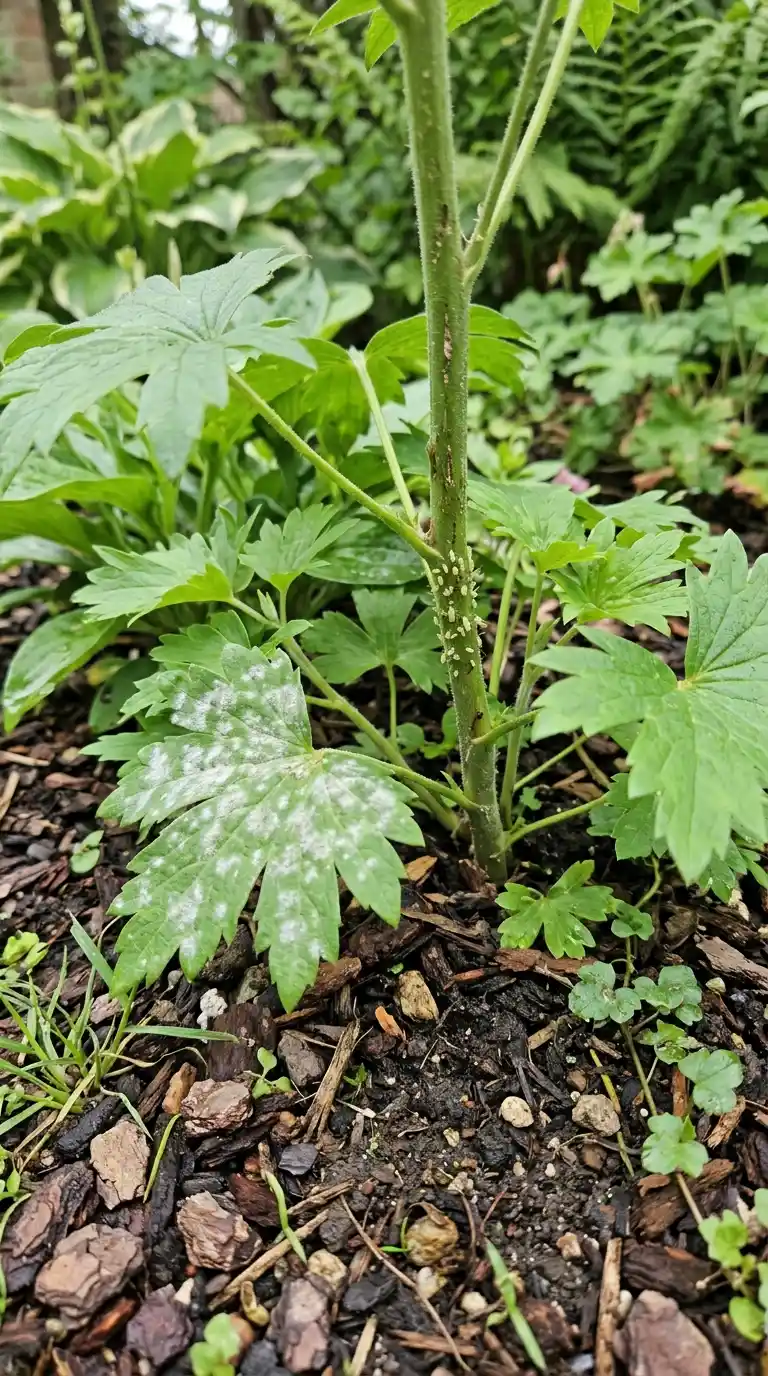
Delphiniums attract aphids reliably, and the tender new growth at the base of emerging spikes is a particular target. Check plants regularly from early spring, and a strong jet of water from a hose is often enough to knock aphid colonies off without resorting to sprays. Slugs and snails are significant pests especially in damp springs — they will shred emerging shoots overnight. Surround crowns with horticultural grit or use copper tape around pots, and consider iron phosphate pellets as a wildlife-safe control method. Powdery mildew appears in hot, dry conditions with poor airflow and is best managed preventively through proper spacing and avoiding overhead watering.
Common Delphinium Problems and What Actually Helps:
- Yellowing lower leaves — often a sign of overwatering or waterlogged soil; improve drainage and reduce watering frequency
- Wilting despite adequate moisture — check for crown rot at the soil line; remove affected tissue and treat with a copper-based fungicide
- Hollow or broken stems — caused by wind damage; stake earlier and more securely next season
- No second bloom — plants were not fed adequately after deadheading; apply a potassium-rich feed immediately after cutting back
- Sparse or short spikes — often caused by overcrowding or insufficient sun; divide clumps every three years and move to a sunnier spot
- Blackened stem bases — likely a symptom of Sclerotinia or bacterial crown rot; remove and destroy affected plants, do not compost
9. Overwintering and Long-Term Crown Care
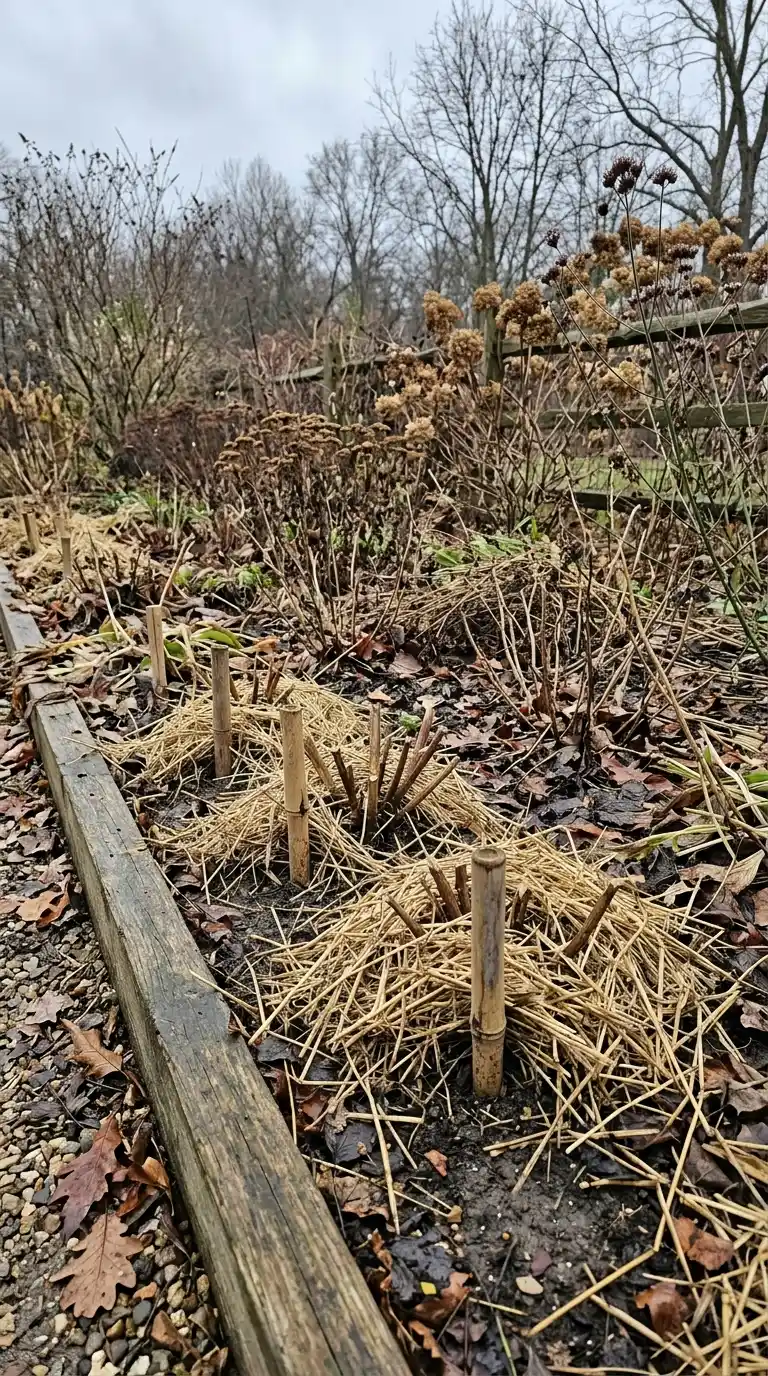
In Zones 3–5, delphiniums are reliably cold-hardy and need only minimal winter protection once established. After cutting back in late fall, apply a three-inch layer of dry mulch — straw or shredded bark works well — over the crown to prevent frost heaving and protect the dormant growth buds. Remove the mulch gradually in early spring as temperatures rise so the crown doesn’t sit in trapped moisture. In Zones 6–7, where winter alternates between freezing and thawing, this mulch layer is actually more critical because it’s the repeated freeze-thaw cycle rather than sustained cold that damages crowns.
Divide established delphinium clumps every three to four years in early spring as new growth emerges. Lift the clump carefully, divide into sections each containing several healthy growing eyes, and replant immediately at the same soil depth. Division refreshes the vigor of older clumps that begin to produce fewer and smaller spikes over time, and it’s also a free way to expand your planting across the garden. Newly divided plants may produce smaller spikes in their first season, but by the second year they typically recover fully and bloom with renewed energy.
Conclusion
Delphiniums reward patience, good soil, and a willingness to stake and feed generously — and what they give back is genuinely hard to match in any other garden plant. A well-grown Elatum hybrid in full bloom is one of those garden moments you remember across seasons. Whether you’re designing a formal English-style border, a relaxed cottage garden, or simply want to grow exceptional cut flowers, these plants deserve a dedicated spot in your plans this year.
Start with the variety that suits your climate and space, prepare the soil before anything else, and commit to the staking routine early. The rest — the feeding, the deadheading, the watching of a second flush emerge in August — becomes a rhythm you’ll look forward to every year. Delphiniums have earned their Flower of the Year recognition not just for their beauty, but for what they bring to a garden that no other plant quite replaces. 🌿