Scandinavian bedroom design has captivated homeowners worldwide with its rare ability to feel both minimal and deeply cozy at the same time. Rooted in the Nordic concept of hygge, the Danish art of creating warmth and comfort, this style transforms a bedroom into a genuinely restful retreat through simplicity rather than excess. Clean lines, natural materials, and a carefully considered palette work together to create a space where rest comes easily.
This list covers eleven ideas for bringing Scandinavian style into a bedroom, from furniture choices to lighting, textiles, and decor. Each idea focuses on the style’s defining principles of function, warmth, and quiet beauty rather than decorative complexity. Whether you’re redesigning a full room or adding a few key pieces, these ideas adapt easily to almost any space and budget. Let’s explore how to build a bedroom that feels serene, grounded, and genuinely beautiful.
1. Clean-Lined Wood Bed Frame
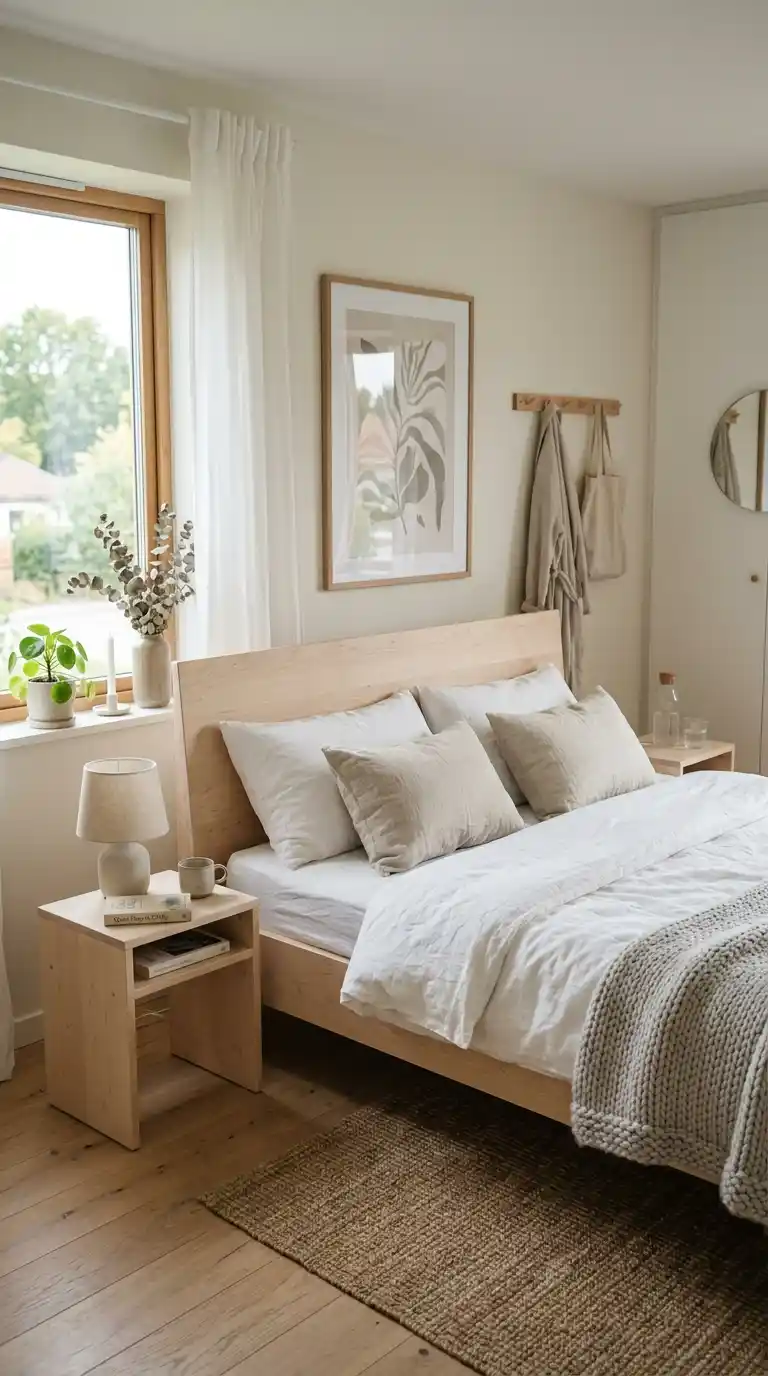
A simple, clean-lined wood bed frame is the foundation of nearly every Scandinavian bedroom, providing natural warmth without unnecessary ornamentation. Light woods like birch, ash, or pale oak are particularly characteristic of this style, keeping the room feeling airy and bright rather than heavy. The frame’s minimal design lets the wood’s natural grain do all the visual work.
Choosing a bed frame with tapered or straight legs rather than ornate carved details maintains the clean, functional aesthetic. A low-profile headboard in the same light wood adds subtle definition to the bed zone without dominating the wall. Pairing this simple frame with layered white and cream bedding creates the quintessential Scandinavian bed arrangement. This honest, unpretentious furniture choice anchors the entire room with genuine warmth.
2. Soft Neutral Color Palette
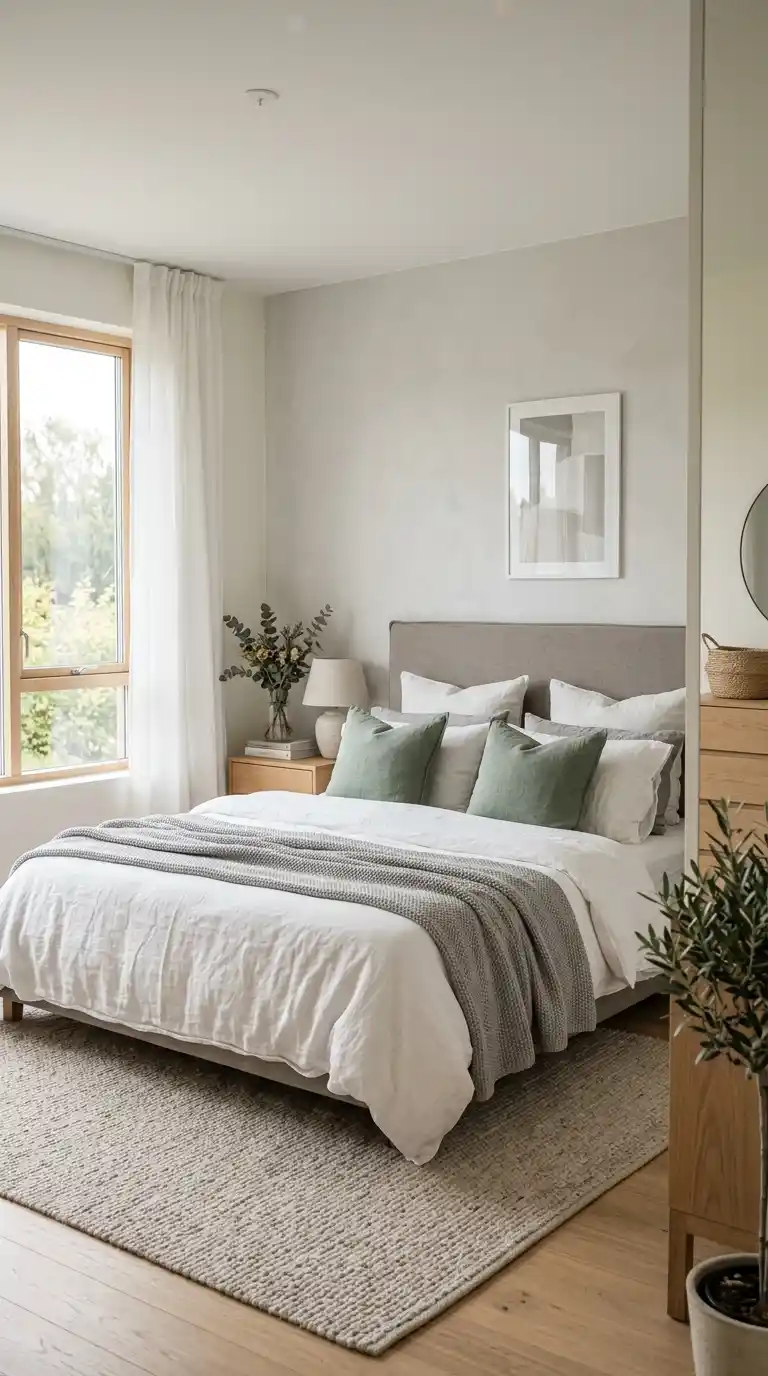
Scandinavian bedrooms rely on a soft, restrained color palette built around whites, warm grays, and gentle beiges that reflect the long Nordic winter light. This neutral base creates a calming, uncluttered backdrop that supports rest rather than stimulating the senses. Occasional soft accents in muted blue, dusty sage, or warm terracotta add subtle interest without disrupting the overall calm.
Choosing warm-toned whites and grays, rather than cool or stark versions, keeps the room feeling cozy rather than clinical. Layering a few slightly different neutral shades across walls, bedding, and furniture adds depth without introducing bold color. A single soft accent tone in a throw pillow or a small ceramic piece provides a gentle focal point within the neutral scheme. This restrained palette is what gives Scandinavian rooms their distinctive, serene atmosphere.
3. Hygge-Inspired Layered Bedding
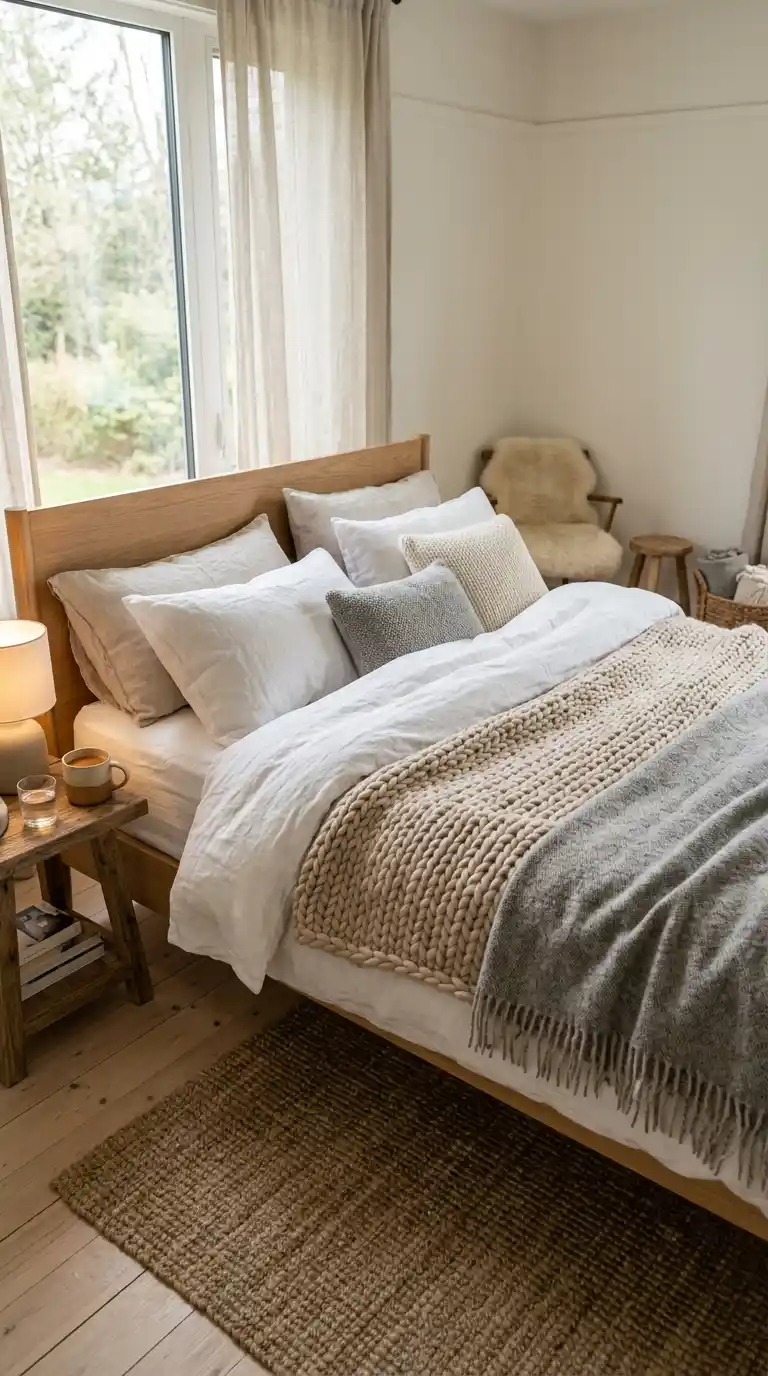
The concept of hygge, centered on warmth, comfort, and coziness, finds its most complete expression in the layered, textural bedding of a Scandinavian bedroom. Stacking a crisp white duvet with a chunky knit blanket, soft linen euro shams, and a wool throw at the foot of the bed creates an inviting nest that feels abundantly comfortable. This layering technique adds depth and visual richness entirely through texture.
Choosing bedding in slightly varied tones of white, cream, and oatmeal rather than a single flat color keeps the layers visually distinct. Mixing fabric types, like pairing smooth cotton with rough linen and a chunky woven throw, creates a satisfying tactile contrast. A single accent pillow in a muted pattern or soft color adds gentle variety within the neutral arrangement. This approach to bedding transforms the bed into the room’s most inviting element.
4. Warm Ambient Lighting
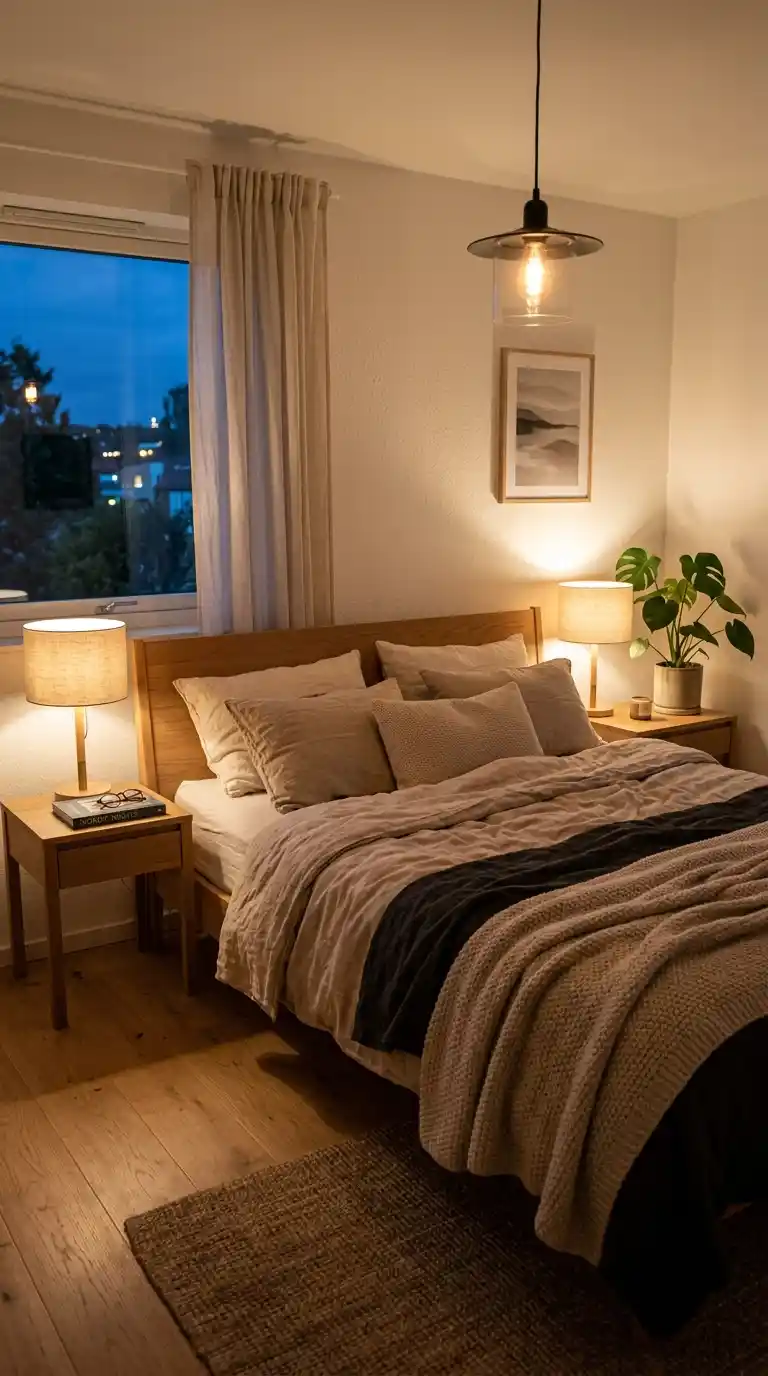
Lighting holds special importance in Scandinavian design, compensating for the long, dark Nordic winters with warm, layered illumination that makes any room feel instantly cozy. Simple pendant lights in warm tones, paired with bedside table lamps featuring linen or fabric shades, create a soft, even glow throughout the bedroom. This layered approach avoids harsh overhead lighting that flattens textures and disrupts the room’s calm mood.
Choosing warm white bulbs rather than cool or bright daylight tones preserves the room’s cozy, amber atmosphere after sunset. Dimmable fixtures allow the space to shift from brighter morning light to a softer, more relaxed evening glow. String lights tucked along a shelf or window ledge add a final, soft layer of gentle ambient warmth. This thoughtful approach to lighting is central to achieving the hygge quality that defines this style.
5. Minimal Functional Furniture
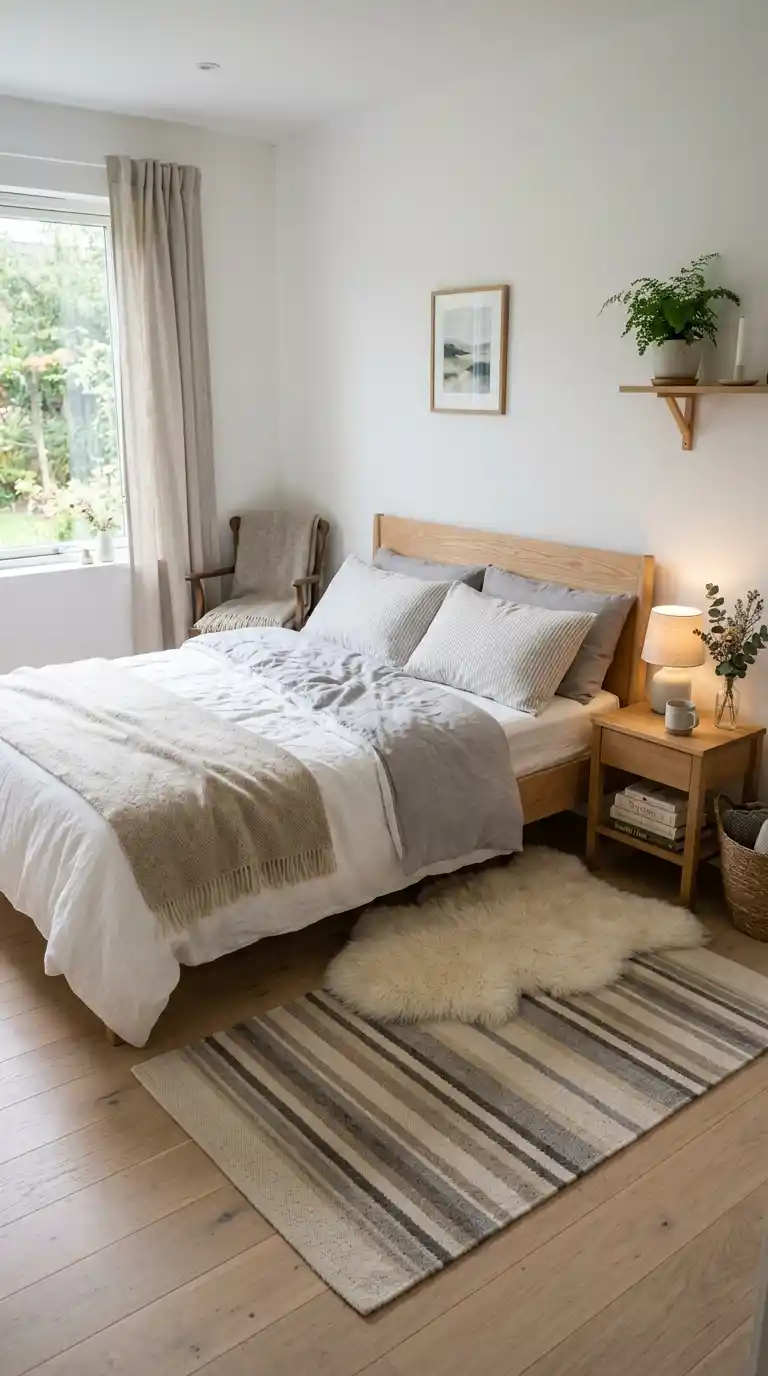
Scandinavian design philosophy prioritizes furniture that is both beautiful and genuinely useful, avoiding pieces that exist purely for decoration. A simple nightstand with a drawer, a slim dresser with clean hardware, and perhaps a low bench at the foot of the bed cover all essential functions without overcrowding the room. Each piece earns its place through both form and function.
Choosing furniture in the same light wood family as the bed frame creates a cohesive, calm arrangement throughout the room. Avoiding overly ornate or heavily decorated pieces maintains the clean, uncluttered visual atmosphere central to the style. Built-in or wall-mounted storage solutions further reduce floor clutter while keeping the room feeling organized. This functional approach to furniture creates a bedroom where everything has its place and purpose.
6. Natural Fiber Rugs and Textiles
Natural fiber rugs in wool, cotton, or jute bring warmth and texture to a Scandinavian bedroom floor, particularly welcome during colder months when bare floors feel uninviting. A simple striped wool rug or a flat-woven cotton mat in muted tones adds pattern and softness underfoot without disrupting the neutral palette. These natural materials feel honest and unpretentious, qualities central to Nordic design values.
Choosing a rug in a simple pattern, like a subtle stripe or a minimal geometric, introduces visual interest without overwhelming the room’s calm. Layering a smaller sheepskin or fluffy accent rug beside the bed adds an extra layer of tactile comfort exactly where it’s most needed. Matching the rug’s tonal palette to the room’s broader neutral scheme keeps the floor treatment feeling seamlessly integrated. This natural grounding layer ties the entire room together quietly and warmly.
7. Simple Scandinavian Art and Wall Decor
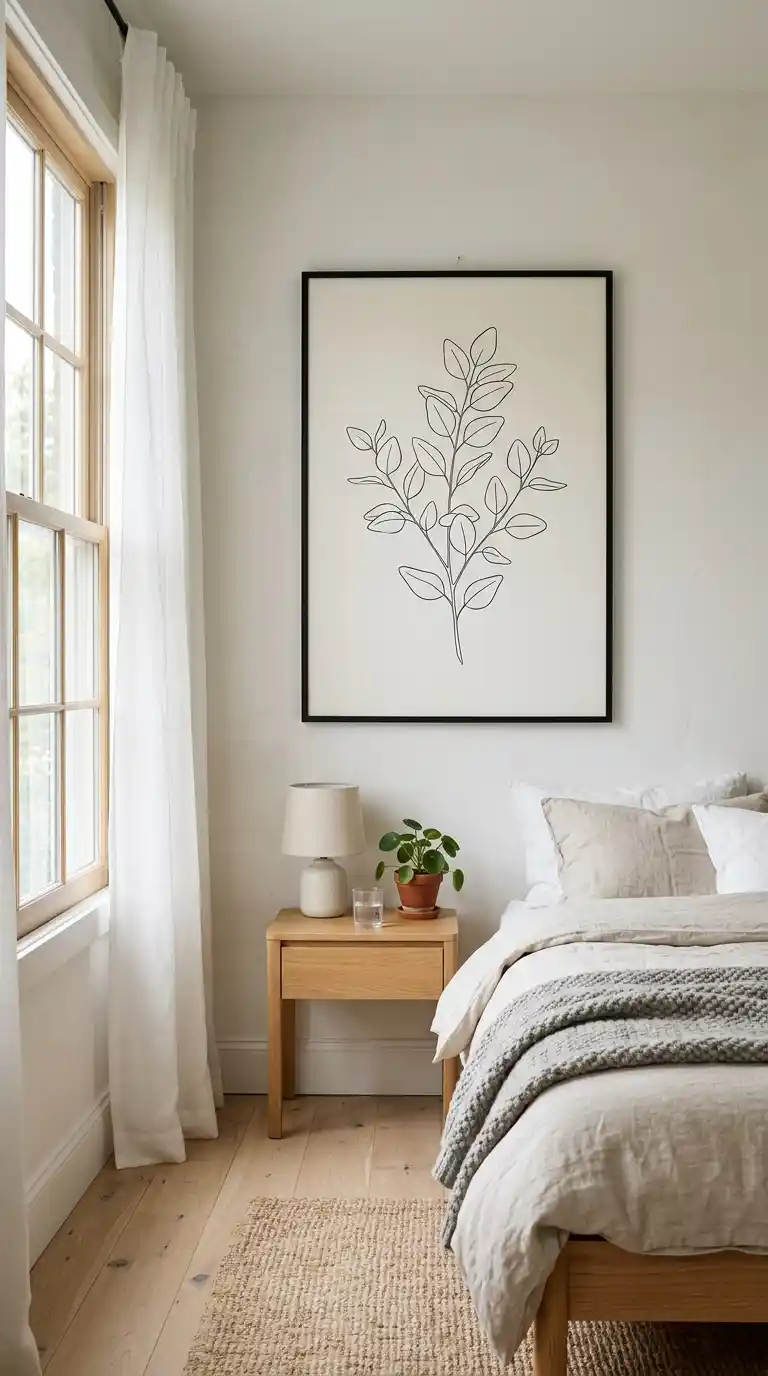
Wall decor in a Scandinavian bedroom stays minimal and intentional, favoring a few carefully chosen pieces over a crowded gallery arrangement. Simple line art prints, abstract botanical illustrations, or black and white photography in slim natural wood or black frames add personality without visual noise. These pieces feel curated rather than collected, each one occupying its wall space with quiet confidence.
Choosing art with muted, nature-inspired tones rather than bright or saturated colors keeps the wall decor aligned with the room’s overall palette. A single large print positioned above a dresser or beside the bed often makes more impact than several smaller pieces. Leaving generous wall space around each piece allows it to breathe and be appreciated individually. This restrained approach to art reflects the broader Scandinavian philosophy of choosing less but choosing better.
8. Indoor Plants for Natural Warmth
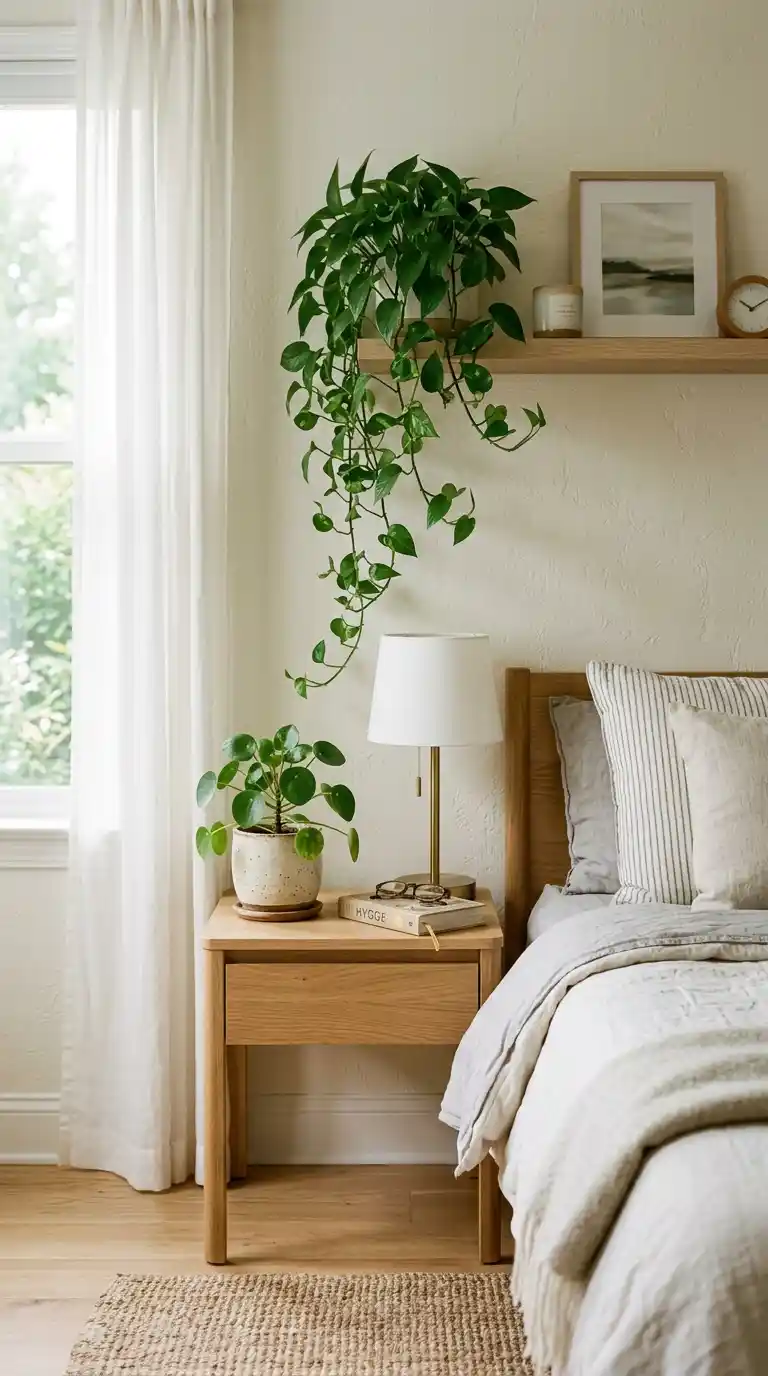
A few carefully placed plants bring the natural world into a Scandinavian bedroom, softening minimal surfaces with organic shape and living color. A small potted plant on a nightstand, a trailing variety on a shelf, or a taller statement plant in a simple ceramic pot in the corner each add warmth and life without disrupting the room’s quiet order. This natural presence reinforces the Nordic connection to nature and the outdoor world.
Choosing plants that thrive in lower light conditions, like snake plants, pothos, or peace lilies, suits the Scandinavian bedroom’s typically softer lighting environment. Selecting simple, neutral-toned ceramic or terracotta planters keeps the focus on the plant’s natural form rather than a decorative container. Grouping a small collection of plants on a single shelf creates more visual impact than scattering individual plants around the room. This understated greenery brings the room’s natural material theme full circle.
9. Curtains and Window Treatments
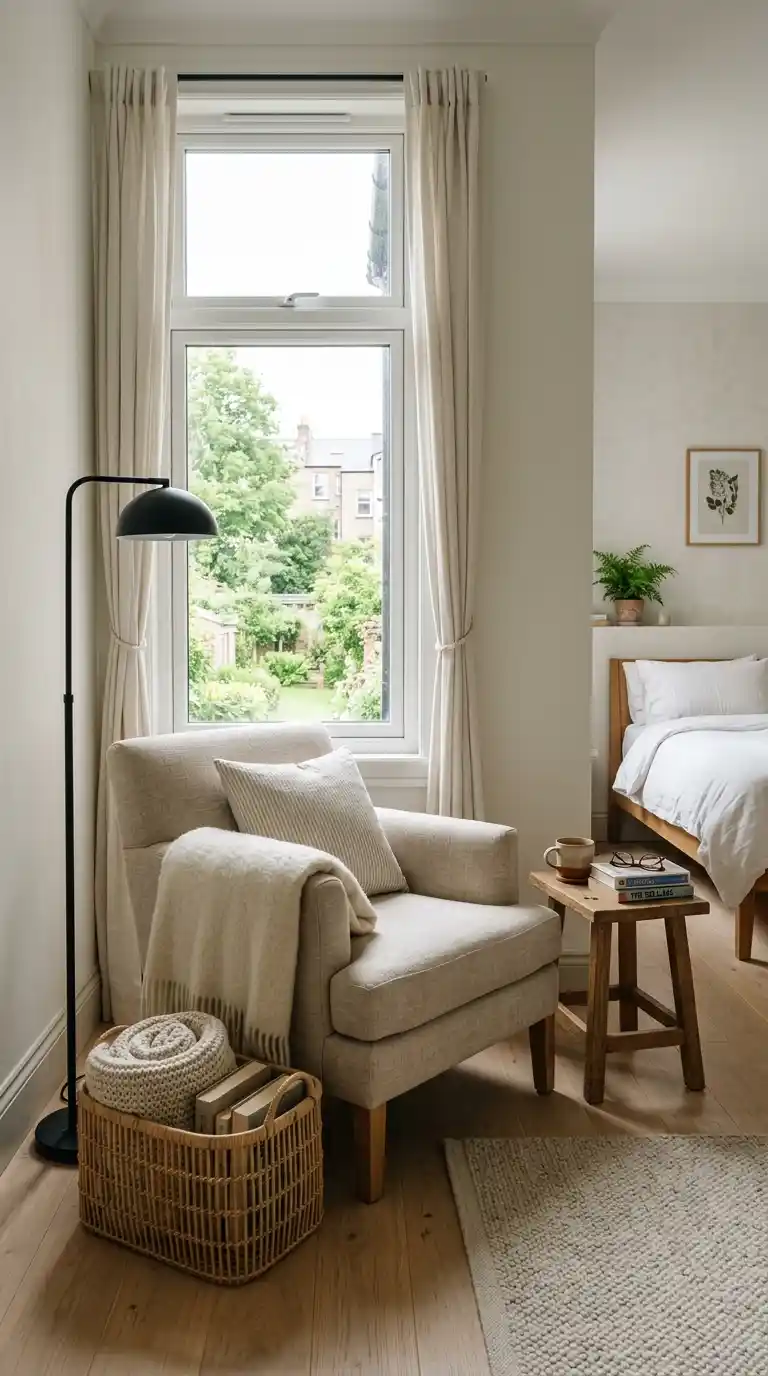
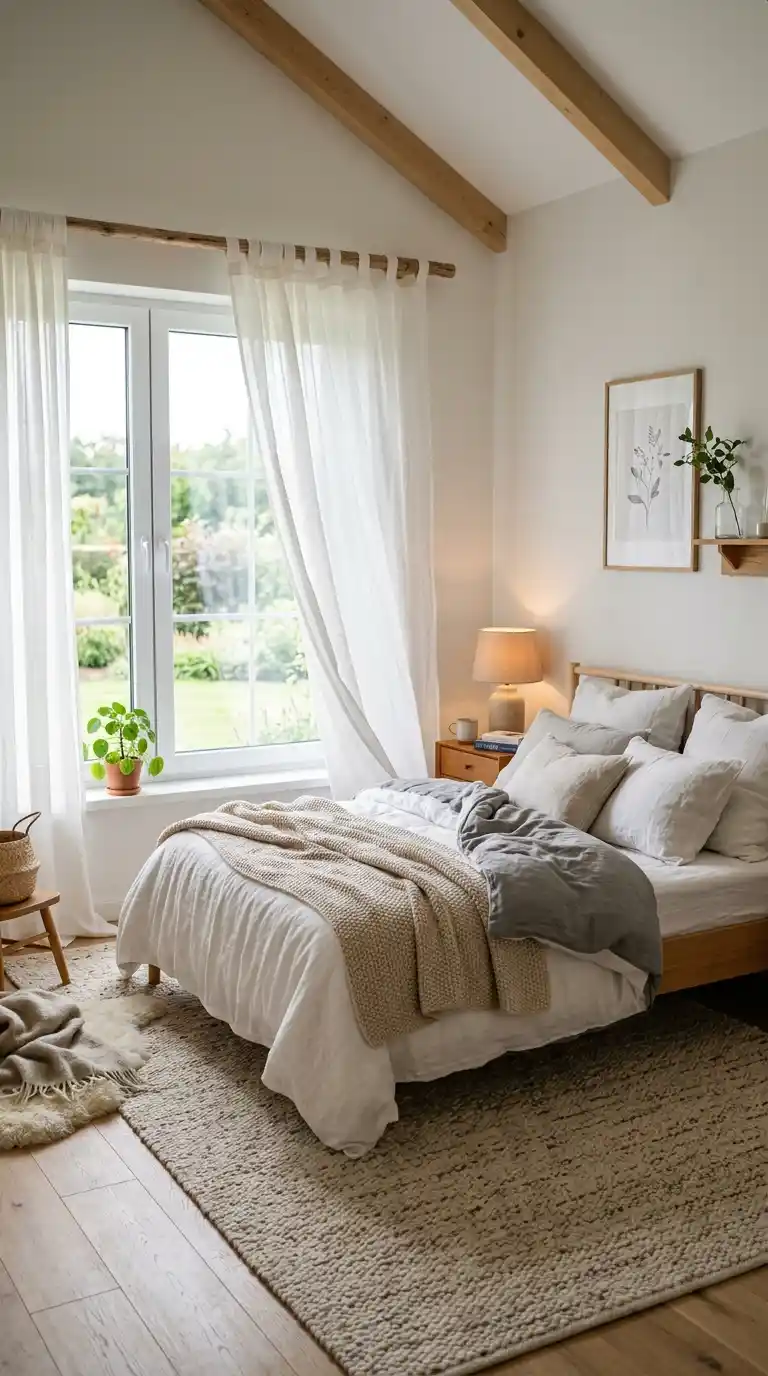
Soft, flowing curtains in white linen or sheer cotton are essential to a Scandinavian bedroom, filtering natural light into a gentle, diffused glow that feels calm and inviting. Hung from simple wooden or matte black curtain rods close to the ceiling, these panels create visual height and elongate the room’s proportions. Their relaxed, slightly billowing drape feels informal and effortlessly beautiful.
Choosing a fabric with a subtle texture, like a loose linen weave or a gentle slub cotton, adds material interest that flat, smooth fabric lacks. Allowing the curtains to extend slightly past the window frame on each side makes the window appear larger and the room brighter. Pairing sheer daytime curtains with a heavier blackout liner addresses both the desire for natural light and the need for genuine rest. This layered window treatment supports both the aesthetic and the practical demands of a restful bedroom.
10. Cozy Reading Corner
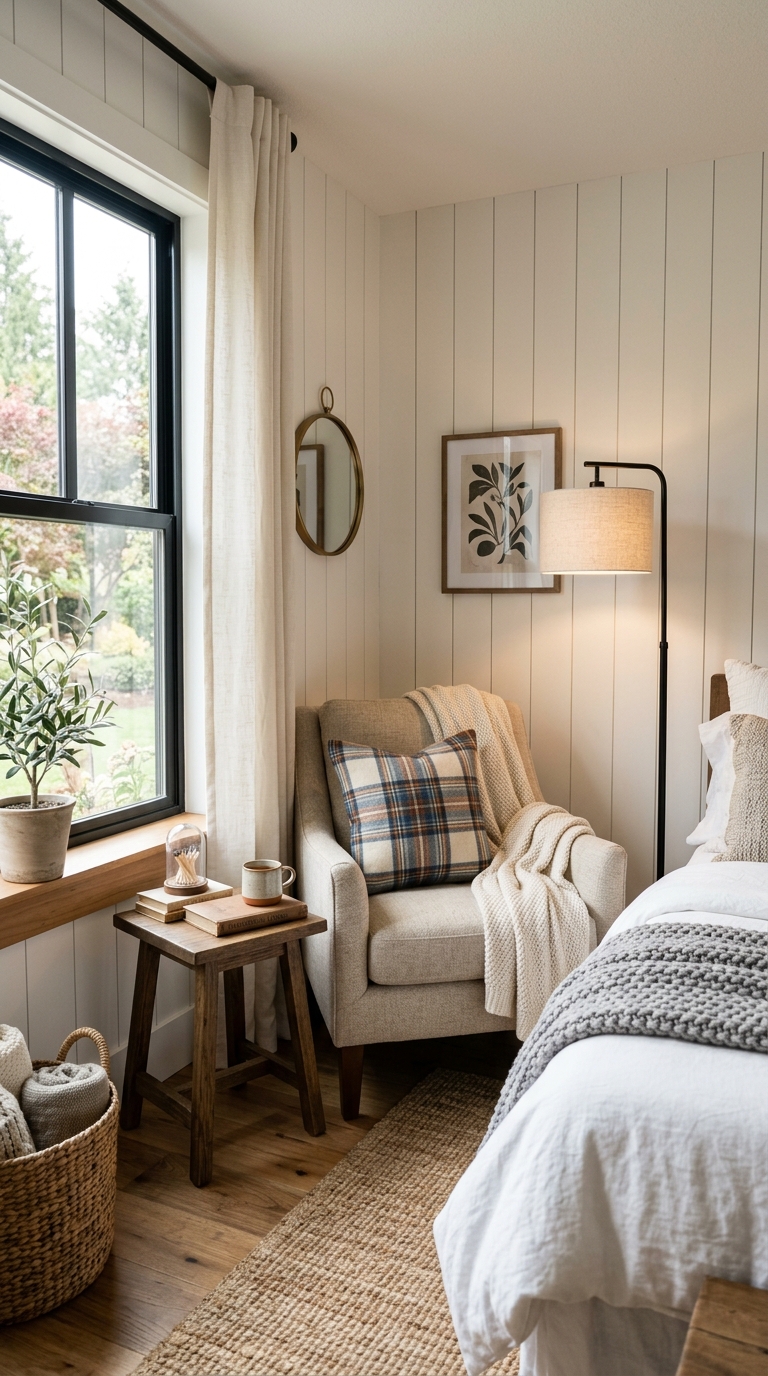
A well-considered reading nook or corner adds both function and warmth to a Scandinavian bedroom, reflecting the Nordic appreciation for quiet, indoor comfort. A simple upholstered chair in a natural fabric, paired with a slim floor lamp and a small side table, creates an inviting retreat within the retreat. This addition makes the bedroom feel more than just a sleeping room.
Choosing a chair with a slightly curved silhouette in linen or wool upholstery keeps the seating feeling soft and cohesive with the room’s broader material palette. A woven basket nearby holding extra throws adds both function and texture beside the chair. Positioning the reading corner near a window takes advantage of natural daylight for daytime reading. This quietly purposeful corner often becomes the most-used and most-loved spot in the entire bedroom.
11. Thoughtful Storage and Organization
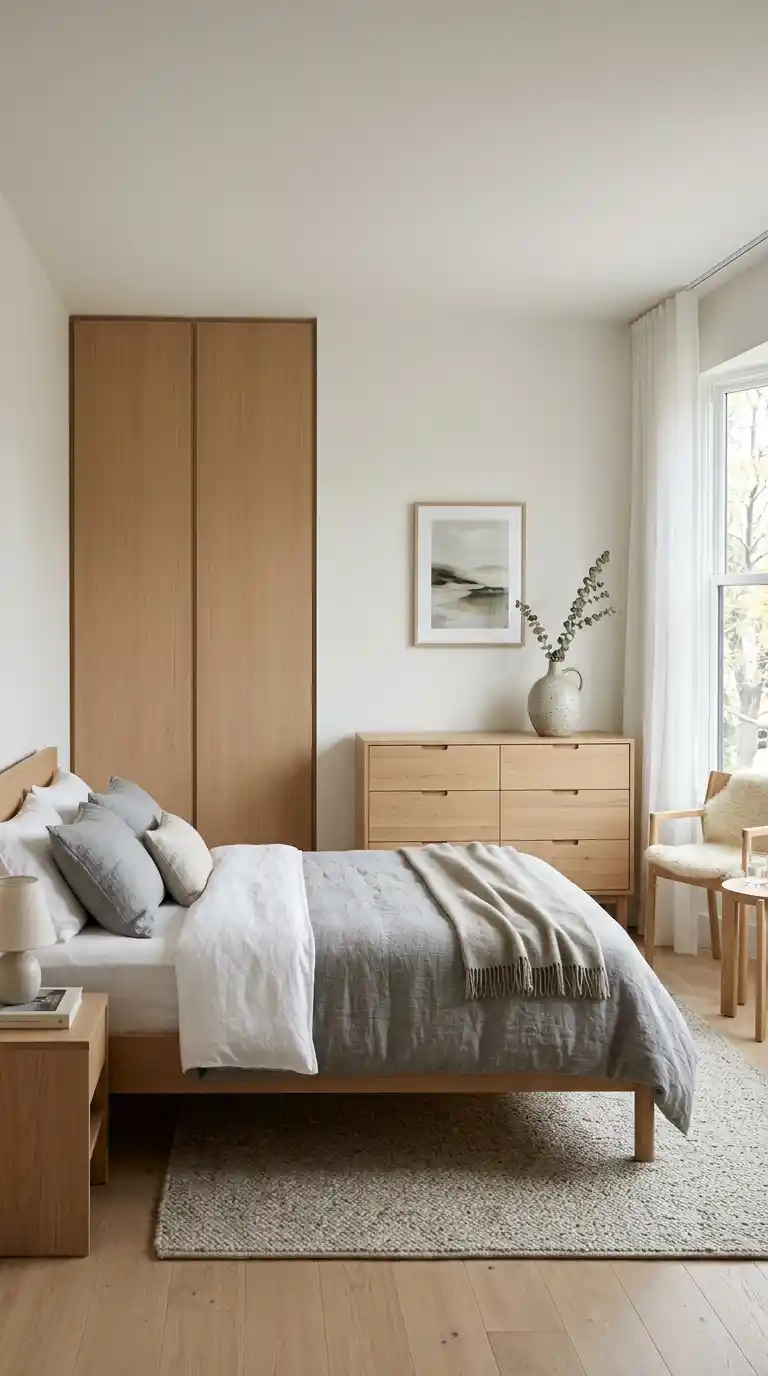
Visible clutter is the single greatest threat to the calm, ordered atmosphere central to Scandinavian bedroom design. Built-in wardrobes with simple flat-panel doors, under-bed storage drawers, and a slim dresser with clean hardware keep all everyday items organized and out of sight. This hidden organization allows the room’s clean, minimal surfaces to remain undisturbed.
Choosing storage furniture in the same wood tone or painted finish as the room’s other pieces keeps the storage from standing out as a separate, utilitarian element. Simple woven baskets or linen storage boxes inside open shelving add flexible, movable organization with consistent aesthetic. Keeping surfaces like the nightstand and dresser top nearly bare, with just one or two intentional objects, maintains the room’s peaceful visual order. This disciplined approach to storage is what keeps a Scandinavian bedroom feeling genuinely restful rather than just styled for photographs.
Conclusion
Scandinavian bedroom design proves that the most restful spaces are built through clarity and intention rather than decoration and excess. The eleven ideas above show how simple furniture, warm lighting, natural textiles, and thoughtful organization work together to create a bedroom that genuinely supports rest and wellbeing. Every element in this style earns its place by contributing both beauty and function.
What makes this style so enduring and universally loved is its deep respect for comfort and honesty in materials, choosing things that feel good to live with day after day rather than simply to admire. Starting with a clean-lined wood bed frame and layered neutral bedding gives any room an immediate Scandinavian foundation. Over time, adding warm lighting, natural fiber textiles, and a few carefully chosen plants builds a bedroom that feels consistently serene. A well-executed Scandinavian bedroom is not about having less, it is about living better with what is there.