Sage green has quickly become one of the most beloved kitchen colors, offering a soft, nature-inspired tone that feels both calming and sophisticated. Unlike brighter, more saturated greens, sage carries a muted, grayish undertone that pairs effortlessly with natural materials and warm metals. It works equally well in modern, traditional, and farmhouse-style kitchens, making it a remarkably versatile choice.
This list covers eleven ideas for incorporating sage green into a kitchen, from full cabinetry to smaller accent details. Each idea focuses on how this earthy tone pairs with countertops, hardware, and lighting to create a cohesive, elevated look. Whether you’re planning a full renovation or simply adding a few sage-toned touches, these ideas offer plenty of inspiration. Let’s explore how this calming color can transform your kitchen.
1. Full Sage Green Cabinetry
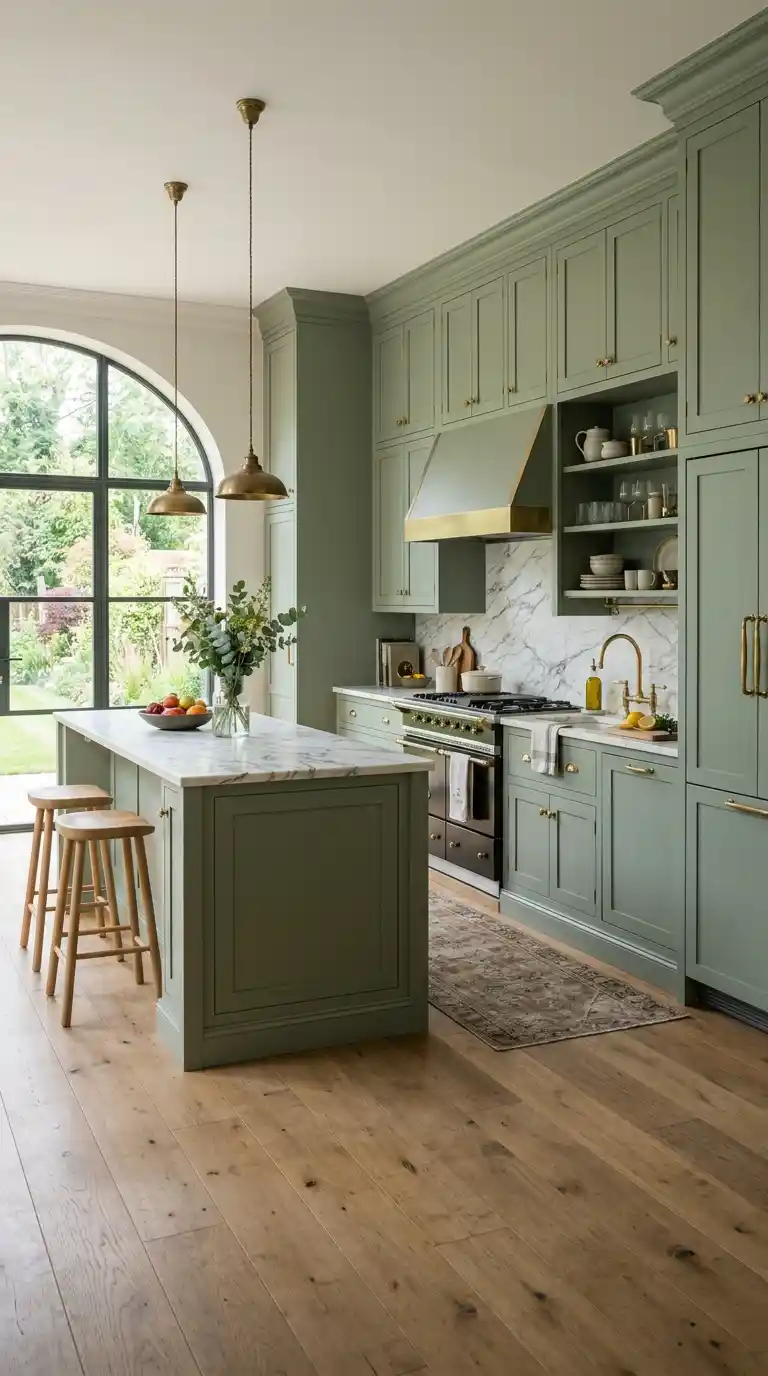
Painting all cabinetry, both upper and lower, in sage green creates a fully immersive, cohesive look that feels calm and intentional throughout the kitchen. This approach works particularly well in kitchens with ample natural light, where the color’s subtle depth can be fully appreciated. A monochromatic sage kitchen avoids feeling flat by relying on varied textures in countertops and hardware.
Choosing a matte or satin finish keeps the color feeling soft rather than glossy or plastic. Pairing full sage cabinetry with white marble or quartz countertops adds necessary brightness and contrast. Brass or unlacquered brass hardware throughout ties the look together with warmth. This fully committed approach creates one of the most striking and memorable kitchen styles available.
2. Two-Tone Sage and White Combination
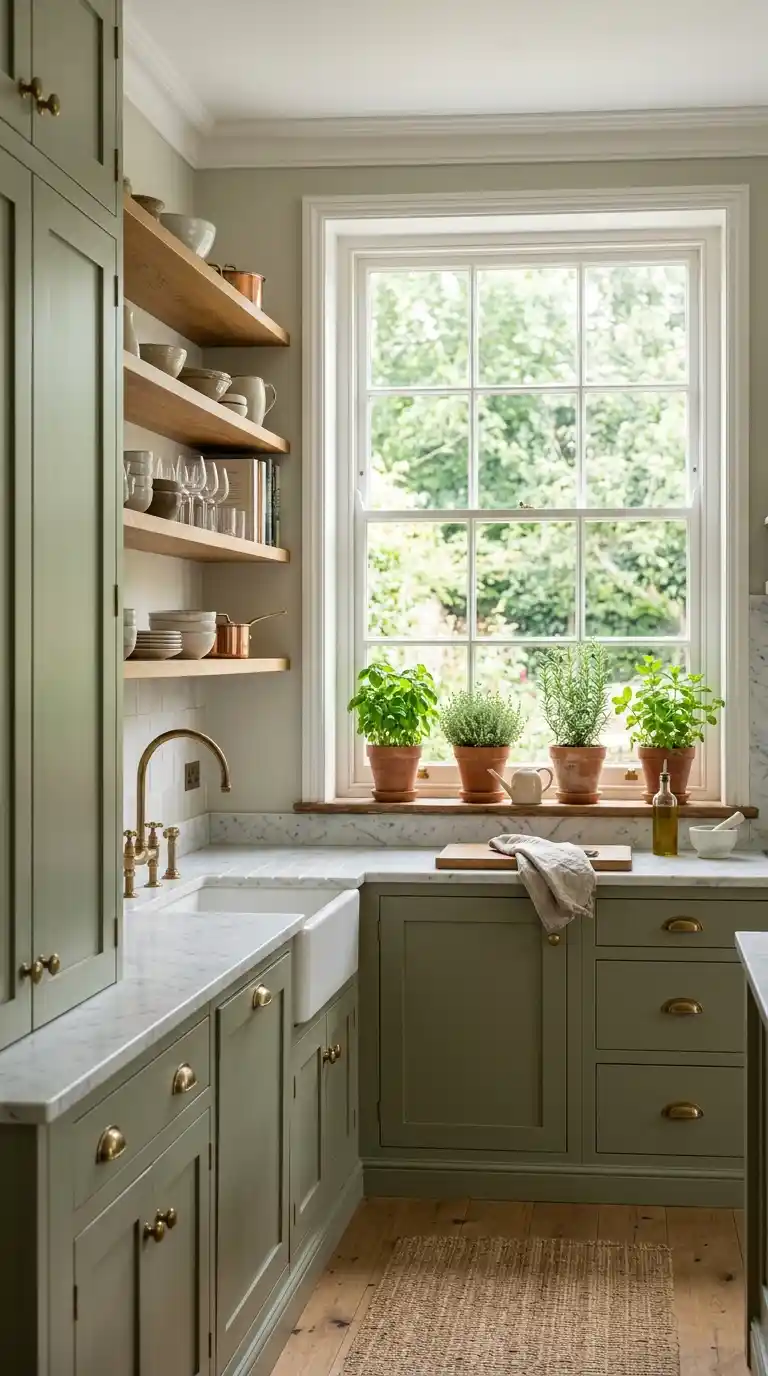
Pairing sage green lower cabinets with white upper cabinets creates a balanced, classic look that feels fresh without overwhelming the space. This two-tone approach keeps the kitchen feeling bright and open while still introducing color and personality through the lower cabinetry. It’s one of the most popular ways to incorporate sage green for those hesitant about full commitment.
Choosing a warm white for the uppers, rather than a stark cool white, keeps the overall palette feeling cohesive. Adding brass hardware throughout both colors ties the two tones together visually. A white marble or quartz countertop bridges the two cabinet colors with brightness and texture. This combination remains a timeless, widely loved choice for sage green kitchens.
3. Sage Green Kitchen Island
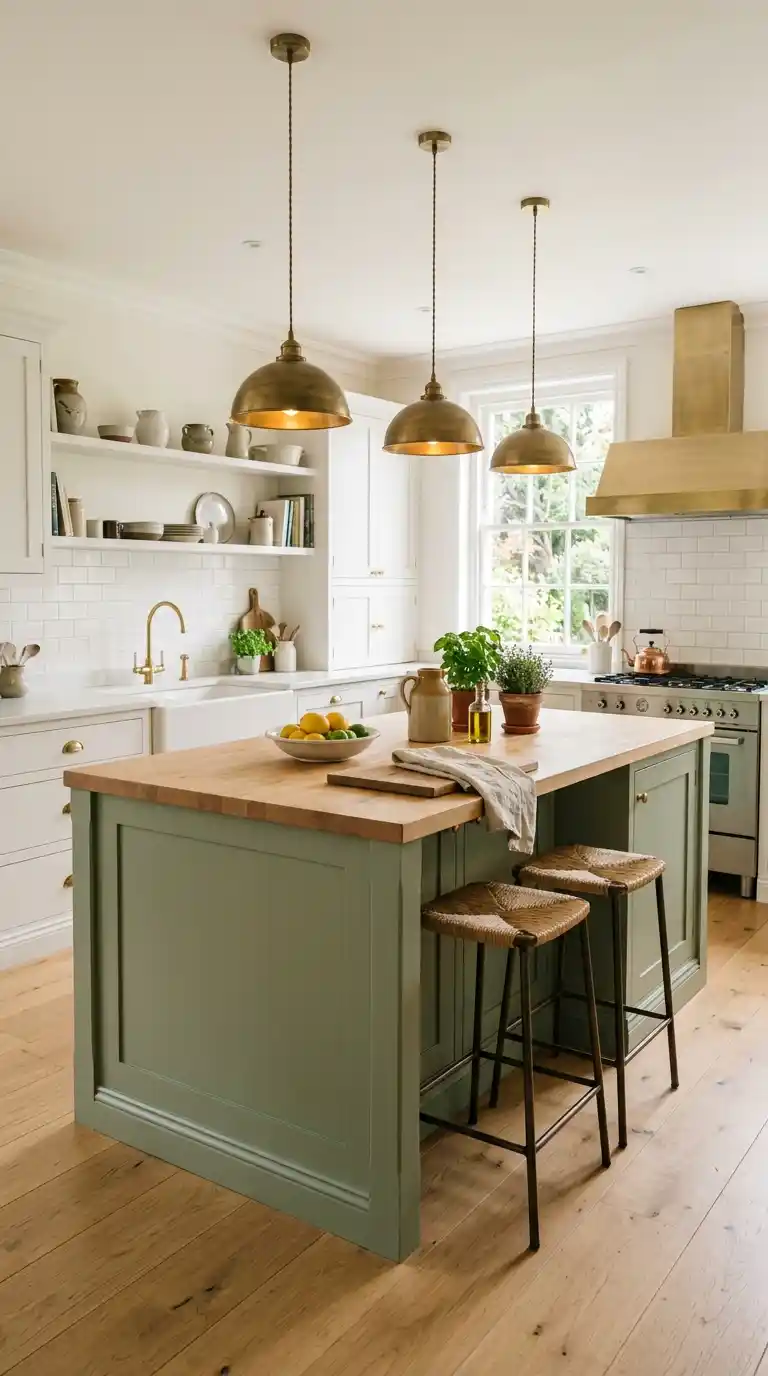
Using sage green exclusively on a kitchen island, while keeping surrounding cabinetry in white or cream, creates a striking focal point without committing the whole room to color. This approach works especially well in larger kitchens where the island naturally draws the eye as a centerpiece. The contained pop of color feels intentional and design-forward.
Choosing a contrasting countertop, like white marble or butcher block, for the island highlights the sage green cabinetry beneath. Pairing the island with bar stools in a complementary neutral tone keeps the look balanced. Brass pendant lighting above the island reinforces the warm, elegant mood. This focused approach to color makes a strong design statement with less overall commitment.
4. Brass Hardware for Warm Contrast
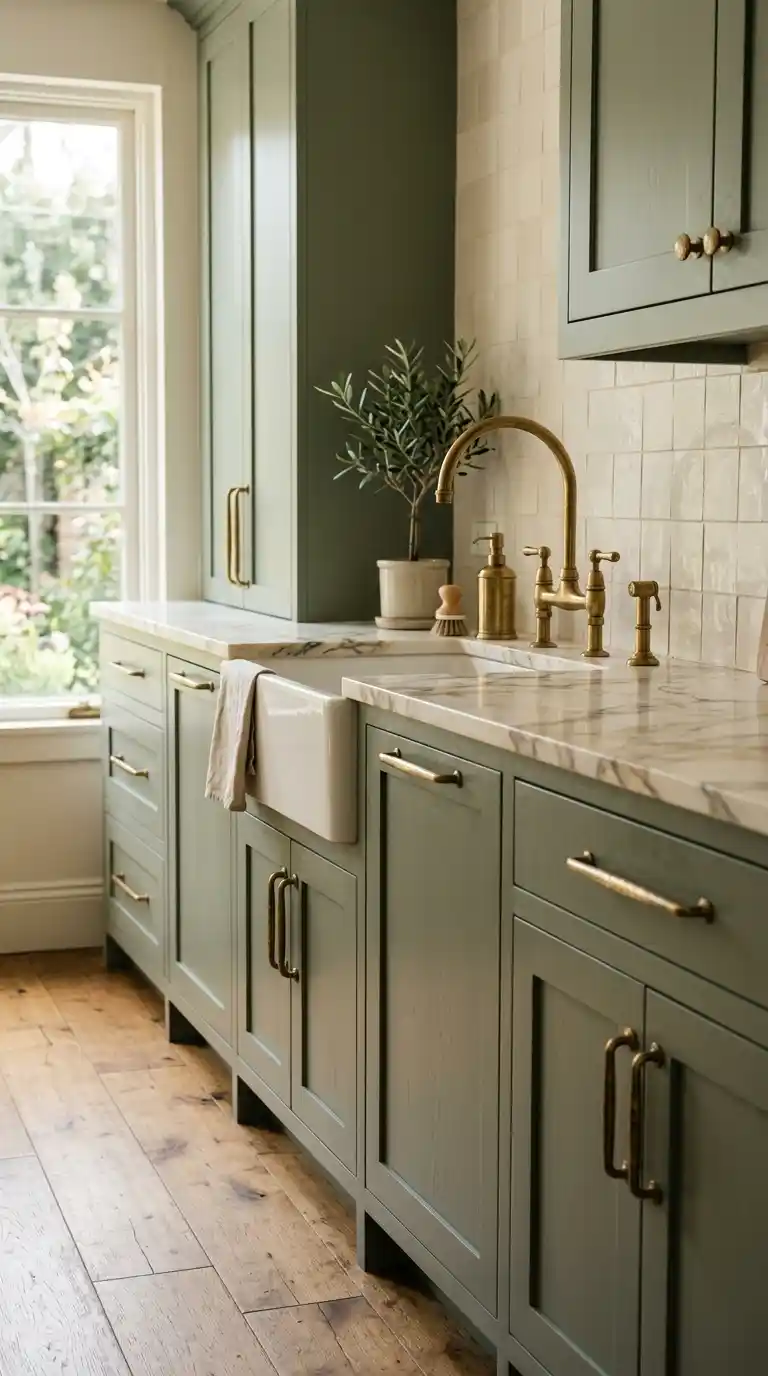
Brass hardware brings out the warmth in sage green cabinetry, creating a rich contrast that feels both elegant and inviting. Unlike cooler-toned hardware, brass adds a golden warmth that complements the muted, earthy quality of sage. This pairing has become one of the most popular hardware and color combinations in kitchen design.
Choosing an aged or unlacquered brass finish softens the contrast compared to bright, polished gold. Cabinet pulls, knobs, and faucet fixtures in matching brass create a cohesive, intentional look throughout the room. Pairing brass with sage green pendant lighting reinforces this warm metal theme overhead. This combination consistently photographs beautifully and remains a design favorite.
5. White Marble Countertops
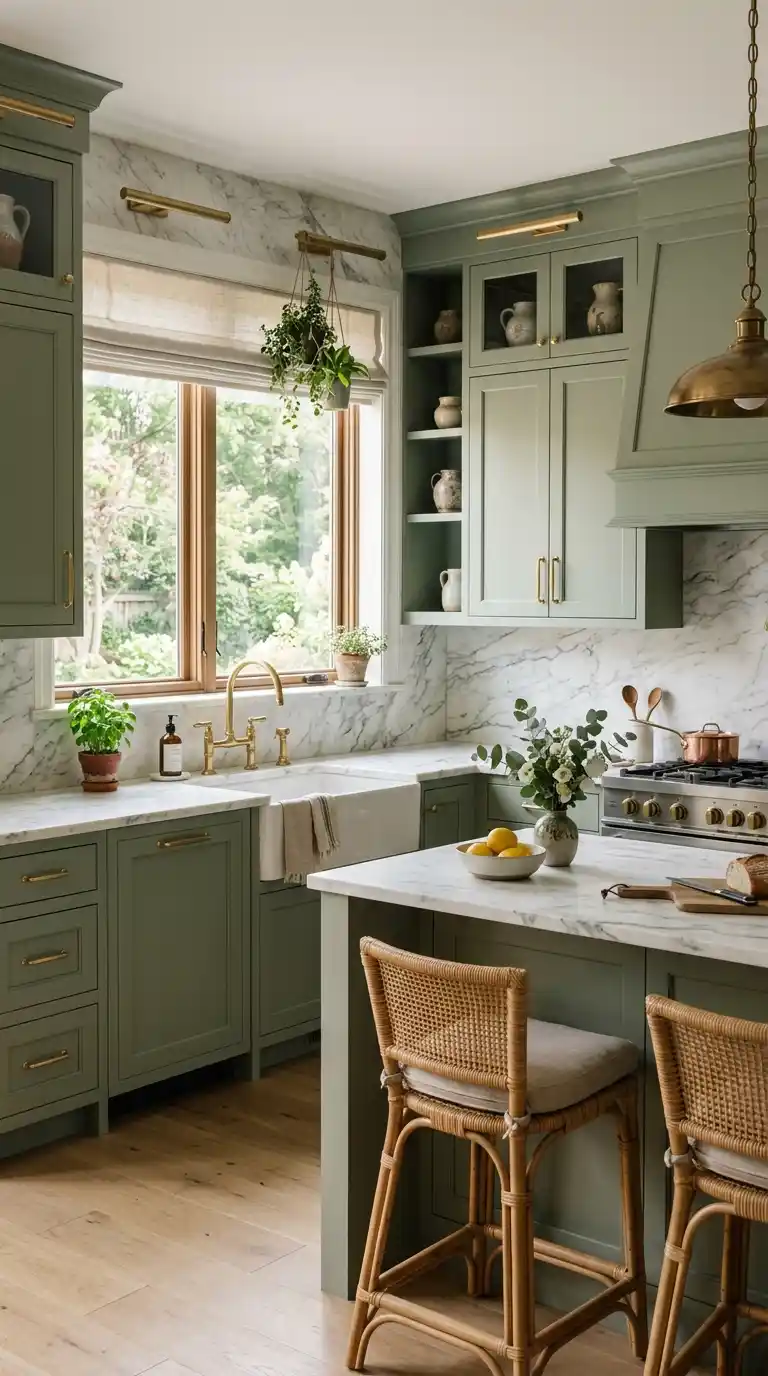
White marble countertops provide essential brightness and contrast against sage green cabinetry, preventing the kitchen from feeling too heavy or dark. The subtle veining in marble adds organic movement that pairs beautifully with the natural, earthy quality of sage. This combination feels both luxurious and effortlessly elegant.
Choosing a marble with warm-toned veining, rather than stark gray, keeps the overall palette feeling cohesive with the sage green’s warmth. A marble backsplash extending up the wall continues this brightness vertically throughout the kitchen. Pairing marble countertops with brass fixtures ties the warm and cool elements together seamlessly. This classic combination remains one of the most reliable choices for sage green kitchens.
6. Warm Wood Open Shelving
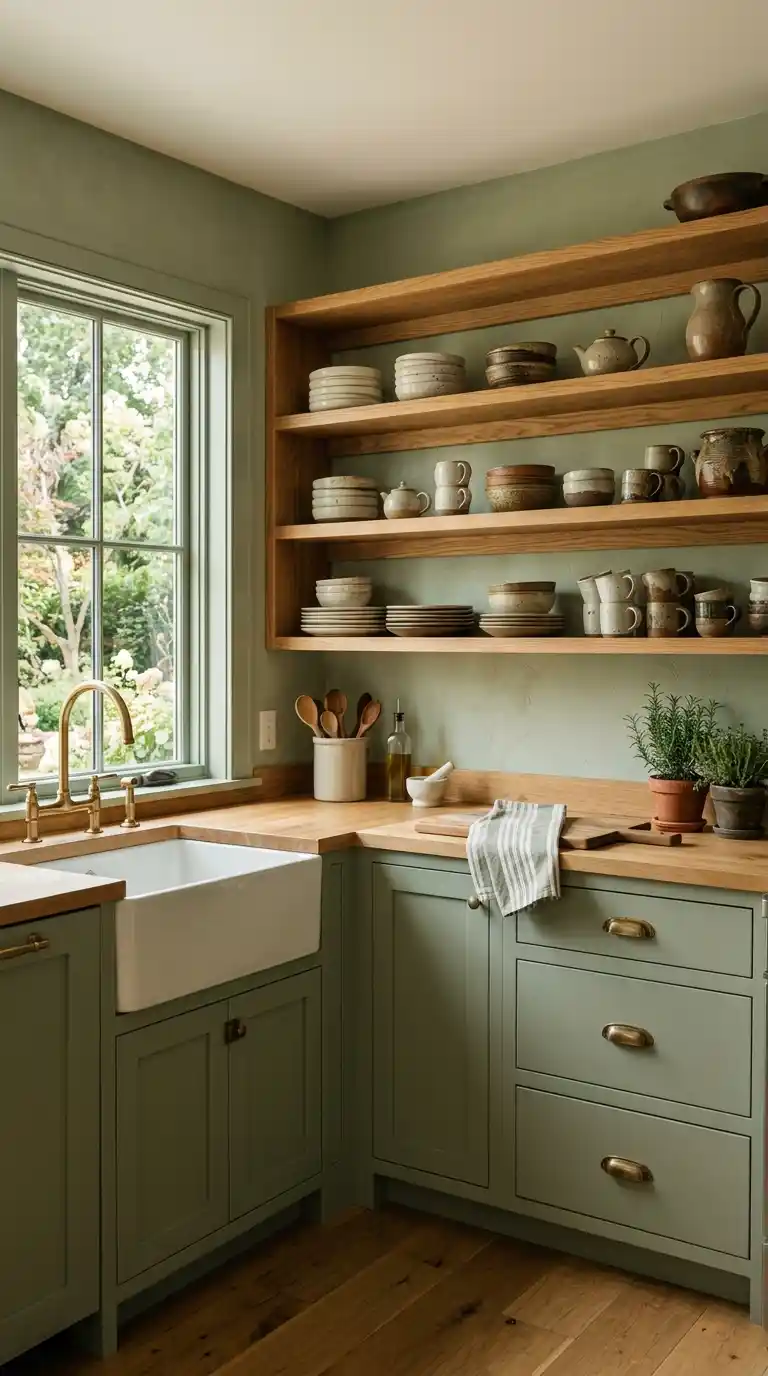
Open shelving in warm wood tones, like oak or walnut, adds natural texture and warmth alongside sage green cabinetry. This combination softens the painted surfaces with organic material, preventing the kitchen from feeling too uniform or flat. Displaying simple ceramic dishware on the shelves adds further visual interest.
Choosing wood with visible grain keeps the shelving feeling natural rather than overly polished. Positioning open shelves near a window allows natural light to highlight both the wood texture and the shelf’s contents. Styling the shelves with neutral or sage-toned ceramics maintains a cohesive color story throughout the kitchen. This natural material pairing adds warmth that balances the painted cabinetry beautifully.
7. Terracotta and Sage Accents
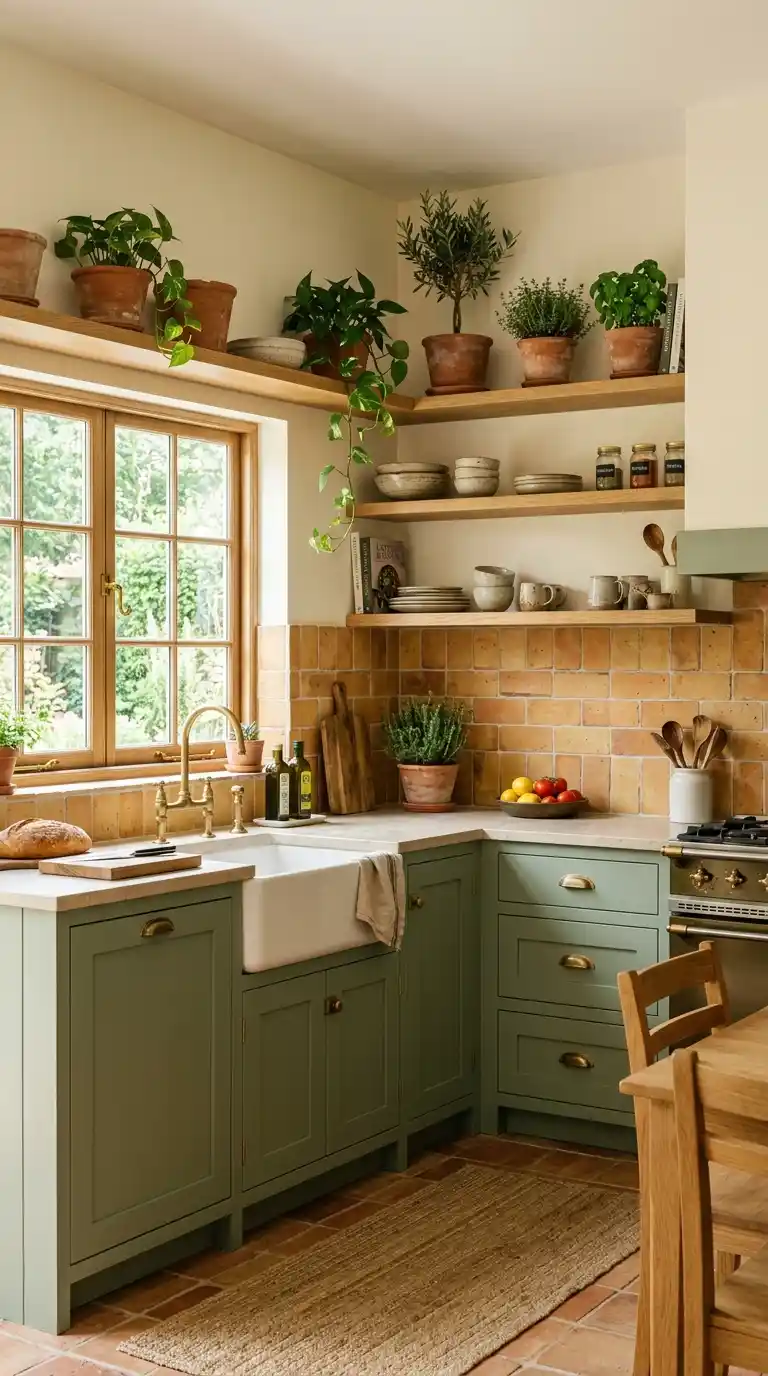
Pairing sage green with warm terracotta accents, through tile, planters, or decor, creates an earthy, sun-baked color combination that feels both fresh and grounded. This pairing works particularly well in kitchens leaning toward a Mediterranean or boho-inspired style. The warm terracotta balances sage’s cooler undertones beautifully.
Choosing a terracotta tile backsplash or a few terracotta planters on open shelving introduces this accent color without overwhelming the space. Pairing these two earthy tones with brass hardware reinforces the warm, organic mood throughout the kitchen. Adding woven baskets or natural fiber rugs continues this grounded theme underfoot. This combination brings genuine warmth and character to a sage green kitchen.
8. Sage Green Tile Backsplash
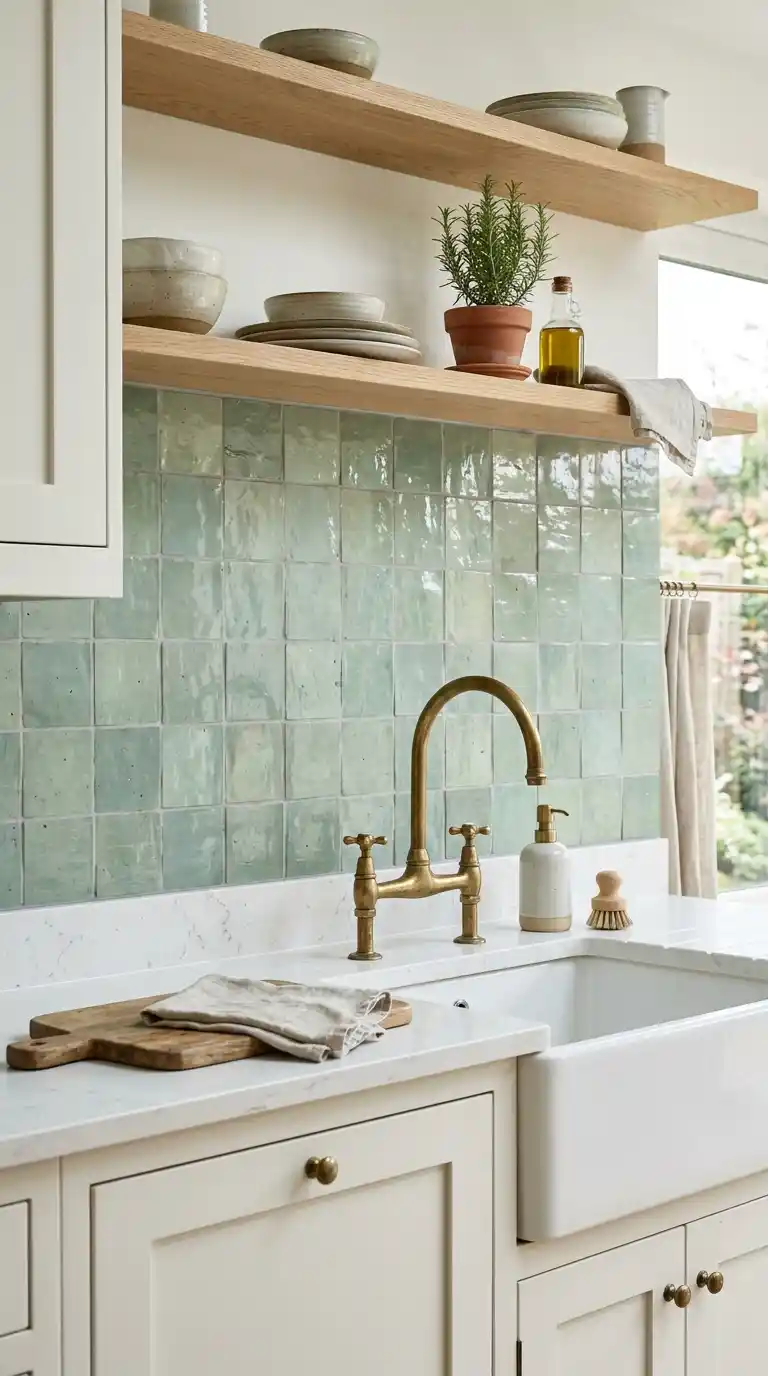
A sage green tile backsplash, whether in classic subway shapes or more textured zellige tiles, adds dimension and pattern while staying within the same calming color family as the cabinetry. This approach works particularly well when cabinets are kept in white or cream, allowing the tile to introduce the sage tone instead.
Choosing a slightly varied or handmade-look tile adds texture and visual interest compared to flat, uniform options. Pairing a sage tile backsplash with brass faucet fixtures ties the warm and cool tones together. This approach offers a lower-commitment way to introduce sage green for those not ready for full cabinetry color. The tile becomes a textured, colorful focal point within an otherwise neutral kitchen.
9. Black Accents for Definition
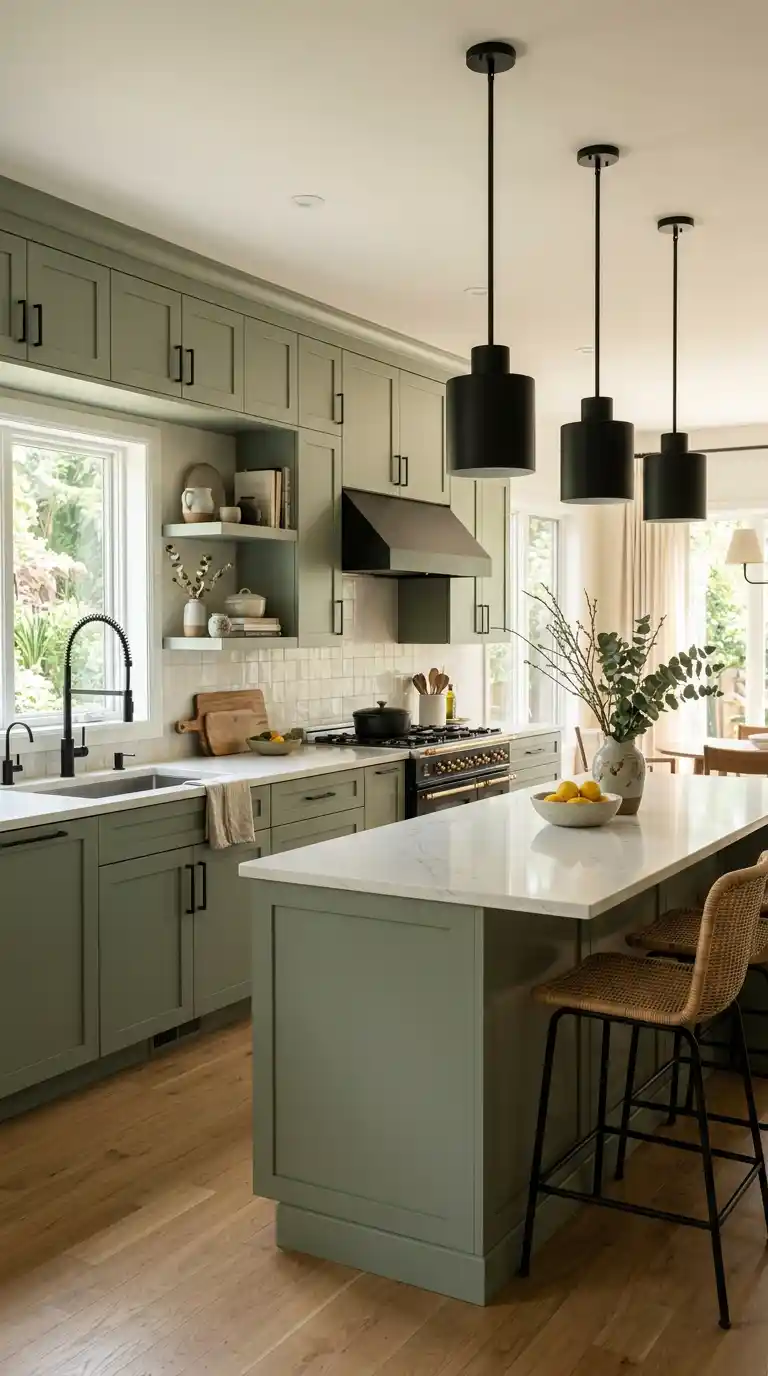
Adding black accents, like matte black faucet fixtures, pendant lighting, or window frames, gives a sage green kitchen a sense of definition and contrast. Without any dark anchor, an all-soft-color kitchen can start to feel washed out or lacking structure. A few well-placed black details create visual grounding throughout the space.
Choosing matte black over glossy finishes keeps the look refined rather than harsh against the soft sage tone. Black pendant lights above an island add graphic contrast without needing additional color. Keeping black accents to a few key pieces, rather than scattering them everywhere, maintains the kitchen’s overall warmth and softness. This small amount of contrast makes the sage green feel more intentional and structured.
10. Vintage-Inspired Hardware and Fixtures
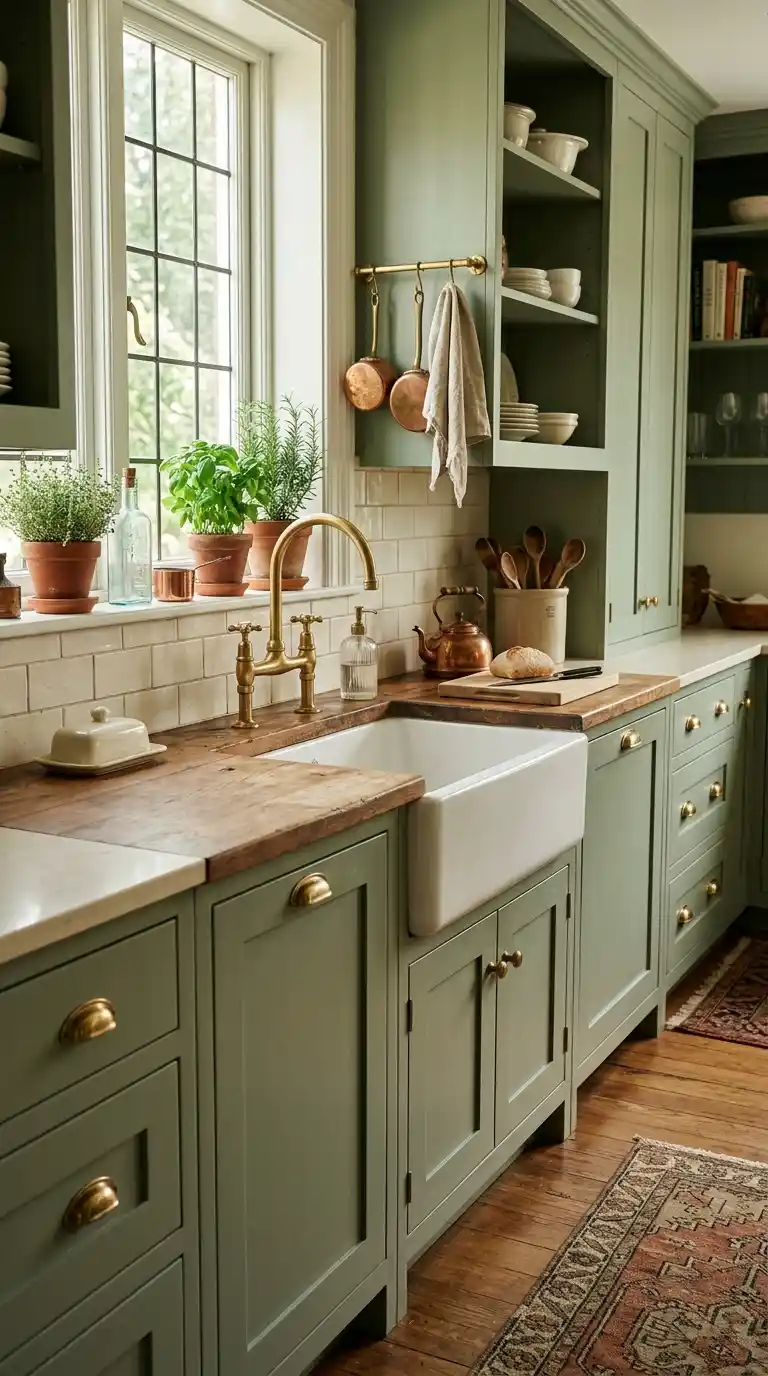
Vintage-style hardware, like fluted brass knobs or an antique-inspired faucet, pairs beautifully with sage green’s slightly old-world, nostalgic quality. This combination suits kitchens aiming for a traditional or cottage-inspired feel rather than a strictly modern look. The slightly worn, characterful details add personality beyond just color.
Choosing hardware with subtle detailing, like a scalloped edge or a soft patina finish, enhances this vintage quality without looking overly ornate. Pairing vintage-style pendant lighting above an island continues this nostalgic theme overhead. A farmhouse-style sink in white porcelain complements both the sage cabinetry and the vintage hardware. This approach gives a sage green kitchen genuine character and warmth.
11. Greenery to Echo the Cabinetry
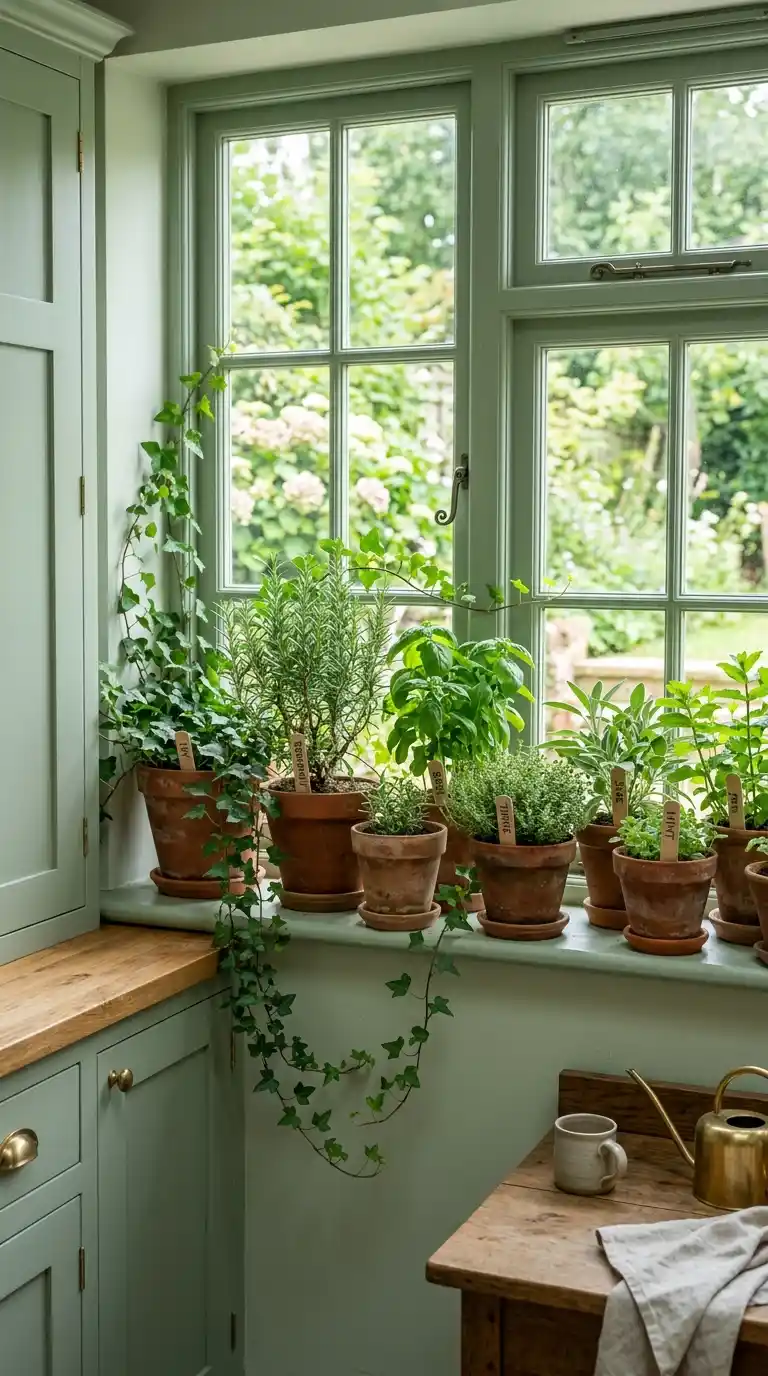
Adding a few potted herbs or trailing plants on a windowsill or open shelf reinforces sage green’s natural, garden-inspired origin within the kitchen itself. This living greenery creates a subtle echo of the cabinetry’s color while adding freshness and life to the room. Fresh herbs also serve a practical, functional purpose for everyday cooking.
Choosing terracotta or ceramic pots in neutral tones keeps the focus on the plant’s natural green rather than the container. Placing a small potted plant directly on an open shelf or windowsill creates an intimate, lived-in detail. Trailing varieties, like ivy, draping gently over shelf edges add a soft, organic movement. This natural touch brings the sage green theme full circle within the kitchen’s everyday function.
Conclusion
Sage green has earned its place as one of the most beloved kitchen colors thanks to its calming, versatile, and genuinely timeless quality. The eleven ideas above show how this earthy tone can be incorporated fully or subtly, from complete cabinetry to small accent details, while still feeling cohesive and elevated. Paired with brass, marble, or warm wood, sage green consistently creates a kitchen that feels both fresh and sophisticated.
The key to success with sage green lies in balancing its softness with enough warmth and contrast to keep the space feeling grounded rather than washed out. Small additions like brass hardware, a terracotta accent, or a few potted herbs can elevate the entire look. Over time, these thoughtful choices build a kitchen that feels both calming and genuinely beautiful to spend time in every day. Sage green proves that a soft color can still make a confident, lasting statement.