Japandi design brings together the best of two design philosophies, Japanese minimalism and Scandinavian warmth, creating a living room that feels calm, functional, and quietly beautiful. Where Scandinavian style leans on light wood and cozy textures, Japanese design contributes restraint, natural materials, and intentional emptiness. Together, they form a balanced aesthetic that feels neither cold nor cluttered.
This list covers twelve ideas for bringing Japandi style into a living room, from furniture choices to color palettes and lighting. Each idea focuses on simplicity, natural materials, and a sense of calm rather than visual excess. Whether you’re redesigning a whole room or adding a few key pieces, these ideas are easy to adapt to almost any space. Let’s explore how to build a Japandi living room that feels both grounded and serene.
1. Low-Profile Wood Furniture
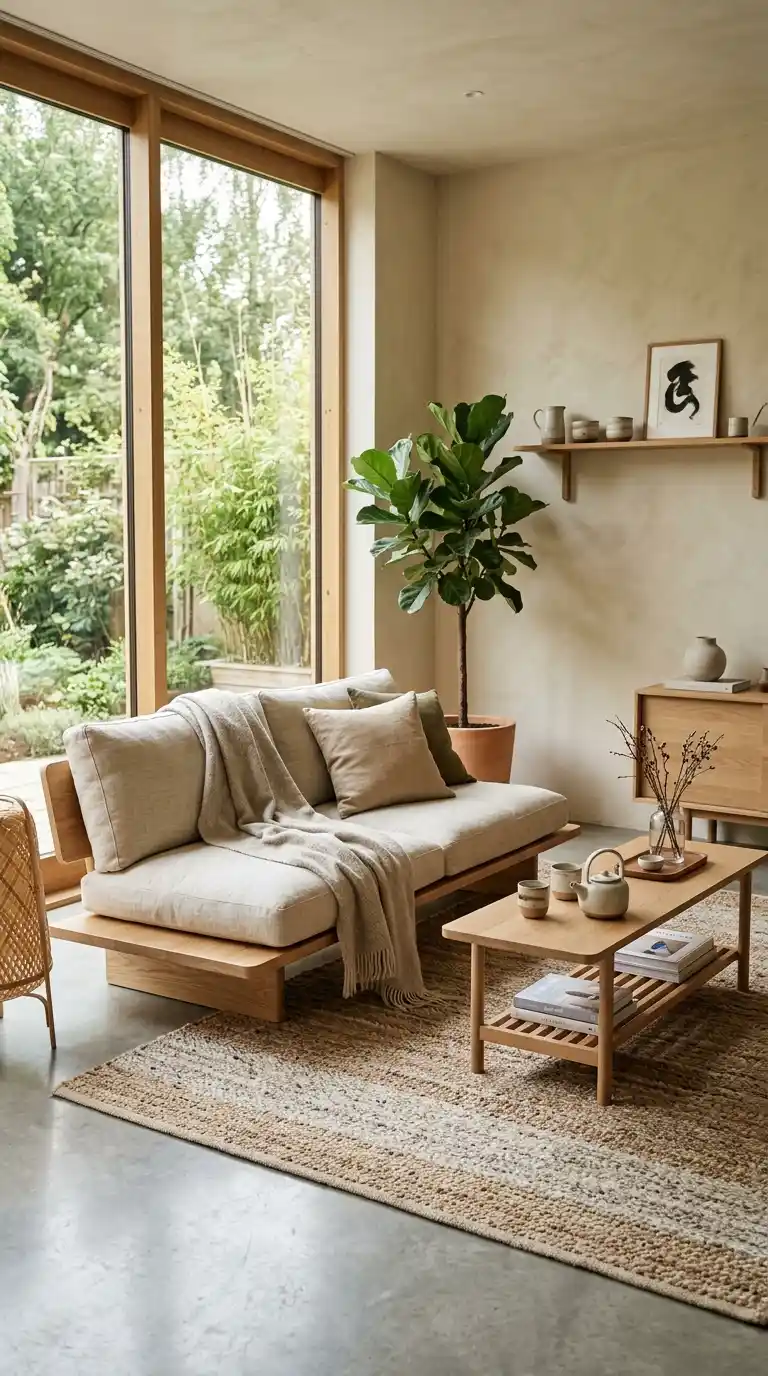
Japandi furniture tends to sit low to the ground, with clean lines and minimal ornamentation that echo Japanese design traditions. A low wooden sofa frame, a slim coffee table, or a floor-level media console all contribute to this grounded, calming silhouette. The reduced visual height makes ceilings feel taller and rooms feel more spacious.
Choosing light woods, like oak or ash, keeps the furniture feeling airy despite its low profile. Avoiding heavily carved or decorative details maintains the simplicity central to the style. Pairing a few different low-profile pieces together creates a cohesive, intentional layout rather than a mismatched collection. This furniture approach forms the structural foundation of any Japandi living room.
2. Neutral, Earthy Color Palette
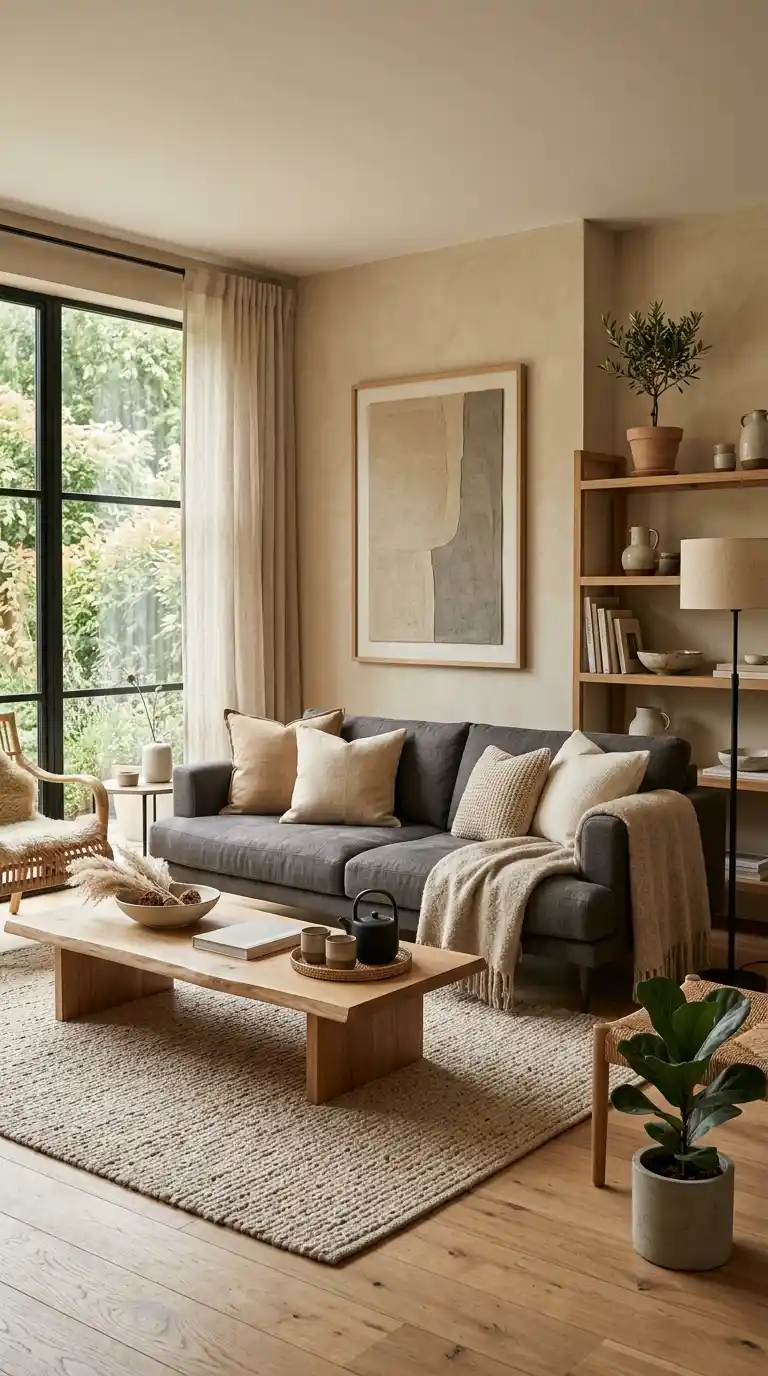
Japandi color schemes stay close to nature, favoring warm whites, soft beiges, muted greens, and gentle charcoal tones. This restrained palette creates a calming backdrop that lets natural materials and textures take center stage. Bright or saturated colors are used sparingly, if at all, to maintain the room’s quiet, grounded mood.
Layering several neutral tones, rather than relying on just one shade, adds subtle depth without introducing visual noise. A charcoal accent chair paired with warm beige walls is a common and effective combination. Soft sage or olive green textiles add a single living accent without disrupting the overall calm. This earthy palette is what gives Japandi rooms their distinctive, grounded warmth.
3. Natural Wood and Stone Pairings
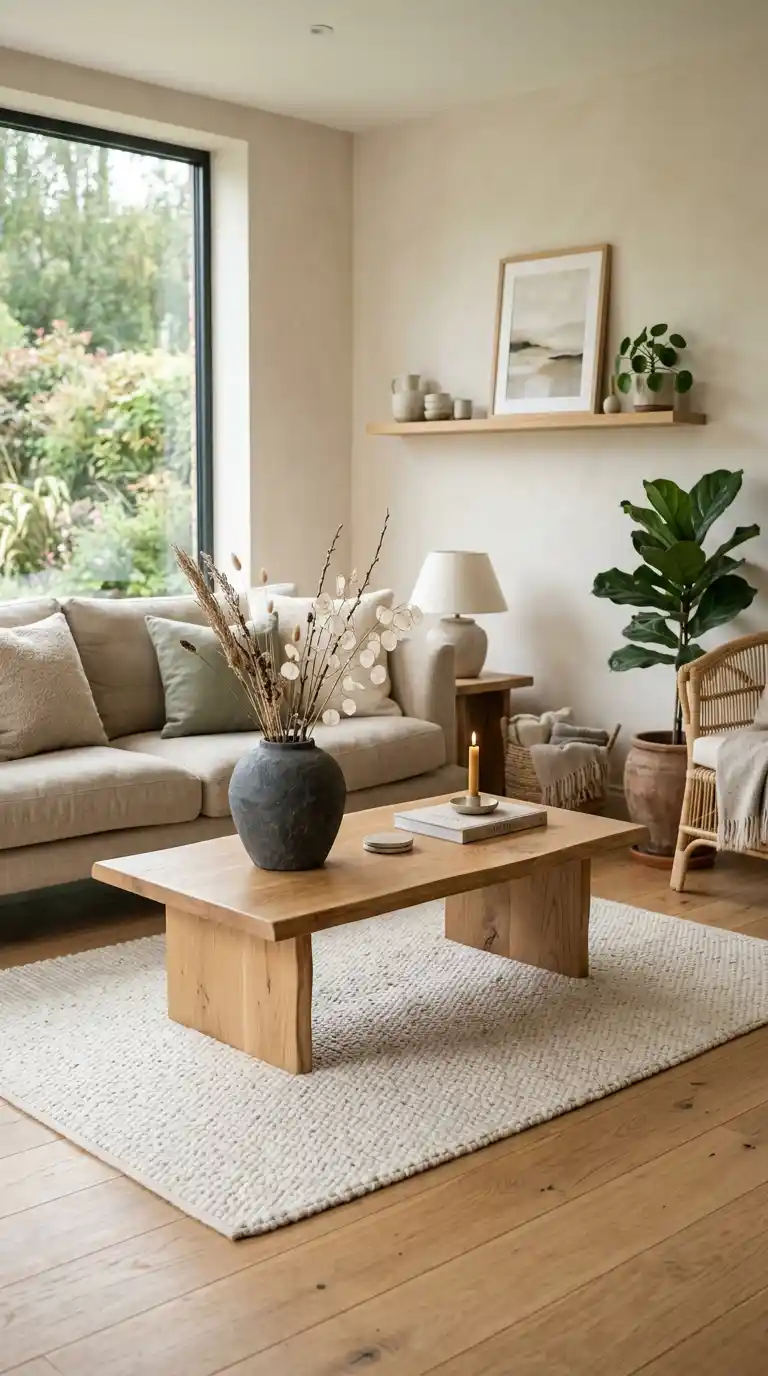
Combining warm wood with cool, textured stone creates the material contrast that defines much of Japandi style. A wood coffee table paired with a stone vase or a stone-topped side table balances warmth and texture in a single vignette. This pairing reflects both Japanese reverence for natural materials and Scandinavian functional simplicity.
Choosing stone in matte, unpolished finishes keeps the look organic rather than glossy or formal. Wood pieces with visible grain add warmth that balances the coolness of stone surfaces nearby. Mixing these two materials throughout the room, rather than isolating them to one area, creates a cohesive textural story. This combination grounds the room in a way that feels both natural and refined.
4. Minimal, Functional Decor
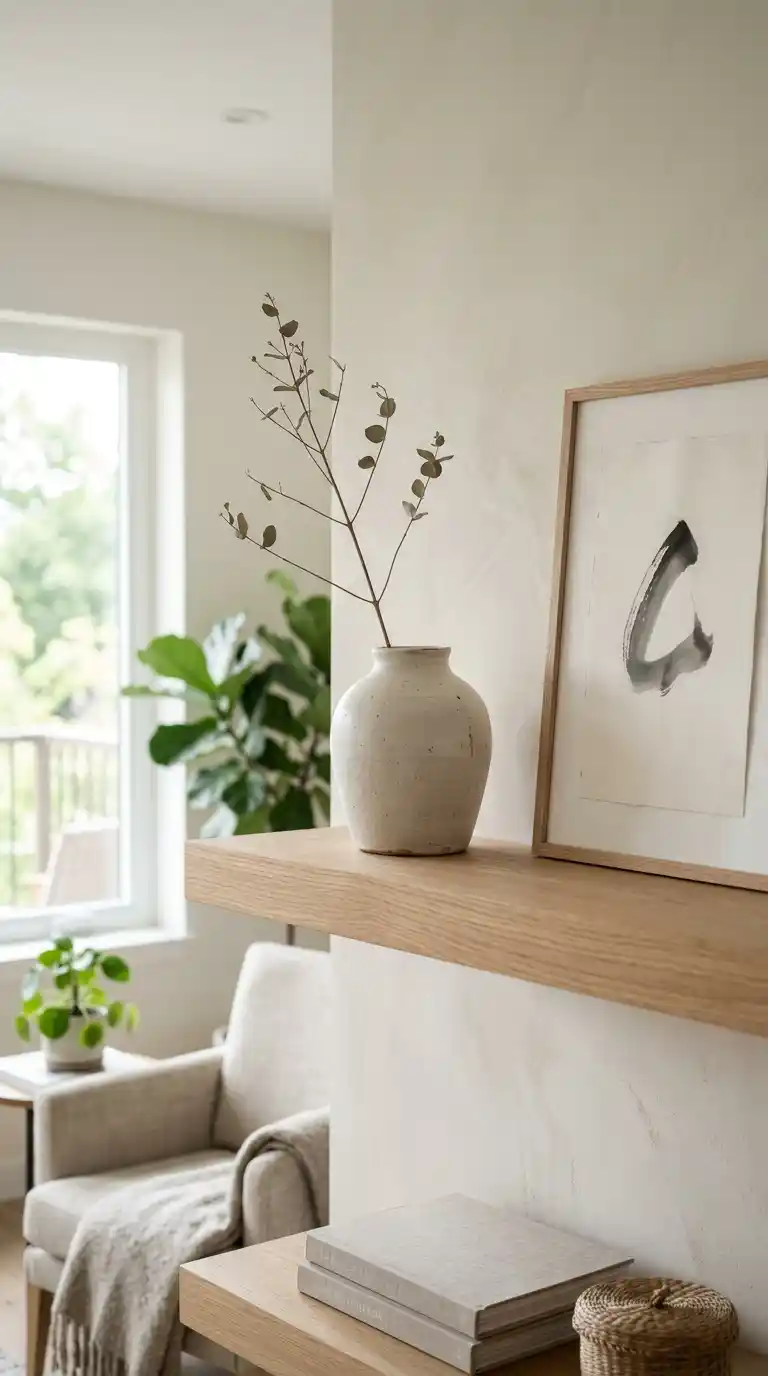
Japandi design avoids clutter, favoring a few carefully chosen decor pieces over a large collection of trinkets. A single ceramic vase, one piece of framed art, or a small sculptural object carries more visual weight than a crowded shelf ever could. Each item should serve a clear purpose, whether functional or purely aesthetic.
Choosing decor in natural materials, like wood, stone, or linen, keeps even small accents aligned with the room’s broader palette. Leaving visible empty space around each object allows it to be appreciated individually rather than lost in clutter. This restraint requires more intention when selecting pieces, but the payoff is a room that feels calm and curated. Minimalism here is a tool for clarity, not emptiness.
5. Soft Natural Textiles
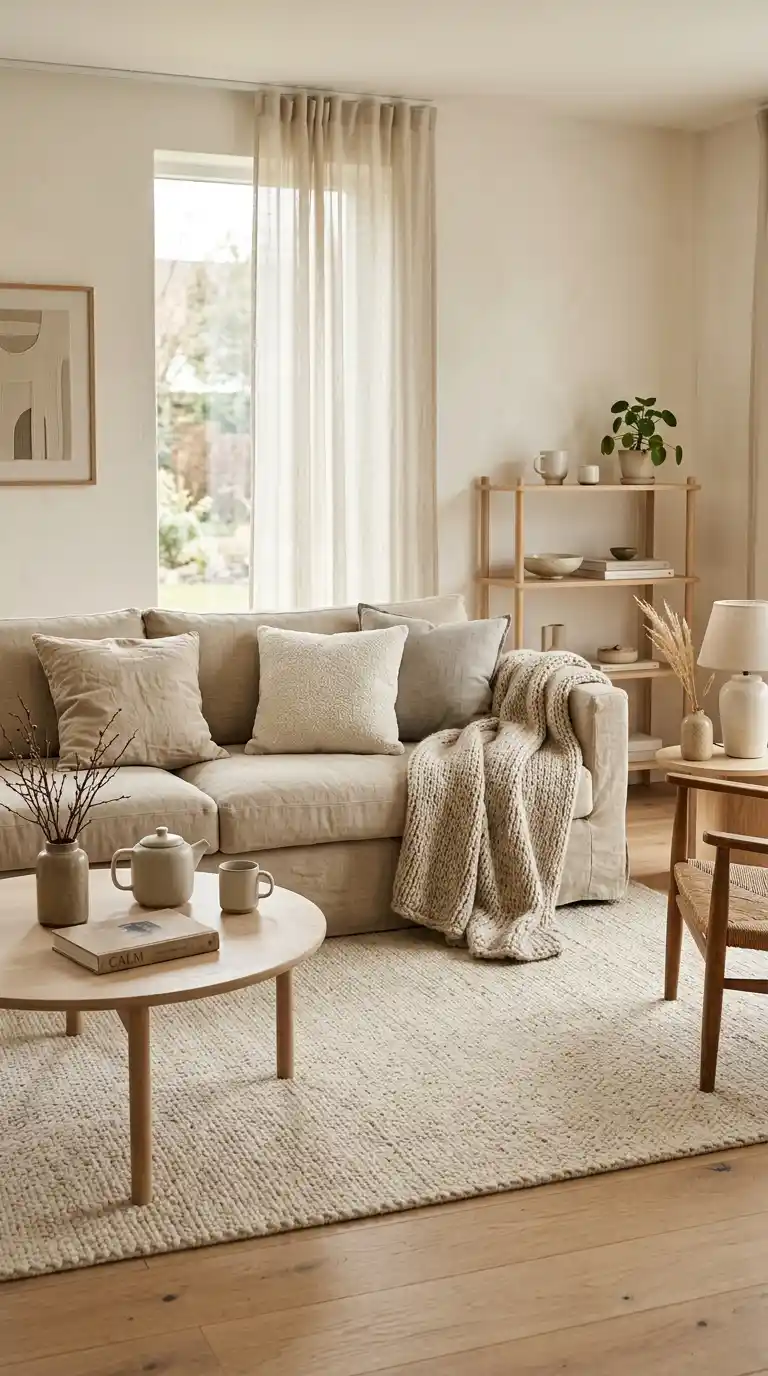
While the color palette stays neutral, texture carries much of the room’s warmth through soft natural textiles like linen, wool, and cotton. A linen sofa cover, a wool throw blanket, or a woven floor cushion all add tactile comfort without introducing pattern or bold color. This textural layering keeps the room from feeling stark despite its minimal color scheme.
Choosing textiles in slightly varied neutral shades, rather than one flat tone, adds subtle dimension throughout the room. A wool area rug beneath low furniture grounds the space while adding warmth underfoot. Avoiding heavily patterned fabrics maintains the calm, uncluttered visual feel central to Japandi style. This soft layering is what makes minimalism feel inviting rather than austere.
6. Shoji-Inspired Screens or Dividers
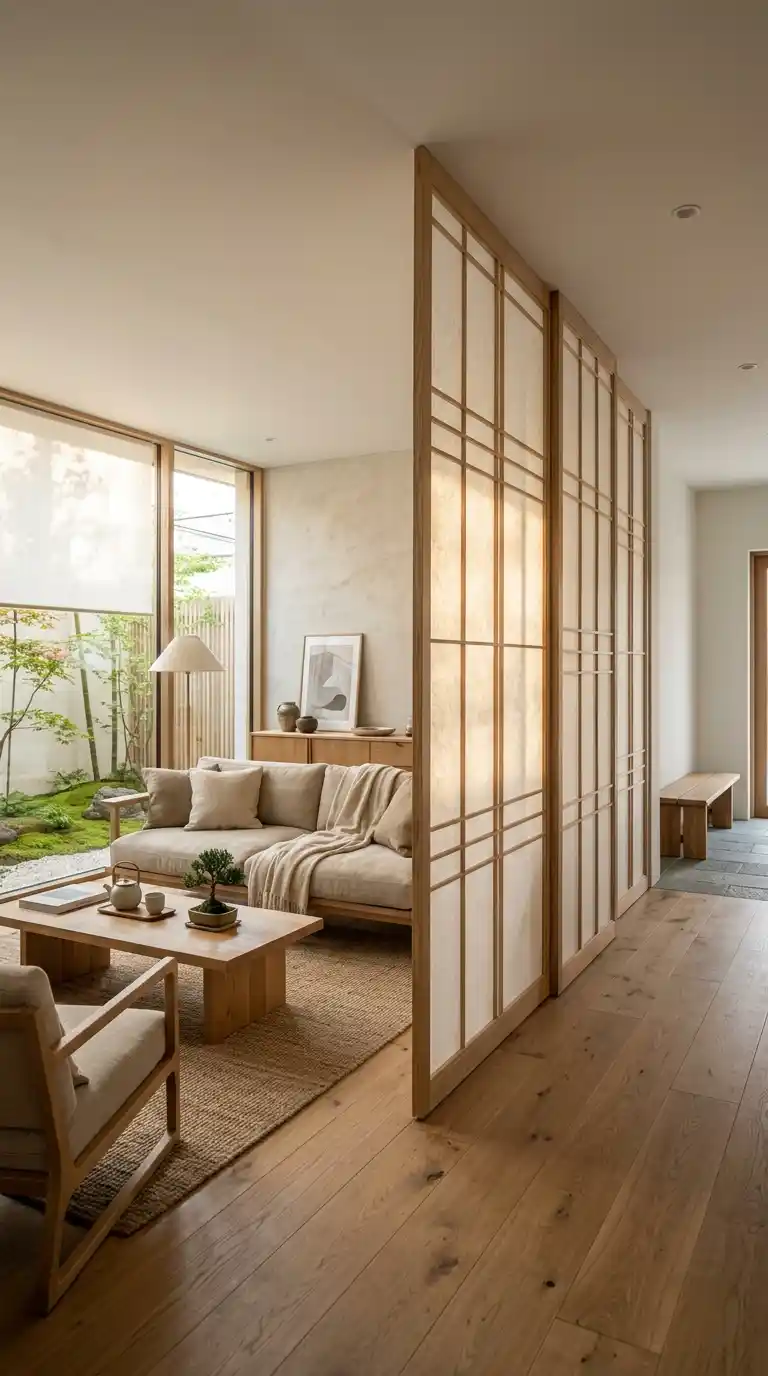
Screens inspired by traditional Japanese shoji, featuring wood frames and translucent paper or fabric panels, add both function and visual softness to a Japandi living room. Used to divide an open-concept space or soften a window’s light, these screens introduce gentle pattern through their grid structure. The diffused light they create adds a calm, almost meditative quality to the room.
Choosing a screen in light wood keeps the piece feeling airy rather than heavy or imposing. Positioning a screen near a window allows it to filter harsh daylight into a softer glow throughout the day. Sliding versions save floor space compared to swinging room dividers, fitting naturally into smaller layouts. This detail brings an authentic touch of Japanese design into the room’s Scandinavian-leaning structure.
7. Warm, Layered Lighting
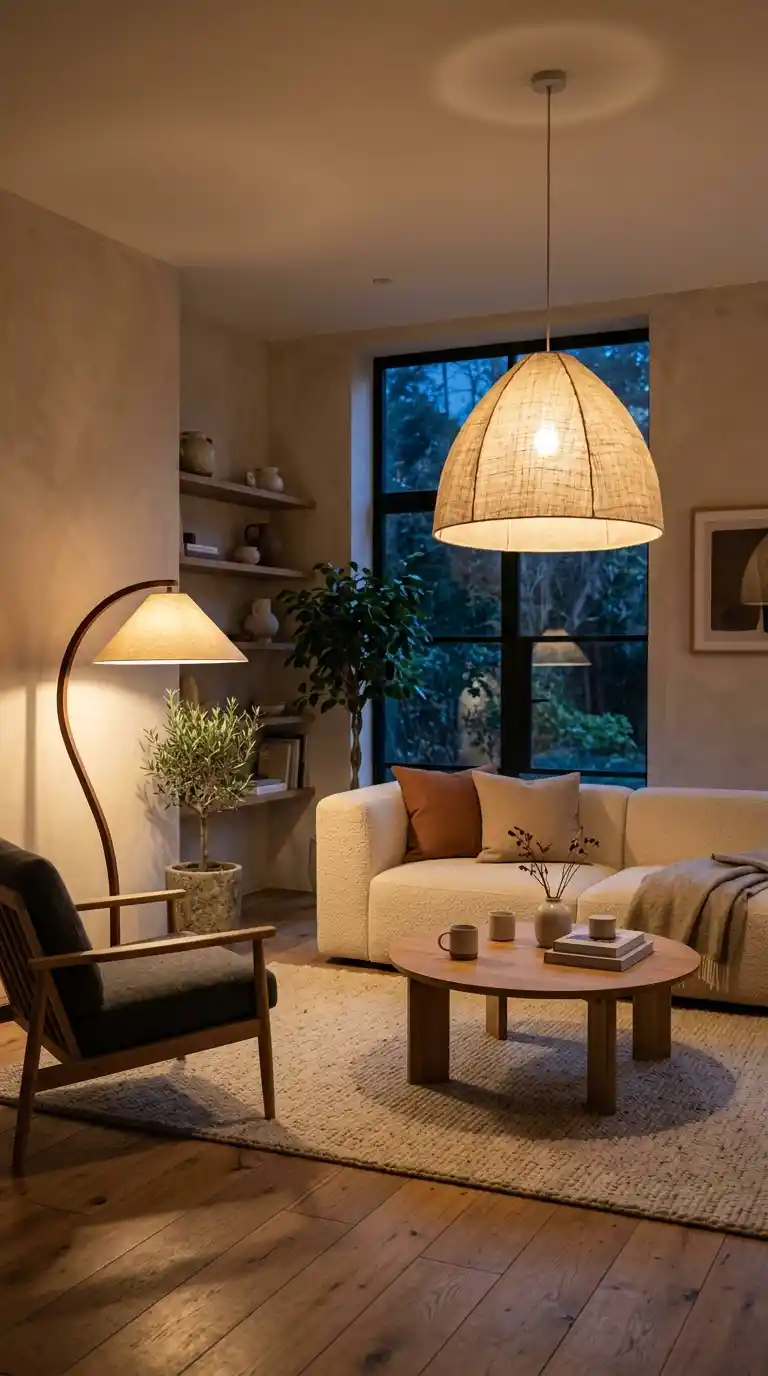
Lighting in a Japandi living room avoids harsh overhead fixtures in favor of warm, diffused sources placed throughout the room. A paper or linen pendant shade, paired with a simple wood floor lamp, creates layered light that feels soft and intentional. This approach mirrors both Japanese attention to ambiance and Scandinavian focus on cozy, functional light.
Choosing warm-toned bulbs rather than cool white ones keeps the room feeling inviting throughout the evening. Dimmable fixtures allow the space to shift from bright daytime functionality to a softer, more relaxed glow at night. A small table lamp beside a reading chair adds a final, intimate layer of light. This thoughtful approach to lighting reinforces the room’s overall sense of calm.
8. Built-In or Hidden Storage
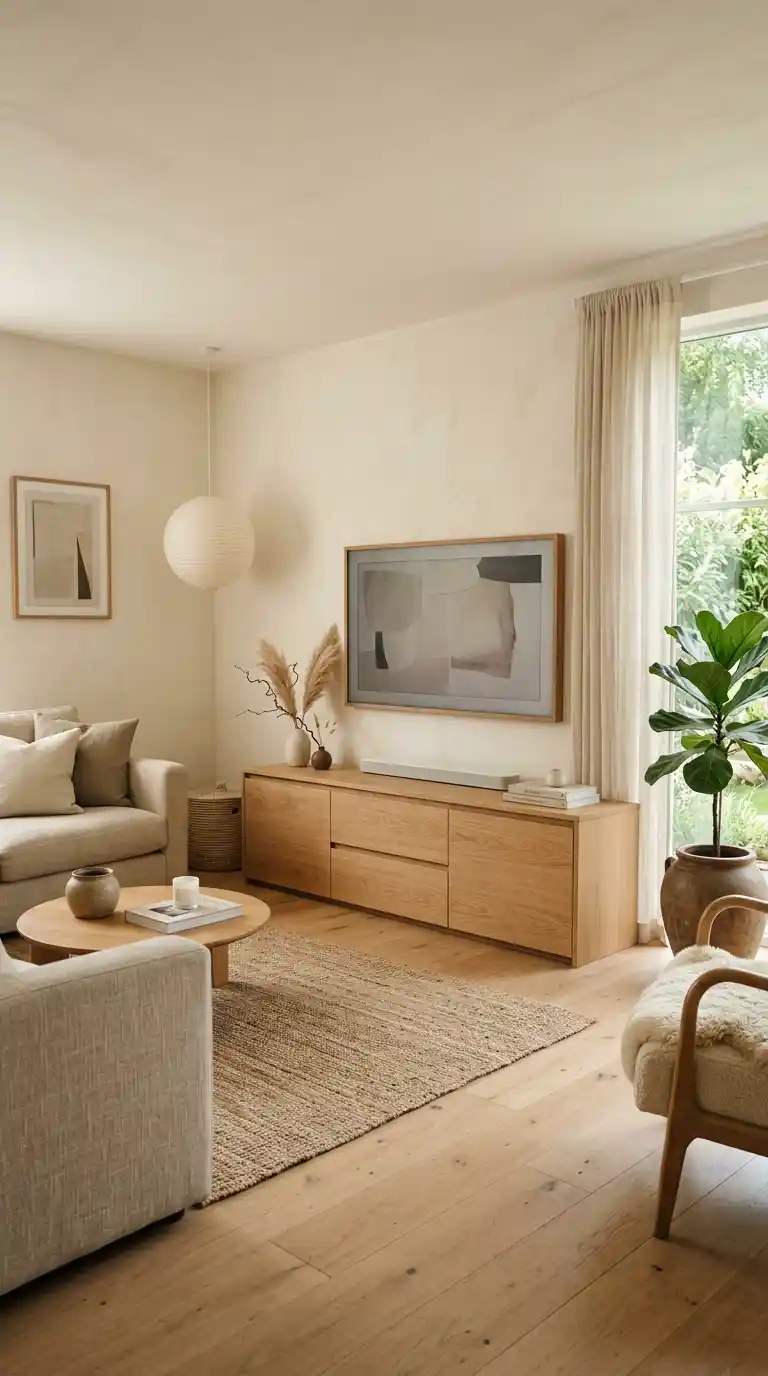
Keeping clutter out of sight is essential to maintaining the calm, uncluttered feel central to Japandi design. Built-in shelving with closed wood panels, or a low media console with hidden drawers, keeps everyday items organized without disrupting the room’s visual simplicity. This focus on function mirrors Scandinavian practicality alongside Japanese restraint.
Choosing storage furniture in the same light wood tones as the rest of the room keeps the piece feeling integrated rather than separate. Soft-close drawers and hardware-free cabinet fronts maintain the room’s clean, minimal lines. A woven basket tucked beneath a console offers additional flexible storage without adding visual weight. This hidden storage approach is key to keeping a Japandi room feeling spacious and calm.
9. Indoor Plants with Simple Pots
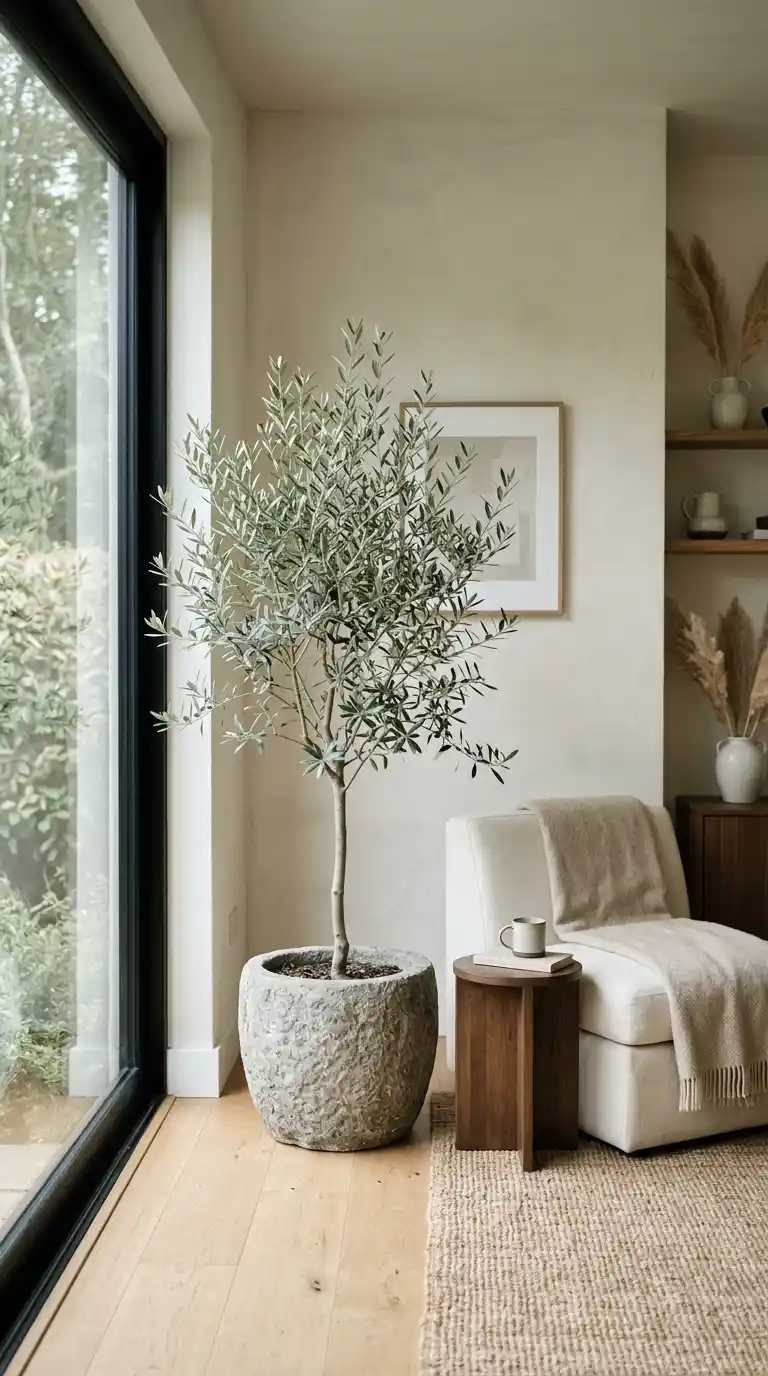
A few carefully placed plants bring life to a Japandi living room without disrupting its restrained color palette. A single olive tree in a simple stone or ceramic pot, or a small bonsai on a low shelf, adds organic shape and a touch of nature. This minimal approach to greenery reflects the Japanese appreciation for individual, intentional natural elements.
Choosing pots in matte neutral tones, like stone gray or warm terracotta, keeps the focus on the plant itself rather than a decorative container. Avoiding overly lush or colorful plants maintains the room’s calm, understated mood. Placing a single plant in an otherwise empty corner gives it room to be appreciated fully. This restrained approach to greenery fits naturally into the room’s overall philosophy.
10. Matte, Textured Wall Finishes
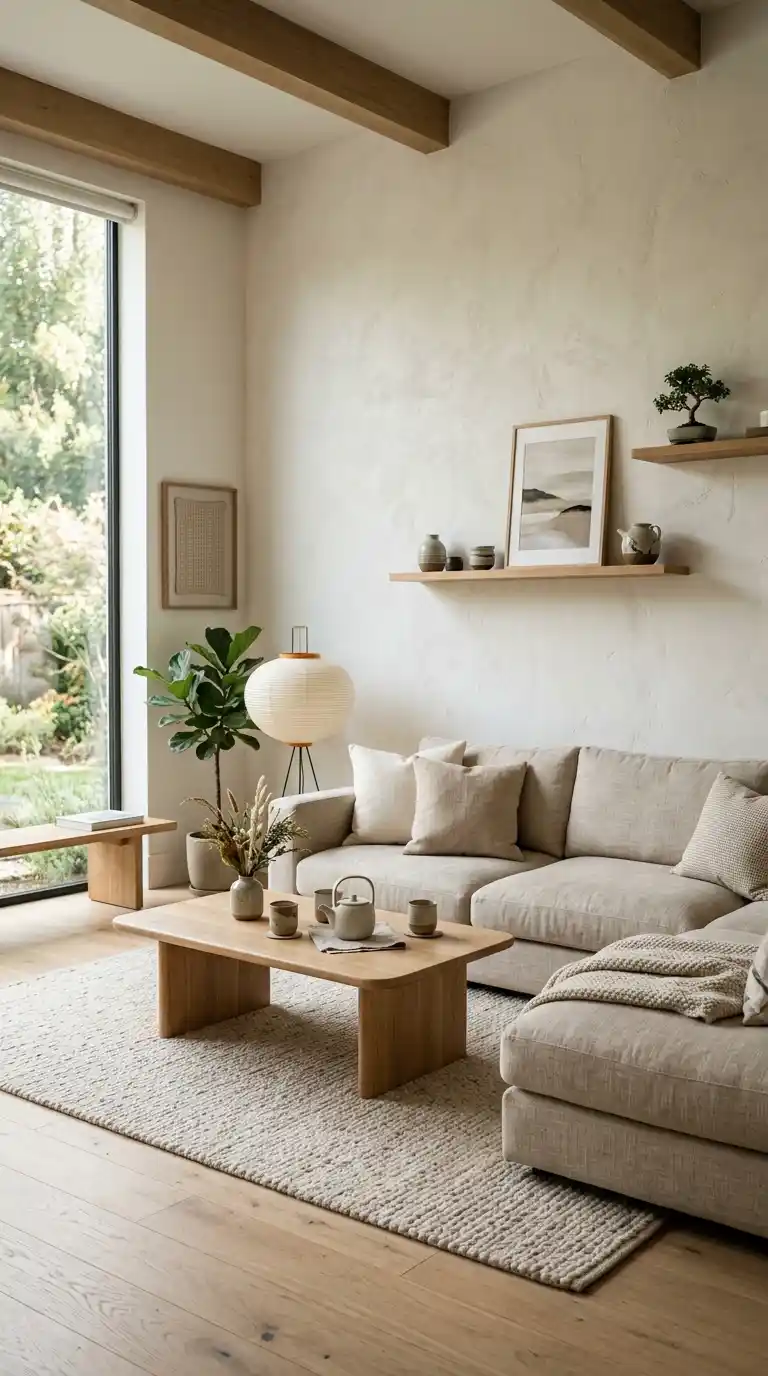
Walls in a Japandi living room often feature subtle texture, like a lime wash or matte plaster finish, rather than flat, glossy paint. This textured surface catches light softly throughout the day, adding quiet depth without any additional color or pattern. The slightly imperfect, handmade quality of these finishes echoes both Japanese wabi-sabi philosophy and Scandinavian simplicity.
Choosing a warm white or soft beige tone for the wall finish keeps the backdrop calm and neutral. This textured approach pairs particularly well with the room’s natural wood and stone materials, creating a cohesive tactile story throughout the space. Avoiding bold wallpaper or strong patterns maintains the room’s overall sense of quiet. This subtle wall treatment adds richness that’s felt more than seen.
11. Asymmetrical, Balanced Layouts
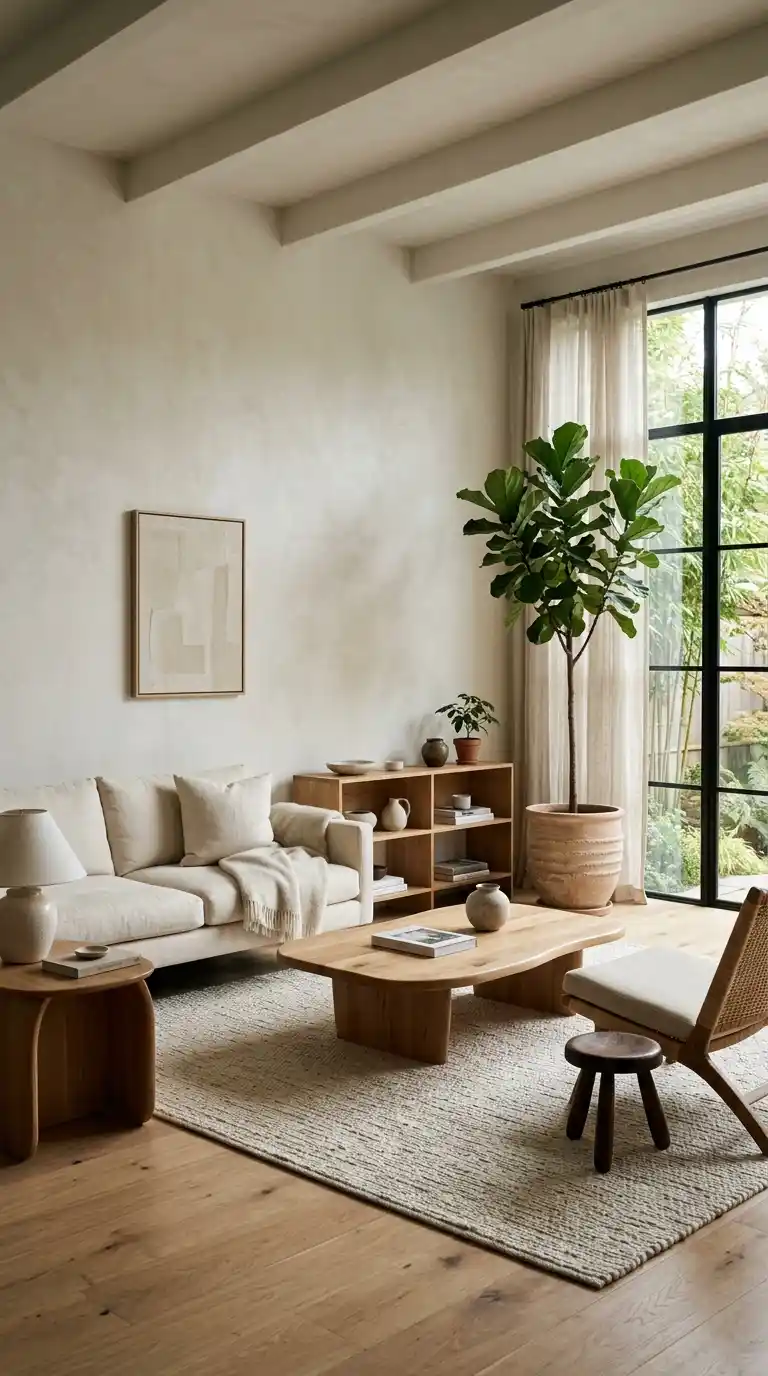
Japandi rooms often favor asymmetrical arrangements over perfectly matched, symmetrical layouts, reflecting Japanese design principles around natural balance. A single large plant on one side of the room, balanced by a low shelf on the other, creates visual equilibrium without exact mirroring. This approach feels more organic and intentional than a rigidly matched setup.
Choosing furniture pieces of varying heights and shapes, rather than identical sets, supports this asymmetrical balance. Leaving generous negative space around furniture groupings allows each piece room to be appreciated individually. This layout philosophy requires more thoughtful placement but results in a room that feels naturally composed. Asymmetry, done well, creates a sense of calm rather than disorder.
12. Quiet, Functional Seating Areas
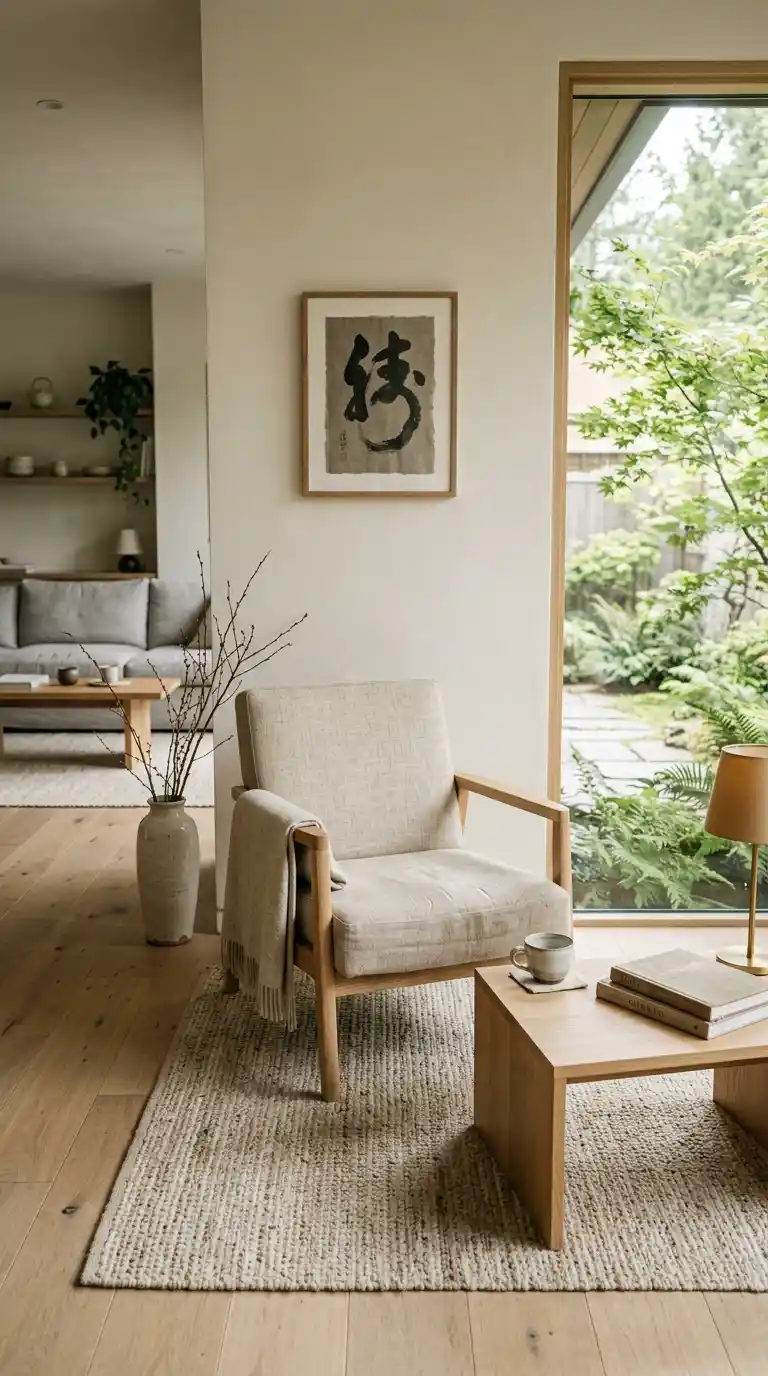
Seating in a Japandi living room prioritizes comfort and function over decorative excess, often featuring simple, low-profile chairs or a streamlined sofa. A single accent chair with clean lines, paired with a low wood side table, creates a quiet reading or conversation spot. This functional approach reflects Scandinavian practicality layered with Japanese restraint.
Choosing seating in natural materials, like linen upholstery or a wood frame, keeps each piece aligned with the room’s broader palette. Avoiding overly plush or oversized furniture maintains the room’s calm, uncluttered proportions. Positioning seating to encourage conversation, rather than facing a single focal point like a TV, supports a more intentional use of the space. This thoughtful approach to seating ties the entire room’s philosophy together.
Conclusion
Japandi living room design proves that minimalism and warmth aren’t opposing forces, they can exist together beautifully when built on natural materials and intentional choices. The twelve ideas above show how Japanese restraint and Scandinavian coziness combine to create a space that feels both calm and genuinely livable. From low furniture to layered lighting, every detail supports the room’s overall sense of balance.
What makes this style so enduring is its focus on quality over quantity, choosing fewer, more meaningful pieces rather than filling every surface. Starting with a few foundational elements, like a low wood coffee table or a textured wall finish, can shift the entire mood of the room. Over time, layering in natural materials, soft textiles, and thoughtful storage builds a space that feels effortlessly serene. A Japandi living room isn’t about having less, it’s about choosing better.