Japanese bathroom design has become one of the most sought-after styles for homeowners craving calm, simplicity, and a true sense of escape. Rooted in centuries-old bathing rituals, this design philosophy treats the bathroom as a place of intentional relaxation rather than just function. Natural materials, soft lighting, and uncluttered layouts work together to create a space that feels more like a private spa than an everyday room. Even small bathrooms can adopt this style with the right choices.
This list walks through eleven ideas that capture the essence of Japanese bathroom design, from deep soaking tubs to natural wood accents. Each idea focuses on creating warmth, texture, and a slower pace through thoughtful design rather than excess. Whether you’re renovating fully or adding a few key elements, these ideas are easy to adapt to almost any home. Let’s explore how to bring this peaceful aesthetic into your own space.
1. Zen-Inspired Minimalist Layouts
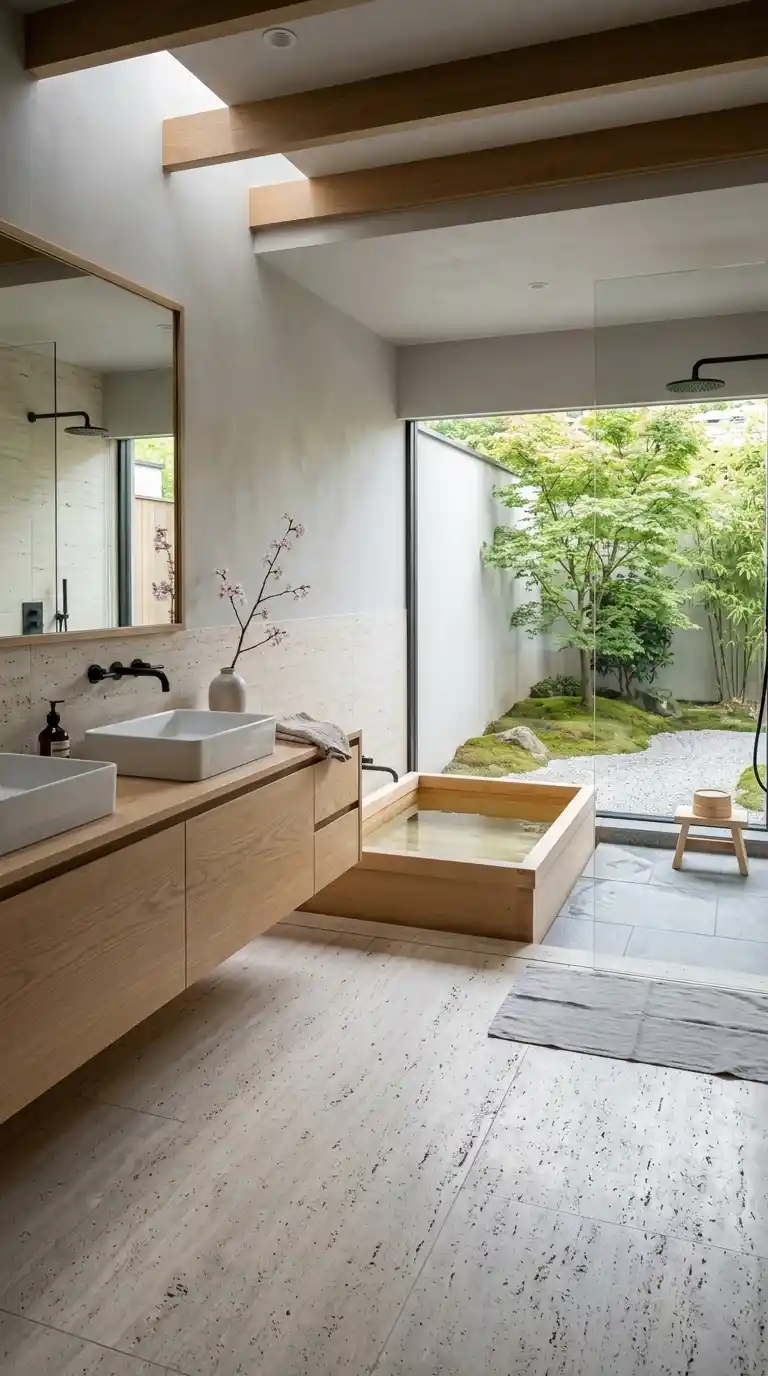
A true Japanese bathroom starts with restraint, removing anything that doesn’t serve a clear purpose. Clean lines, open floor space, and a limited color palette allow the eye to rest rather than search for focal points. Storage is hidden behind smooth cabinetry, keeping countertops nearly empty and surfaces calm. This minimalist approach makes even a modest-sized bathroom feel deliberate and uncluttered.
Layouts often separate the wet and dry areas, a practical tradition that keeps the space feeling fresh and organized. A low platform or slight step can define the shower zone without needing walls or curtains. Every element earns its place, from a single stool to one carefully chosen plant. The result is a room that feels spacious simply through what it leaves out.
2. Natural Wood Accents
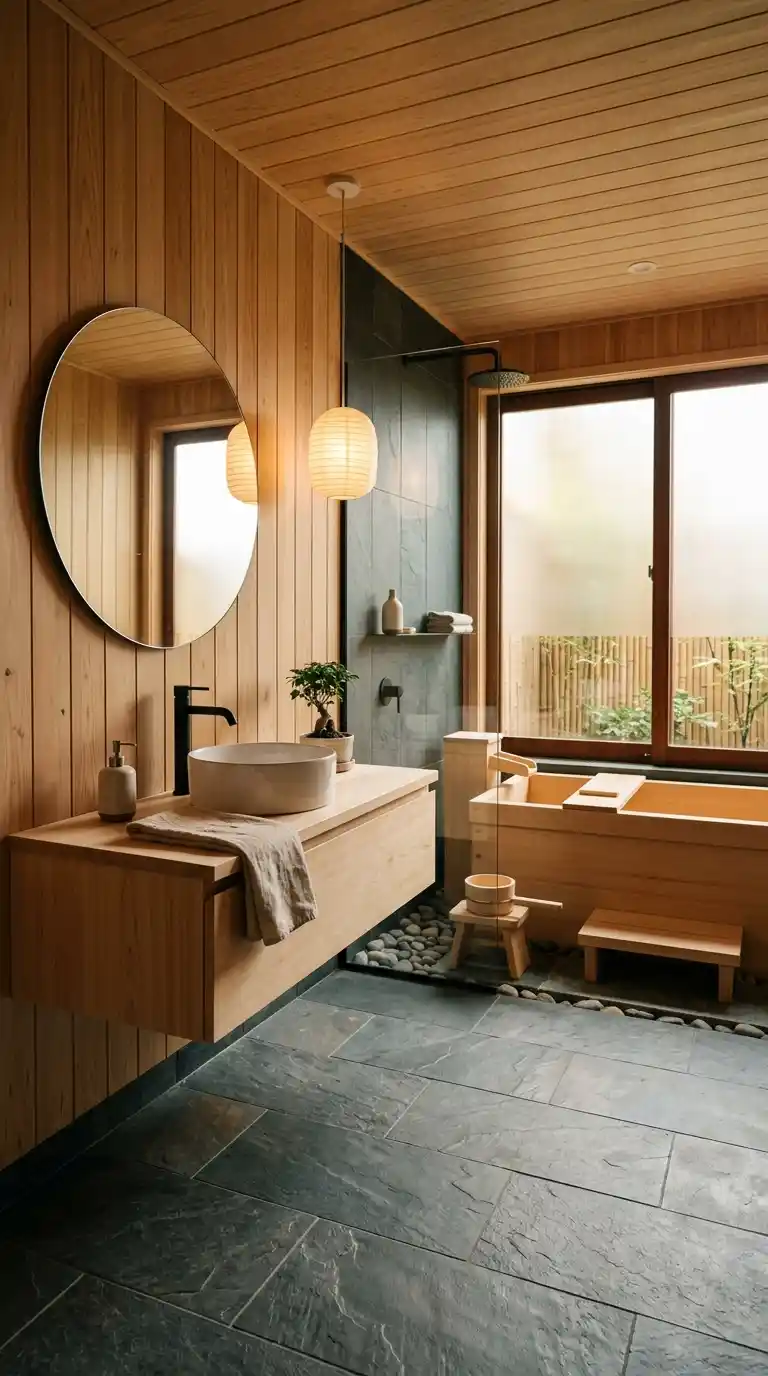
Warm wood tones are central to Japanese bathroom design, most commonly seen in hinoki cypress for its scent and water resistance. Wood ceiling slats, vanity fronts, or a wooden stool instantly soften the coolness of tile and stone. The natural grain adds texture and warmth that stone alone can’t achieve. Even small wood details create a noticeable shift in mood.
Choosing wood with a light, natural finish rather than heavy varnish keeps the look authentic and breathable. Teak or cedar are popular alternatives when hinoki isn’t available, offering similar warmth and durability. Pairing wood with stone or matte tile creates a balanced, grounded palette. This contrast of materials is what gives the style its quiet richness.
3. Deep Soaking Tubs
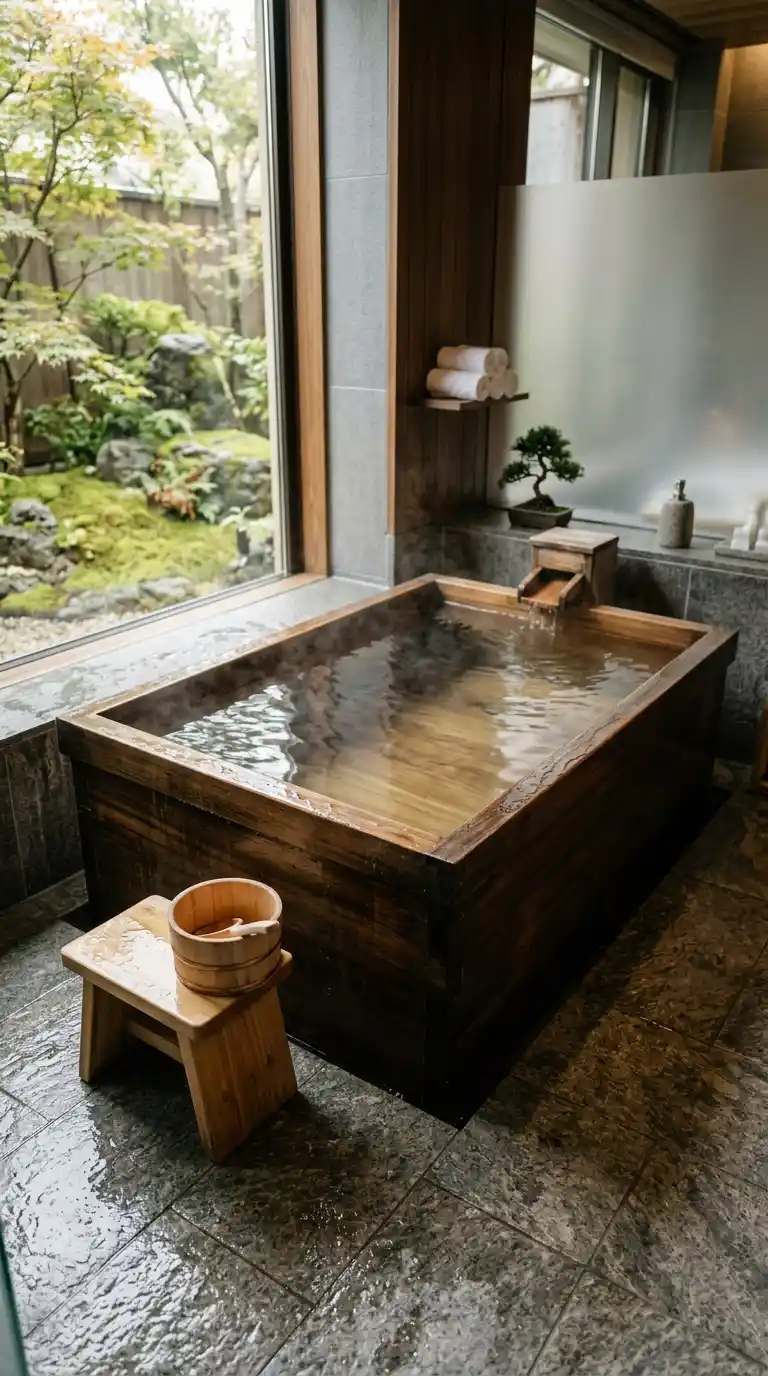
The ofuro, a deep soaking tub, is one of the most recognizable features of Japanese bathroom design. Unlike Western tubs meant for lying down, these are designed for sitting upright with water covering the shoulders. This shape allows for full-body warmth in a smaller footprint, making it ideal for compact bathrooms. Many are crafted from wood, stone, or smooth ceramic for a tactile, grounding feel.
The ritual typically includes washing and rinsing before entering the tub, keeping the soaking water clean for longer use. A built-in ledge or small shelf nearby holds a cup or cloth without disrupting the room’s simplicity. Surrounding the tub with stone tile or pebbles reinforces the spa-like atmosphere. This single feature can transform an ordinary bathroom into a true retreat.
4. Stone and Pebble Flooring
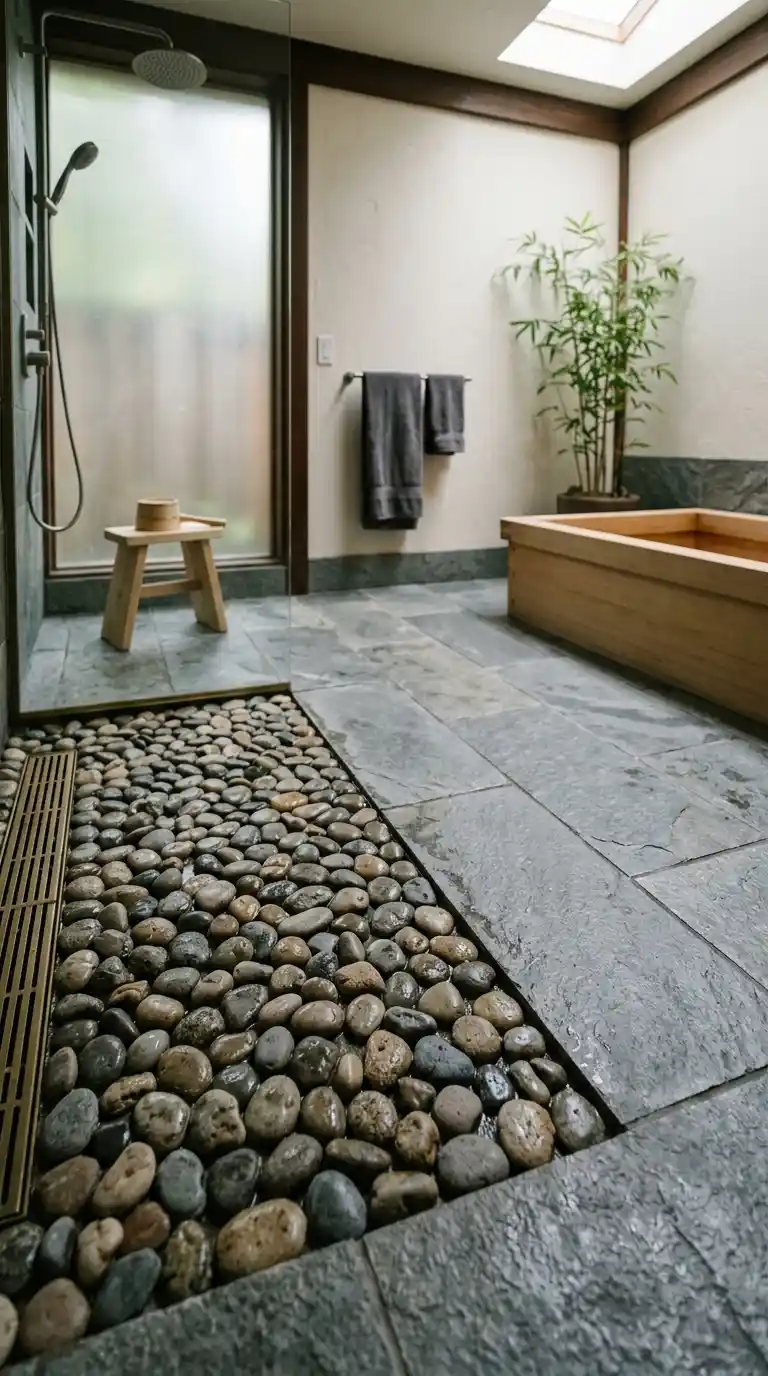
Natural stone flooring brings texture and an organic feel that mimics the outdoors, a key element of Japanese design. River pebbles embedded in a section of the floor, often near the shower, add both grip and a tactile foot massage. Larger flat stones elsewhere keep the space comfortable to walk on barefoot. This mix of textures keeps the floor visually interesting without feeling busy.
Gray, beige, and soft black tones are the most common choices, echoing colors found in nature. Matte finishes are preferred over glossy ones, since they feel more grounded and less reflective. Heated flooring is often added beneath stone tile to keep the space comfortable year-round. The combination of texture and warmth underfoot reinforces the calming intent of the room.
5. Shoji Screen Dividers
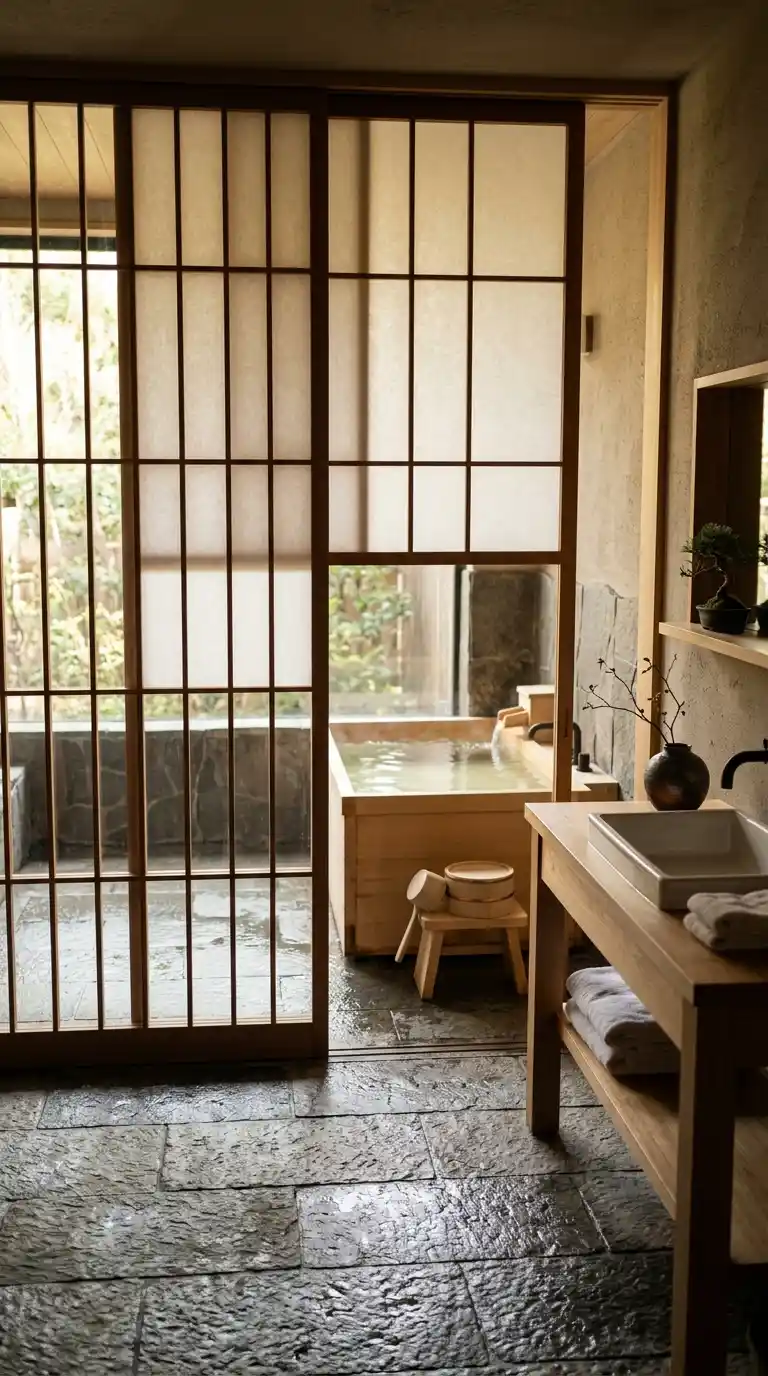
Shoji screens, traditionally made from wood frames and translucent paper or glass panels, are a signature visual element borrowed into bathroom design. Used as a divider between the wet area and the rest of the room, they allow soft light to pass through while maintaining privacy. The pattern of the wood grid adds quiet visual interest without heavy ornamentation.
In smaller bathrooms, a single shoji panel near a window can diffuse harsh daylight into a soft glow. Sliding versions save space compared to swinging doors, fitting naturally into compact layouts. Frosted glass alternatives offer the same effect with easier maintenance for steamy environments. This detail alone can shift a bathroom’s entire mood toward calm.
6. Indoor-Outdoor Garden Views
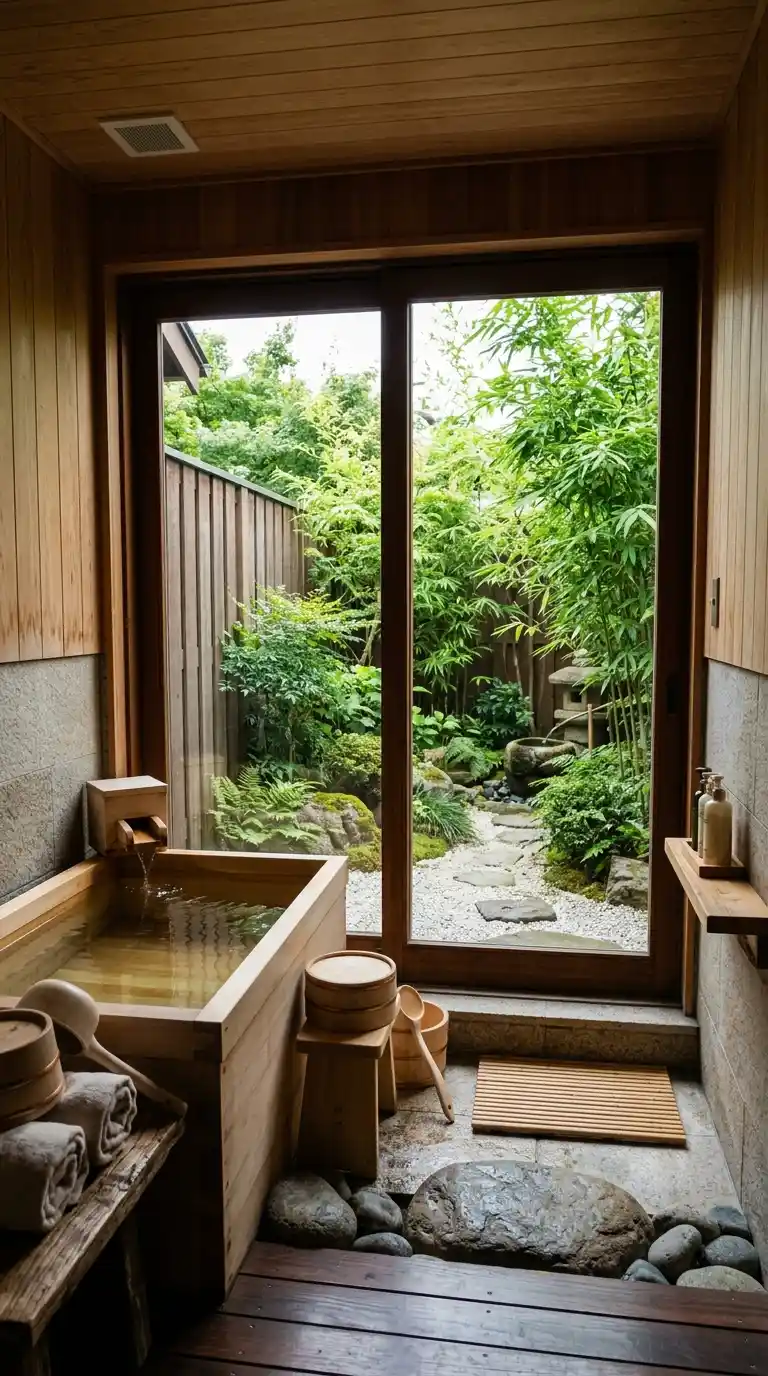
Many Japanese bathrooms are designed around a view, whether a small private courtyard, a rock garden, or simply a single potted tree visible through a window. This connection to nature is considered essential to the bathing ritual, turning a routine task into a moment of stillness. Even an apartment bathroom can borrow this idea with a window-side plant shelf.
Frosted or textured glass allows natural light in while preserving privacy where needed. A small bamboo or moss arrangement just outside a window creates a living focal point year-round. Skylights are another option when an outdoor view isn’t possible, bringing in natural light from above. This connection to greenery is often what makes the space feel genuinely restorative.
7. Neutral Earthy Color Palettes
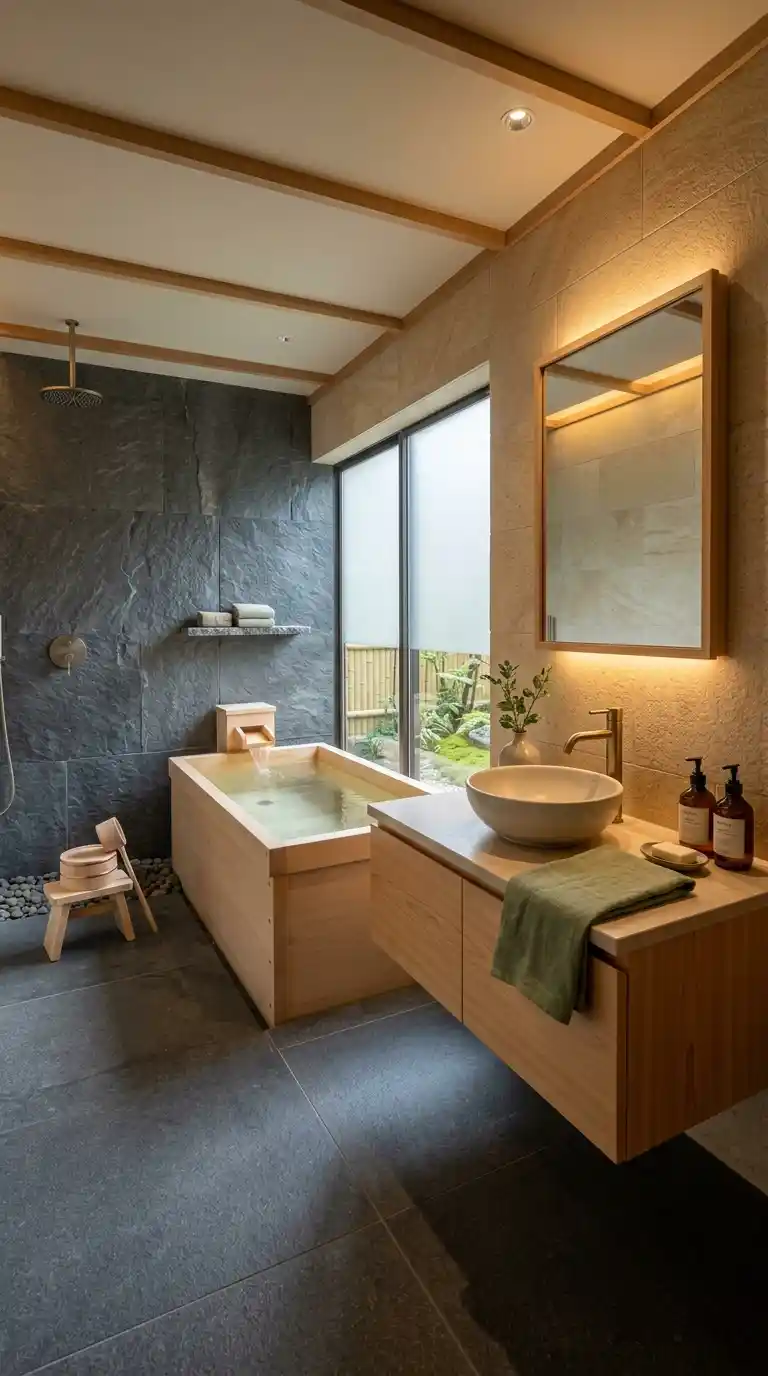
Color in Japanese bathroom design stays close to nature, favoring stone grays, warm beiges, soft blacks, and muted greens. These tones create a backdrop that feels grounding rather than stimulating, supporting the room’s purpose as a place to unwind. Bright whites are used sparingly, often just for trim or fixtures, to avoid a clinical feel.
Layering several neutral tones, rather than relying on just one, adds depth without introducing visual noise. A charcoal stone wall paired with a light wood vanity is a common and effective combination. Soft sage or moss green towels add a single living accent without breaking the calm palette. The overall effect should feel like an extension of the natural world indoors.
8. Rain Showers with Natural Stone
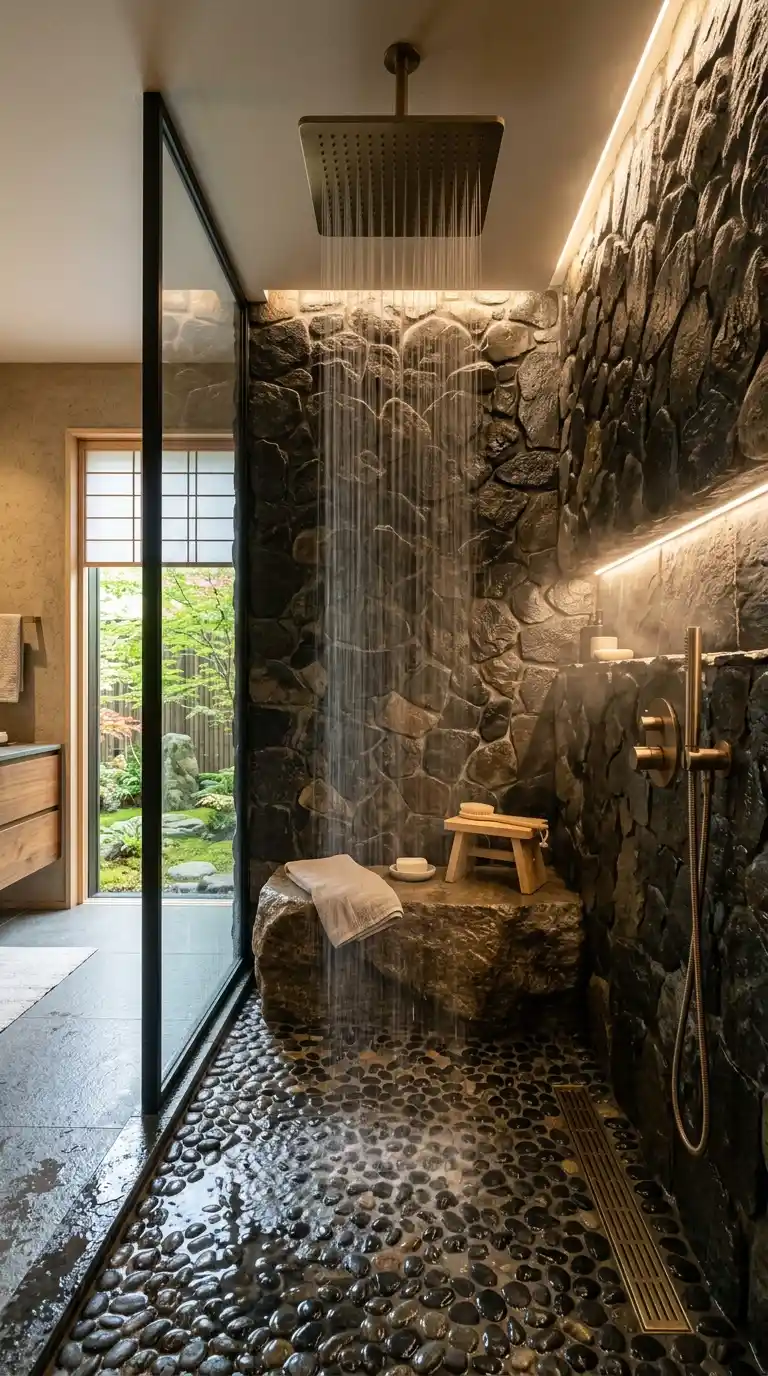
A rain shower head paired with a stone-clad wall captures the feeling of standing beneath a natural waterfall, a detail central to the style’s spa-like quality. Wide, gentle water flow feels more calming than a strong directional spray, matching the room’s slower pace. Stone walls absorb sound slightly, adding to the sense of quiet immersion.
Built-in stone benches inside the shower area allow for a seated rinse, echoing traditional bathing customs. Recessed shelving carved directly into the stone keeps toiletries minimal and out of sight. Matte black or brushed bronze fixtures complement the stone without competing for attention. This combination turns a daily shower into something closer to ritual.
9. Bamboo and Plant Accents
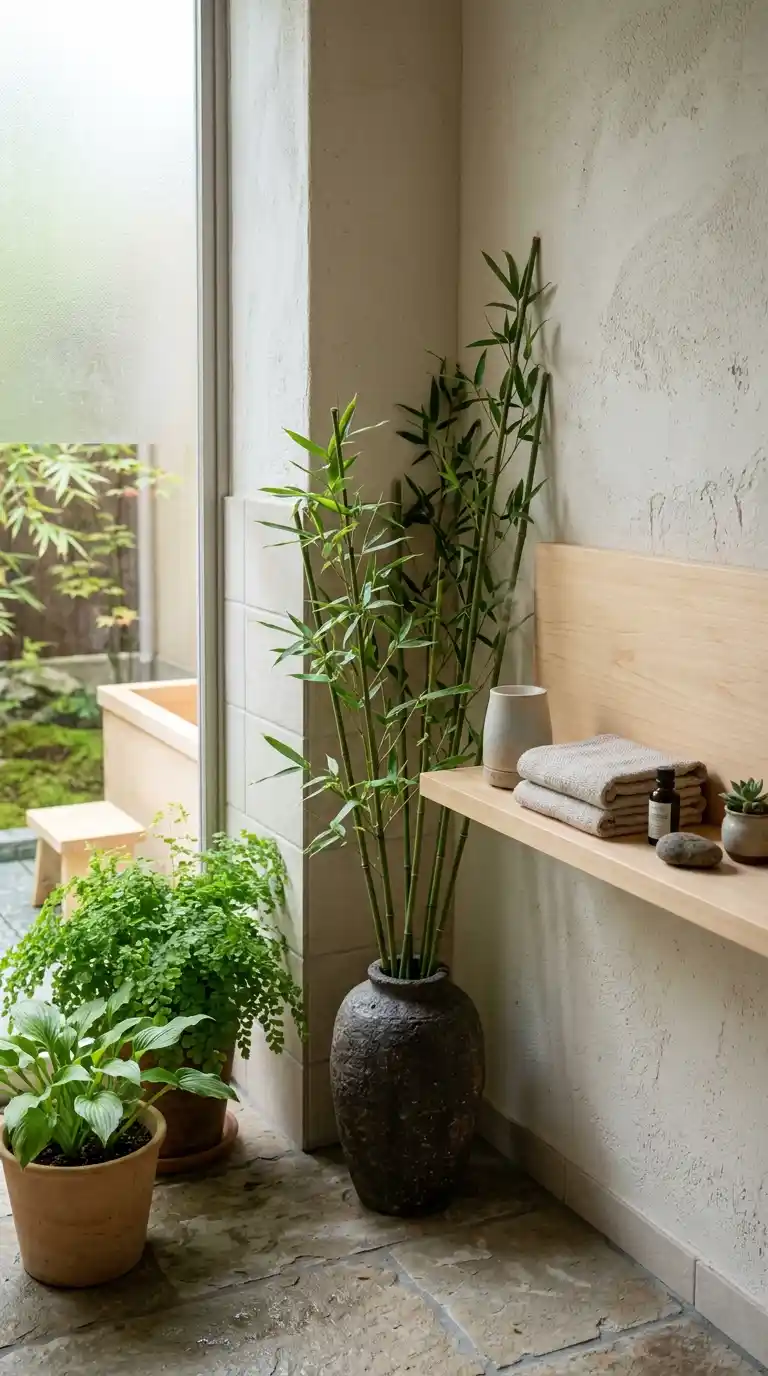
A few well-placed plants do more for this style than almost any other decor choice. Bamboo stalks in a simple vase, a small potted fern, or a single bonsai tree bring life and softness into an otherwise minimal space. These accents echo the garden views often found just outside the room, extending that natural feeling indoors.
Choosing plants that thrive in humidity, like ferns or peace lilies, keeps the greenery healthy in a steamy bathroom environment. A woven basket or stone planter keeps the presentation simple and consistent with the room’s materials. Avoiding overly decorative or colorful plants keeps the focus on calm rather than vibrancy. Even one thoughtfully placed plant can anchor the entire design.
10. Soft Ambient Lighting
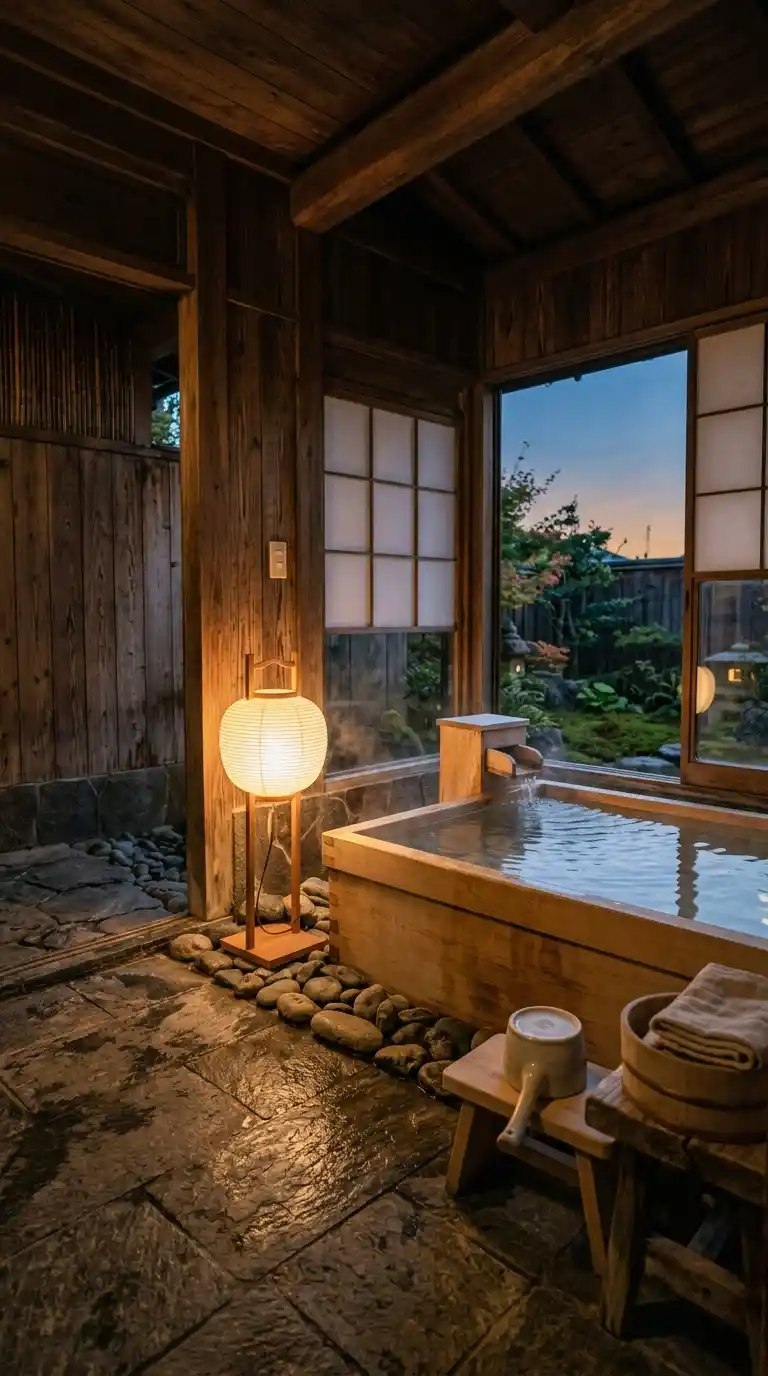
Lighting in a Japanese-inspired bathroom avoids harsh overhead fixtures in favor of warm, diffused glow. Paper lantern-style fixtures, recessed soft lighting, or candles placed near the tub all contribute to a slower, more meditative atmosphere. Light is treated as another material in the room, shaping mood as much as visibility.
Dimmable fixtures allow the space to shift from brighter task lighting during the day to a softer glow for evening soaks. Light filtered through a shoji screen or frosted glass panel adds texture to the glow itself. Keeping bulbs warm-toned rather than cool or bright white preserves the room’s grounded feel. This layered approach to lighting is often what separates a good bathroom from a truly restorative one.
11. Minimalist Vanity and Storage
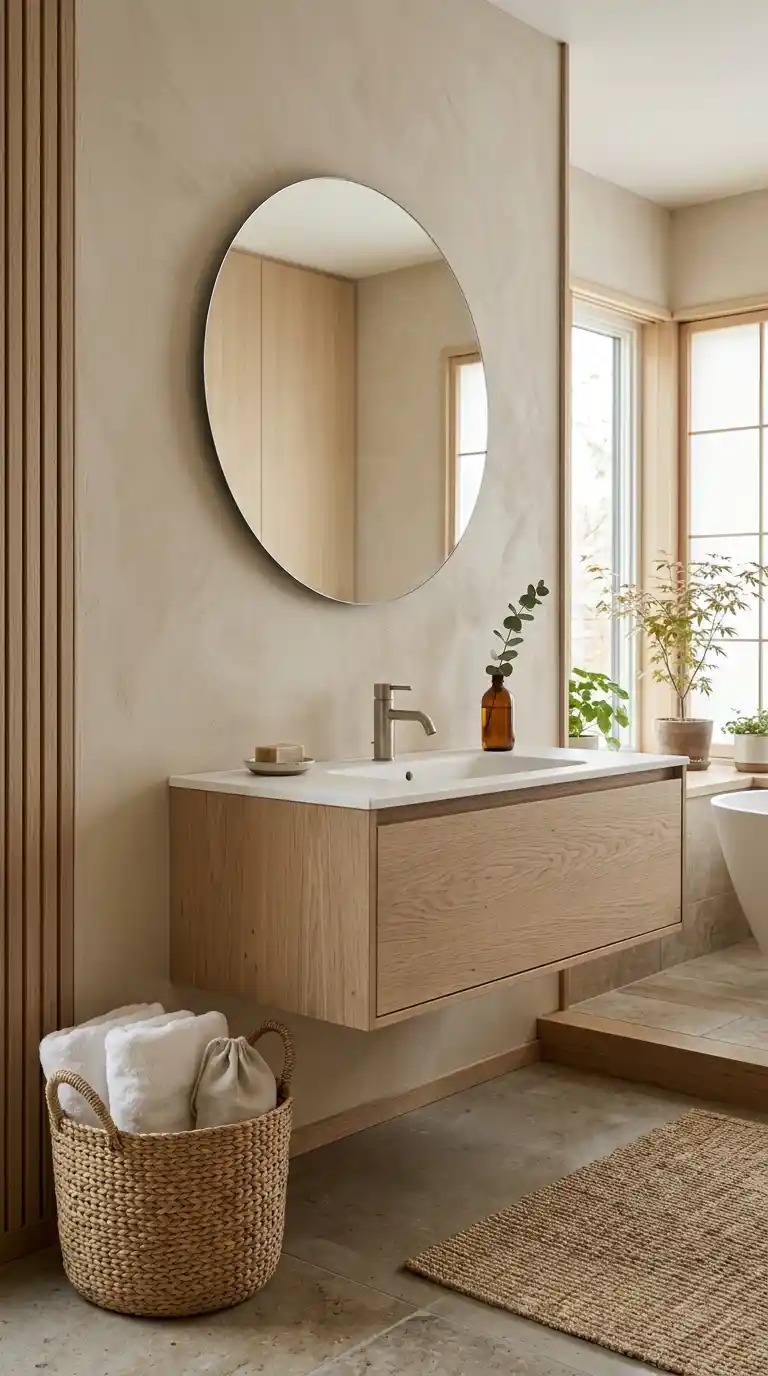
Vanities in this style stay low-profile, often a simple wood or stone counter with closed storage beneath to keep clutter out of sight. A single woven basket or small ceramic dish holds daily essentials without crowding the surface. The goal is a counter that looks nearly untouched, reinforcing the room’s sense of calm.
Mirrors are kept simple, usually framed in wood or left frameless, avoiding ornate detailing that would clash with the room’s restraint. Floating vanities add a sense of lightness, making the floor feel more open beneath them. Soft-close drawers and hidden hardware keep the design seamless and quiet. This understated approach to storage is what ties the whole room together.
Conclusion
Japanese bathroom design proves that true luxury often comes from simplicity rather than excess. Natural materials, soft lighting, and a slower pace transform an everyday routine into something closer to a ritual. The eleven ideas above show how achievable this style can be, whether through a single wood accent or a full soaking tub installation. Even small changes can shift the entire feeling of the room.
What makes this style so enduring is its connection to nature and its respect for quiet, intentional space. A bathroom designed this way doesn’t just look beautiful, it genuinely feels restorative to use every day. Start with one or two elements, like a wood stool or a soft lighting fixture, and build from there. Over time, these small choices add up to a space that feels like a true retreat.